


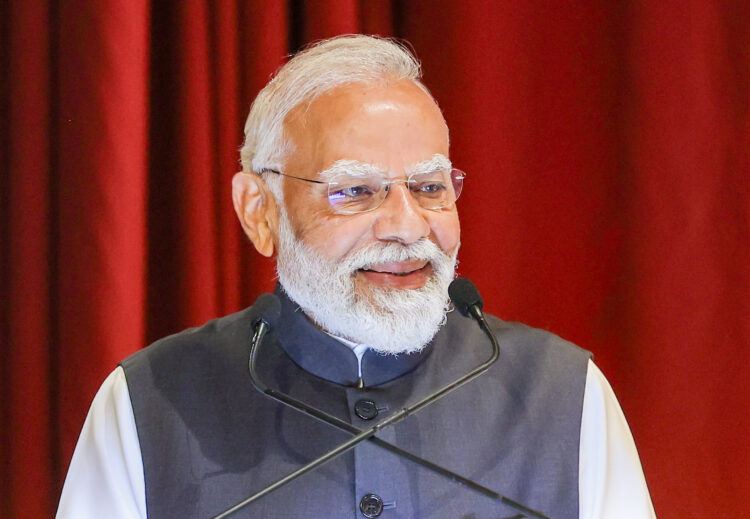
New Delhi: Prime Minister Narendra Modi will address the closing ceremony of the second WHO Global Summit on Traditional Medicine, the Prime Minister’s Office said on Thursday.
The three-day programme being held at Bharat Mandapam, New Delhi, underscores India’s growing leadership and pioneering initiatives in shaping a global, science-based, and people-centred traditional medicine agenda.
“Prime Minister Modi has constantly emphasised for mainstreaming traditional medicine and the Indian Knowledge System through research, standardisation, and global collaboration,” said the PMO.
During the programme, the Prime Minister will launch several landmark Ayush initiatives, including My Ayush Integrated Services Portal (MAISP), a master digital portal for the Ayush sector. He will also unveil the Ayush Mark, which is envisioned as a global benchmark for the quality of Ayush products and services.
Further, PM Modi is expected to release the WHO technical report on training in Yoga and the Book “From Roots to Global Reach: 11 Years of Transformation in Ayush”.
Symbolising the global resonance of India’s traditional medicinal heritage, he will also release a commemorative postal stamp on Ashwagandha.
PM will felicitate the recipients of the Prime Minister’s Awards for Outstanding Contribution to the Promotion and Development of Yoga for the years 2021-2025, recognising their sustained dedication to Yoga and its global promotion.
The awards reaffirm Yoga as a timeless practice for balance, well-being, and harmony, contributing to a healthier and stronger New India.
Prime Minister will also visit the Traditional Medicine Discovery Space — an exhibition which showcases the diversity, depth, and contemporary relevance of traditional medicine knowledge systems from India and across the world.
The Summit, being held from December 17 to 19, is jointly organised by the World Health Organization (WHO) and the Ministry of Ayush. It is themed as “Restoring balance: The science and practice of health and well-being”.
The summit witnessed intensive deliberations among global leaders, policymakers, scientists, practitioners, Indigenous knowledge holders, and civil society representatives on advancing equitable, sustainable, and evidence-driven health systems.
(IANS)