



Mumbai: As part of the move to develop a corporate bond market, the RBI plans to issue a regulatory framework soon to enable the introduction of derivatives on credit indices and total return swaps on corporate bonds.
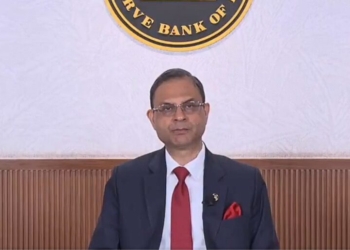
RBI Governor Sanjay Malhotra said that an active derivatives market can facilitate efficient management of credit risks, improve liquidity and efficiency in the corporate bond market and facilitate issuance of corporate bonds across the rating spectrum.
An announcement was made in the Union Budget speech delivered on February 1, 2026, that total return swaps on corporate bonds and derivatives on corporate bond indices will be introduced. Accordingly, a regulatory framework to enable the introduction of derivatives on credit indices and total return swaps on corporate bonds will be issued shortly for public feedback, he explained.
The RBI Governor further stated that the revised framework of allowing greater flexibility to Authorised Dealers with respect to foreign exchange products, risk management and platforms will be issued shortly for public consultation.
Banks and standalone primary dealers authorised under FEMA, 1999, access the foreign exchange market for market making, balance sheet management and hedging of risks. The regulatory framework governing the facilities for such Authorised Dealers (ADs) has been reviewed, rationalised and refined in view of the current market practices and requirements, domestically and globally, he explained.
The Governor also announced that the RBI has decided that investments under the Voluntary Retention Route (VRR) will now be reckoned under the limit for FPI investments under the General Route, and certain additional operational flexibilities will be provided to FPIs investing under the VRR.
The Voluntary Retention Route (VRR) was introduced by the Reserve Bank in March 2019 to provide an additional channel for investments by Foreign Portfolio Investors (FPIs) with long-term investment interest in the Indian debt markets. Over the years, the Bank has been recalibrating the Route to improve operational flexibility and ease of doing business.
The VRR has been witnessing active investment by FPIs, and over 80 per cent of the current investment limit of Rs 2.5 lakh crore has been utilised, he added.
(IANS)