


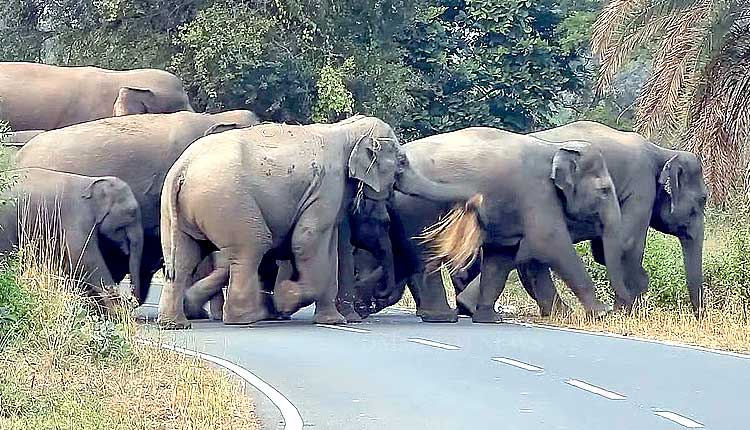
Bhubaneswar: The Odisha Assembly was informed on Tuesday that a total of 344 wild elephants have died across the state between April 2022 and March 10, 2026, highlighting persistent challenges in wildlife protection.
Forest, Environment and Climate Change Minister Ganesh Ram Singkhuntia, in a written reply to a query by MLA Pradip Kumar Dishari, said the deaths were attributed to a range of causes, including poaching and accidents.
According to the data shared in the Assembly, 23 elephants were killed by poachers during the period, while 15 died in accidents. The remaining deaths were due to other natural and incidental causes.
District-wise, Dhenkanal district reported the highest number of elephant deaths at 53. This was followed by Keonjhar district (42), Mayurbhanj district (39), Angul district (39), Cuttack district (37), Sambalpur district (25), and Sundargarh district (21).
A year-wise breakdown shows fluctuating trends in elephant mortality. As many as 93 deaths were recorded in 2022–23, followed by a decline to 66 in 2023–24. However, the number rose sharply to 105 in 2024–25. In the current financial year financial year, 80 elephant deaths have already been reported up to March 10.
The minister also outlined steps taken by the state government to curb elephant deaths and strengthen conservation efforts. These include the establishment of anti-poaching camps, intensified foot patrolling, and the use of artificial intelligence to monitor the movement of elephants and track potential poaching activities across forest divisions.
Additionally, the government has deployed anti-depredation and anti-poaching squads, introduced incentives for informers, and formed joint task forces. Coordination meetings are being held with multiple departments, including railways, energy, and fisheries and animal resources, to mitigate risks such as train hits and electrocution.
Measures like online compensation for affected communities and large-scale awareness campaigns have also been implemented to reduce human-wildlife conflict and support conservation initiatives.