



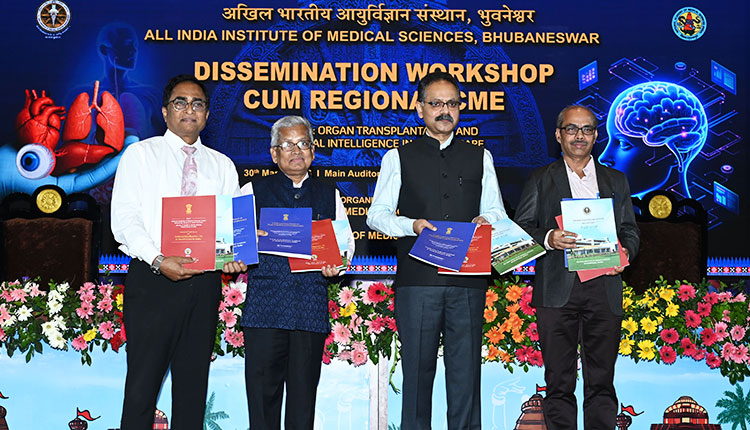
Bhubaneswar: A dissemination workshop-cum-regional Continuing Medical Education (CME) programme on “Organ Transplantation and Artificial Intelligence (AI) in Healthcare” was successfully organised by the All India Institute of Medical Sciences (AIIMS), Bhubaneswar, in collaboration with the National Academy of Medical Sciences (NAMS) on Monday.
The programme witnessed participation from over 300 doctors representing four states—Odisha, West Bengal, Bihar, and Jharkhand—along with eminent experts in the fields of organ transplantation and AI in healthcare. The attendees included representatives from AIIMS Patna, AIIMS Deoghar, AIIMS Kalyani, and AIIMS Bhubaneswar, among others.
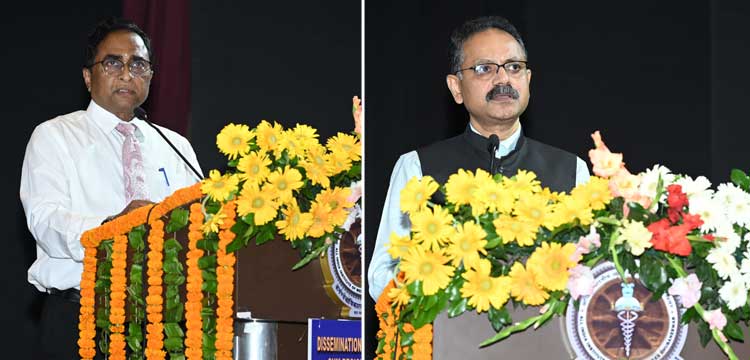
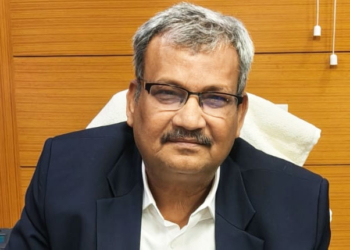
Addressing the inaugural session, Subhasish Panda, Additional Secretary, Prime Minister’s Office (PMO), New Delhi, highlighted the transformative potential of AI in organ transplantation. He stated that AI could pave the way forward for organ transplantation by integrating vast datasets and assisting specialists in making informed decisions. He emphasised that AI can facilitate efficient donor-recipient matching using genetic, clinical, and laboratory data; enable real-time tracking of organ availability; optimise transportation routes for faster delivery; and improve decision-making through predictive analytics and dashboards.
Panda further stated that India ranks as the third leading country globally in organ transplantation, with approximately 20,000 transplants conducted last year. However, he pointed out that nearly 82% of donations come from living donors, with women constituting the largest donor group. A significant proportion of transplants occur in the private sector, limiting affordability. He stressed the need for increased public awareness and greater participation from government institutions.
He added that AI could connect the entire ecosystem by identifying where organs are available and determining optimal transportation routes, ensuring minimum time for organs to reach their destinations for transplantation.
He also noted that, under the vision of the Prime Minister and the efforts of the Government of India in conjunction with state governments, access to medical care, treatment, and medical education has significantly improved. The World Health Organization (WHO) has recognised India as a leading country globally in reducing the maternal mortality rate (MMR) and infant mortality rate (IMR).
Lauding the progress of AIIMS Bhubaneswar, the senior bureaucrat remarked that the city, which earlier lacked advanced healthcare facilities, now hosts one of the most prominent AIIMS institutions in the country, comparable to AIIMS New Delhi.
Prof. (Dr.) Ashutosh Biswas, Executive Director & CEO of AIIMS Bhubaneswar, underscored the urgent need to expand donor pools, strengthen institutional readiness, and align with national policy strategies. He announced that AIIMS Bhubaneswar is committed to establishing a regional centre of excellence for organ transplantation and artificial intelligence.
Digambar Behera, President of NAMS, highlighted the stark demand-supply gap, stating that India requires nearly five lakh organs annually, but only about 3% of this demand is met. Over 82,000 patients remain on active waiting lists.
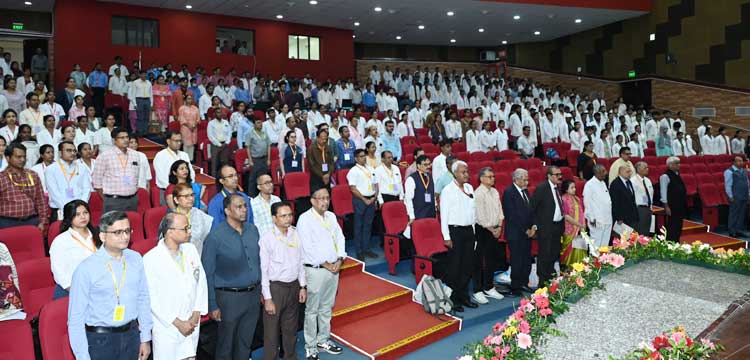
Bhagirathi Dwibedi, Organising Secretary of the CME, delivered the vote of thanks.
Other eminent dignitaries included Meenu Singh (Executive Director & CEO, AIIMS Rishikesh), Sachidananda Mohanty (Executive Director & CEO, AIIMS Awantipora), Arvind Sinha (Executive Director & CEO, AIIMS Kalyani), Yogesh Kumar Chawla (Former Director, PGIMER and Chairman, Task Force, NAMS), Shreepad Karmalkar (Director, IIT Bhubaneswar), Subrat Kumar Acharya (Former President, AIIMS Bhubaneswar), Y. K. Gupta (President, AIIMS Kalyani), Umesh Kapil (Secretary, NAMS), and U. K. Satapathy (State Nodal Officer, SOTTO Odisha). NITI Aayog Member V. K. Paul addressed the gathering virtually.
The CME also featured distinguished experts from premier institutions such as IIT Bhubaneswar, PGIMER Chandigarh, NISER Bhubaneswar, OTTET, IISER Berhampur, and IGIMS Patna, as well as national transplant organisations including ROTTO and SOTTO.
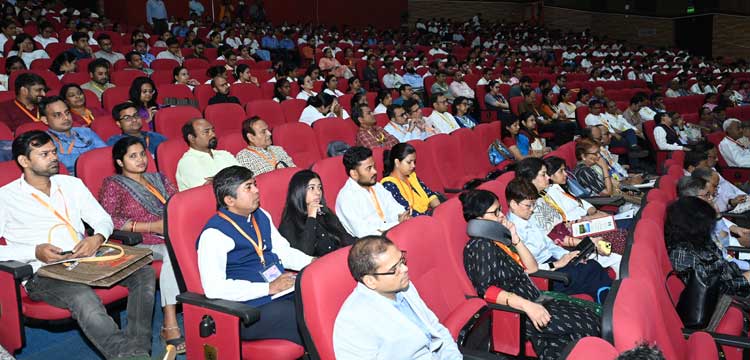
The day-long CME covered a wide range of critical topics, including ethical and legal challenges in organ transplantation, national guidelines and recommendations, institutional preparedness and programme development, antimicrobial resistance and pharmacotherapeutics, strategies to promote organ donation, and the role and scope of AI in healthcare.
The CME concluded with a consensus on strengthening collaborative efforts, enhancing awareness, and leveraging artificial intelligence to improve outcomes in organ transplantation across India.