

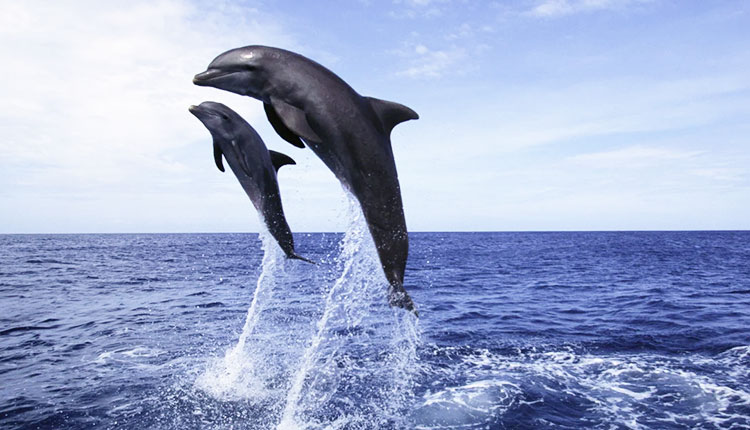
Bhubaneswar: In a significant move to strengthen wildlife conservation efforts, authorities on Tuesday launched the annual dolphin census at Chilika Lake, Asia’s largest brackish water lagoon. The systematic exercise, which began early in the morning, aims to assess the population, distribution, and movement patterns of dolphins across the lagoon’s vast ecosystem.
The census commenced at around 6 am, with 18 specialised teams deployed across the lake. Each team comprises a wildlife expert supported by five to six trained enumerators. The counting operation is scheduled to continue over several days and will conclude on January 22, 2026.
Of the total teams, ten began their survey from Balugaon, while the remaining eight set out from Satapada. Together, they are covering 18 clearly demarcated routes spanning the southern, northern, and central sectors of Chilika, as well as the outer channel.
To ensure accuracy and scientific rigour, GPS-enabled boats are being used to follow fixed transect lines. Teams are equipped with binoculars, range detectors, drones, and compasses to aid in precise observation and data collection.
Speaking about the operation, Wildlife Forest Division DFO, Balugaon, Amlan Nayak said the census is being conducted following the dolphin estimation methodology prescribed by the Chilika Development Authority. “Volunteers from organisations such as WWF and WTI, along with representatives from OUAT, various government and non-government bodies, and wildlife experts, are participating in the exercise,” he said, adding that the daily counting activity is expected to be completed by noon.
To minimise disturbance to dolphins during the census, wildlife authorities have requested all motor boat associations to suspend boat operations in Chilika Lake between 6 am and 12 noon.
Officials believe the data gathered through this carefully coordinated effort will provide crucial insights into dolphin population trends and the overall health of the lagoon’s ecosystem, further reinforcing conservation strategies at one of India’s most ecologically significant wetlands.