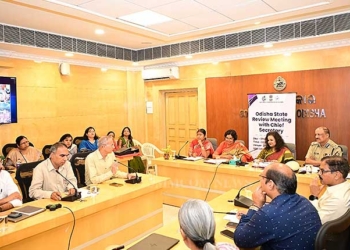




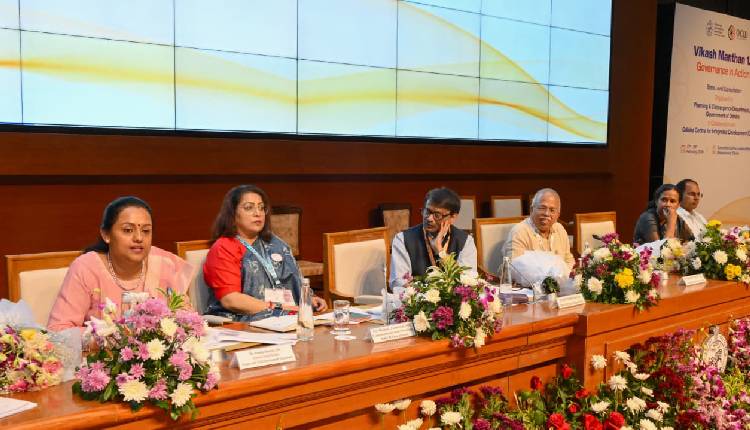
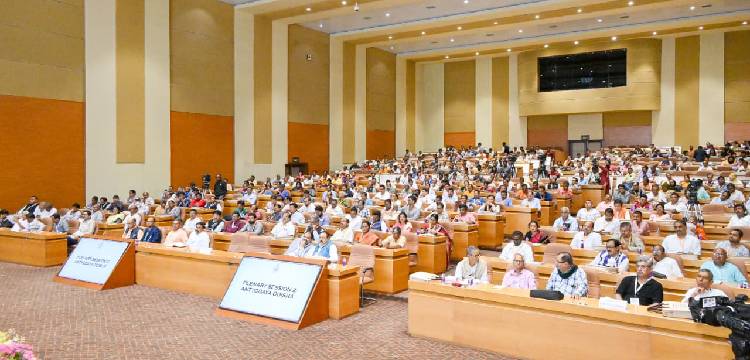
Bhubaneswar: The Capital city witnessed a focused policy dialogue on inclusive growth as the Planning & Convergence Department, Government of Odisha, in collaboration with the Odisha Centre of Integrated Development (OCID), organised an insightful session on “Antyodaya Odisha” during Vikash Manthan 1.0 – Governance in Action at the Convention Centre, Lok Seva Bhawan. The deliberations brought together senior policymakers and sectoral leaders to chart a roadmap for people-centric and equitable development aligned with the vision of Viksit Odisha 2036 and Viksit Bharat 2047.
The session was moderated by Santosh Tripathy, Vice Chancellor of Fakir Mohan University, with Aswini Mohapatra, former Dean of Jawaharlal Nehru University, serving as co-moderator. Discussions centred on strengthening last-mile service delivery and ensuring that development benefits reach the most marginalised sections of society.
Mrinalini Darswal, Commissioner-cum-Secretary of the Women & Child Development Department, highlighted the State’s push for women-led growth through flagship initiatives such as SUBHADRA, Mission Shakti and Lakhpati Didi. She noted that more than one crore beneficiaries are being supported under SUBHADRA, while Odisha has emerged as a national leader with over 17 lakh Lakhpati Didis, reflecting the government’s emphasis on financial independence, entrepreneurship and enhanced female labour force participation.
Aswathy S., Commissioner-cum-Secretary of the Health & Family Welfare Department, outlined the Healthy Odisha Vision 2047 roadmap, which focuses on universal healthcare access, strengthening the continuum from primary to tertiary care, reducing out-of-pocket expenditure and leveraging technology to improve service delivery across the State.
Parameswaran, Commissioner-cum-Secretary of the ST & SC Development Department, underscored the importance of inclusive and balanced growth through effective last-mile delivery, socio-economic empowerment and preservation of tribal cultural identity. He emphasised that dignity, equal opportunity and sustainable development for marginalised communities remain central to Odisha’s governance framework.
Monisha Banerjee, Director, Social Welfare, Women & Child Development Department, spoke about Odisha’s convergence-driven nutrition initiatives, including Purna Aahara and Pada Pushti Karyakram. She highlighted that targeted outreach, growth monitoring and focused interventions in vulnerable and tribal regions have led to measurable improvements in maternal and child nutrition outcomes.
The session reaffirmed Antyodaya — uplifting the last person in the queue — as the guiding principle of governance in Odisha, reinforcing the State’s commitment to inclusive, equitable and people-centric development.