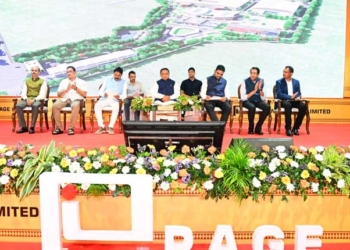




Puri: India witnessed a historic step toward coordinated clean-energy action as the Global Energy Leaders Summit (GELS) 2025 concluded in Puri, Odisha. Touted as the country’s first COP-style platform for interstate coordination, the Summit brought together policymakers, industry leaders, researchers, and global experts for two days of discussions, deliberations, and strategic agreements.
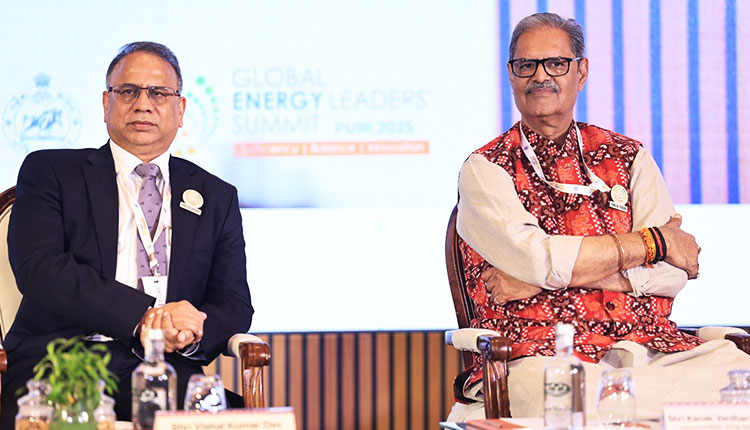
The high-level summit culminated in a press briefing attended by Kanak Vardhan Singh Deo, Deputy Chief Minister of Odisha (Energy, Agriculture & Farmers’ Empowerment); Vishal Dev, Principal Secretary, Energy and Electronics & IT; and Vivek Agarwal, Country Head, Tony Blair Institute for Global Change.
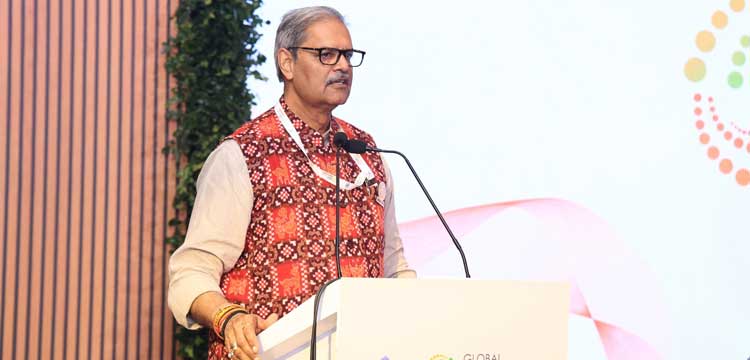
Over two days, GELS brought together a distinguished group of leaders, policymakers, industry CEOs, global experts, and researchers for a structured series of closed-door deliberations, thematic panel discussions, technical deep dives, and knowledge-sharing sessions. These engagements explored frontier issues such as AI-enabled grid security, carbon markets, advanced financing, clean-tech innovation, and institutional reforms. Collectively, they laid the groundwork for a long-term, collaborative platform to guide India’s energy sector toward a clean, resilient, and innovation-driven future.
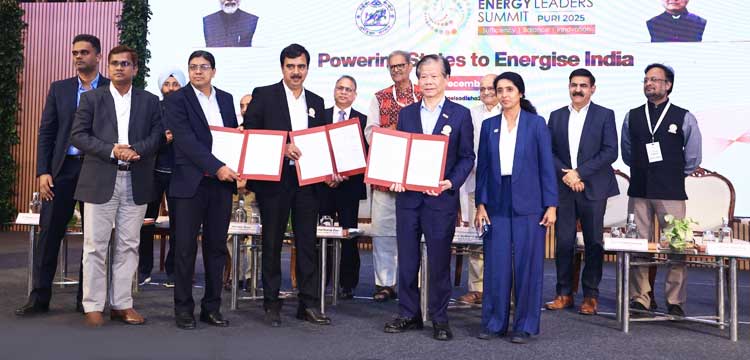
Four Strategic MoUs Signed
A major outcome of GELS 2025 was the signing of four strategic MoUs to accelerate research, pilot projects, and clean-energy deployment across Odisha. These agreements reinforce the Summit’s commitment to long-term cooperation, innovation, and institution-building.
-
Pilot Projects in Renewable Energy – NTU Singapore, GRIDCO, and IIT Bhubaneswar
A trilateral MoU was signed between Nanyang Technological University (NTU), Singapore, GRIDCO, and IIT Bhubaneswar to collaborate on advanced renewable-energy pilot projects and applied research. -
Green Hydrogen Centre of Excellence – GRIDCO, ReNew, IIT Bhubaneswar, and Avaada
This initiative advances India’s green hydrogen mission by establishing a Green Hydrogen Centre of Excellence in Odisha to support R&D, demonstrations, and capacity building. -
Renewable-Energy Development Partnership – NLC India Renewables Ltd (NIRL), OREDA, GEDCOL
A tripartite MoU was signed to jointly develop renewable-energy projects across Odisha. -
Clean-Energy Deployment Framework – SECI, OHPC, GEDCOL, and OREDA
A multi-agency MoU was signed between the Solar Energy Corporation of India (SECI), Odisha Hydro Power Corporation (OHPC), Green Energy Development Corporation of Odisha (GEDCOL), and Odisha Renewable Energy Development Agency (OREDA) to accelerate renewable-energy development and integrated planning.
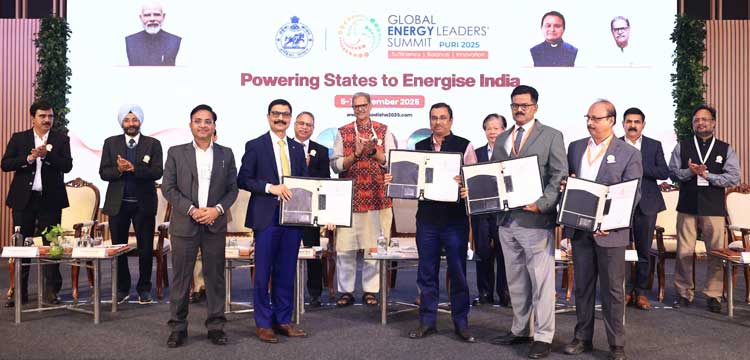
Launch of the Draft Puri Declaration
Based on discussions over the two-day summit, and with inputs from the Union Power Ministry and the Ministry of New and Renewable Energy, a draft of the Puri Declaration was presented, marking a significant step toward an enduring, cooperative framework for India’s clean energy transition. The draft has been circulated to states for consultation and consensus-building, ensuring that the final declaration is truly co-authored and collectively owned.
Thanking the visiting dignitaries and expressing optimism for the Puri Declaration, Kanak Vardhan Singh Deo said, “The process of consensus for the Puri Declaration is underway, and once complete, it will be a collective acknowledgment that no state can progress alone and our collective promise that none will have to.”
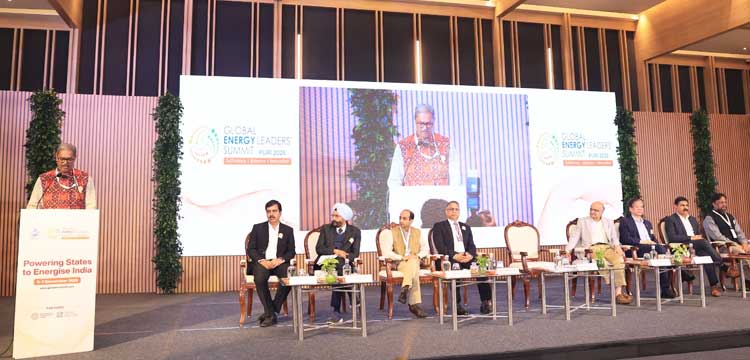
B.V.R. Subrahmanyam, CEO of NITI Aayog, congratulated the Odisha government for leading a summit of this scale and significance. “The summit should serve as a platform for collaboration between states,” he said, urging the hosts to organize it annually and assuring that participation will grow as states recognize the value of such a collaborative platform.
Vishal Dev emphasized that GELS 2025 “demonstrated a clear appetite among states and institutions for coordinated action and shared frameworks,” adding that the Summit’s outcomes reflect consensus on the structural reforms required over the coming decade. Offering the vote of thanks, Professor Anoop Singh noted, “GELS has lived up to its promise as a platform where leaders don’t just discuss challenges; they co-create solutions.”
GELS 2025 also reaffirmed its strong sustainability commitment. The Summit was organized in accordance with ISO 20121 – Event Sustainability Management Systems, and a full carbon-footprint assessment was conducted by an external sustainability partner. All greenhouse gas emissions generated during the event were measured, verified, and neutralized through monitored local afforestation initiatives, positioning GELS as one of India’s first major energy conferences designed for carbon neutrality. GELS set an example by being the first event in Odisha to achieve carbon neutrality. The total carbon footprint of the event was calculated at 45.33 tonnes of CO₂, covering all activities, including international flights. Carbon neutralization is being achieved through the plantation of 1,130 trees in Nuapada, which began today.
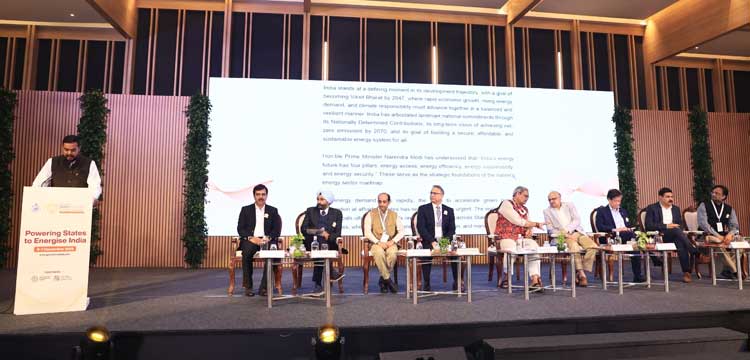
As GELS 2025 drew to a close, leaders reiterated that this is only the beginning. The Puri Declaration will now serve as the guiding framework for ongoing working groups, interstate coordination mechanisms, and annual follow-ups, ensuring that the momentum generated at Puri translates into sustained national action. With Odisha leading the efforts, India is poised to advance a coordinated, collaborative, and inclusive clean-energy transformation supporting the nation’s long-term development and Net Zero ambitions.