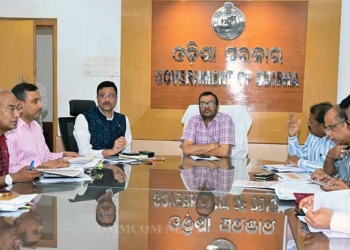




Bhubaneswar: Modern scientific and technological interventions will be applied to Odisha’s traditional brass bell metal and Dhokra handicrafts to enhance product quality, boost production, and improve artisans’ livelihoods, said Minister of Handlooms, Textiles and Handicrafts Pradeep Bal Samanta on Tuesday.
Inaugurating a workshop and training camp at the CSIR–Institute of Minerals and Materials Technology (IMMT), the Minister said that integrating modern technology with traditional craftsmanship would enable artisans to produce superior-quality goods at lower cost and with reduced physical effort. He noted that the adoption of cleaner and time-efficient technologies would also help minimise pollution while increasing overall productivity.
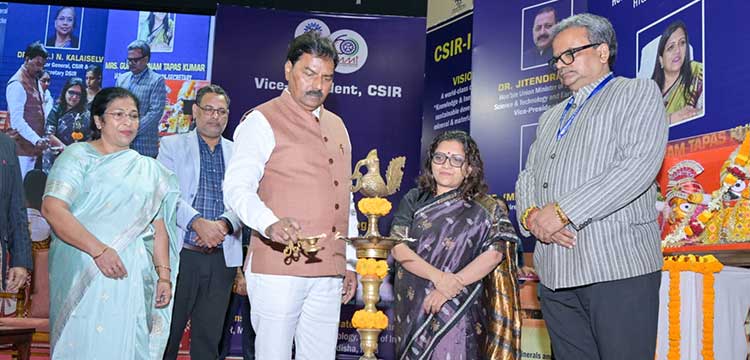
“The use of scientific methods will significantly improve the marketability of brass bell metal and Dhokra handicrafts. This will lead to higher sales and ensure better economic conditions and sustainable livelihoods for artisans,” the Minister said.
Addressing the gathering, Commissioner-cum-Secretary of the Handlooms, Textiles and Handicrafts Department, Guha Poonam Tapas Kumar, emphasised that combining traditional skills with scientific knowledge is key to producing high-quality products that appeal to consumers and strengthen business prospects.
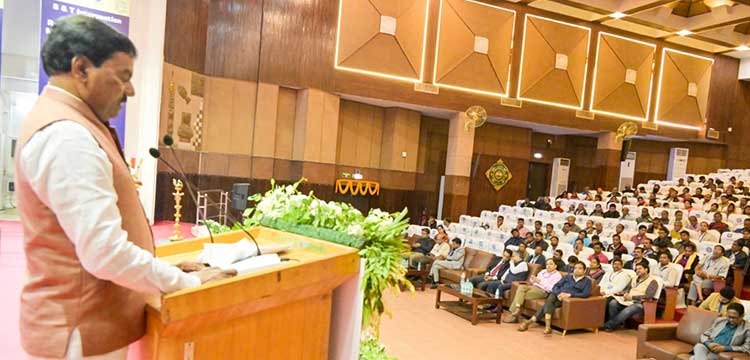
CSIR–IMMT Director Dr. Ramanujan Narayan said the initiative aims to take Odisha’s rich metal craft heritage to global markets through technology-driven innovation. Handicrafts Director Dr. Nivedita Pusti expressed hope that the training camp would help restore the lost glory of traditional metal crafts, generate new employment opportunities, and contribute to strengthening the rural economy.
The workshop and training camp were jointly organised by the Directorate of Handicrafts and CSIR–IMMT as part of efforts to revitalise Odisha’s traditional metal crafts. More than 250 artisans engaged in brass bell metal and Dhokra crafts from 13 districts of the state participated in the programme.
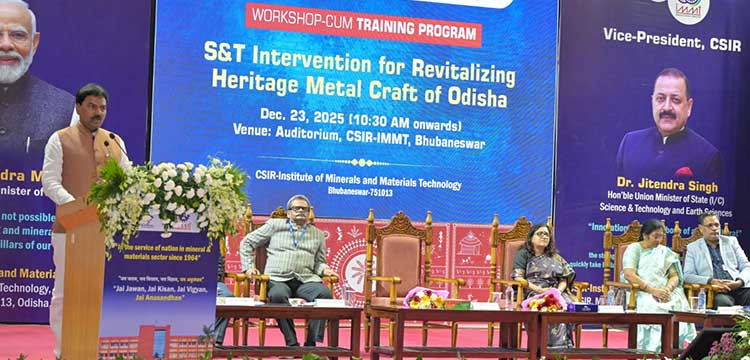
The camp is expected to enhance artisans’ technical skills while creating pathways for improved income and long-term economic growth.
Scientists from CSIR–IMMT, including Dr. A. K. Chaubey and Dr. Y. S. Choudhury, along with Deputy Director of Handicrafts Mangobinda Jena and several Deputy Directors, Assistant Directors, and Handicrafts Development Officers from various districts, were present on the occasion.