



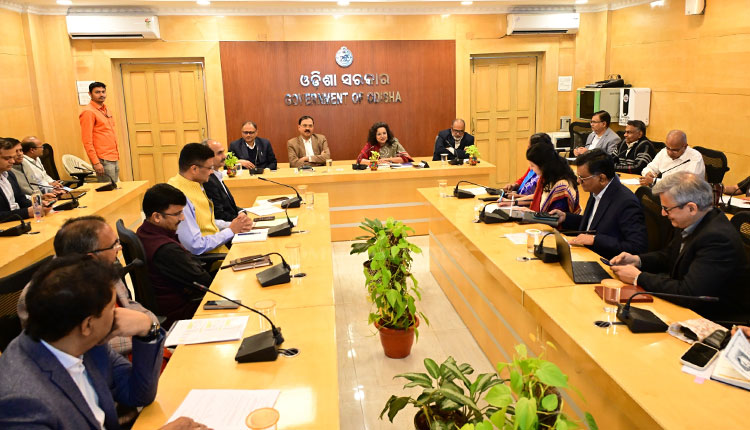
Bhubaneswar: Shortly after assuming charge as the Chief Secretary of Odisha, Anu Garg on Thursday chaired her first all secretaries-level meeting, setting the tone for an aggressive, reform-oriented administrative agenda aligned with the state’s long-term Vision 2036 and Vision 2047 goals.
During the meeting, the Chief Secretary reviewed the implementation of the 15-point directives issued by Chief Minister Mohan Charan Majhi and issued detailed instructions to ensure efficient, accountable and citizen-centric governance across departments.
Emphasising outcomes-driven administration, Garg stressed the need to review the first two-year action plan under Odisha Vision 2036–2047, pursue targeted interventions for achieving double-digit economic growth, and expedite the filling up of vacant posts across departments. She also underlined the importance of exemplary action against inefficient and incompetent employees to establish a clean and effective governance system.
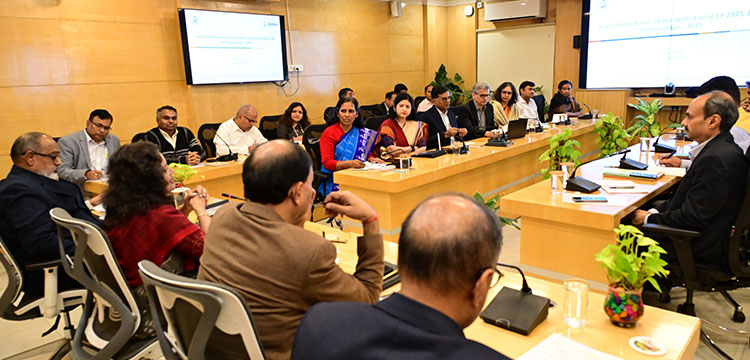
The Chief Secretary directed departments to prepare an annual training calendar under Mission Karmayogi for continuous capacity-building of government employees. She also called for project-wise monitoring to maintain quality while accelerating the execution of district- and state-level projects, alongside regular reviews of budgetary outcomes.
With just three months remaining in the current financial year, Garg placed special focus on financial performance, urging departments to step up programme expenditure to meet targets set for the 2025–26 Budget, while also taking concrete measures to achieve revenue collection goals.
She highlighted the need to accelerate capital expenditure in key sectors such as infrastructure, industry, ports, roads, bridges, drinking water, irrigation, energy and urban development. Under the Mission “Power” programme for rural development, she stressed ensuring electricity, piped drinking water and all-weather road connectivity to every village.
Significantly, the Chief Secretary directed that government presentations and meeting minutes be prepared in Odia, and instructed departments to update their websites in both Odia and English. She also mandated time-bound grievance redressal within 10 days, with proper documentation, and asked senior officers to record district tours and follow-up actions on the inspection portal.
The meeting also reviewed key takeaways from the 5th National Chief Secretaries’ Conference, held in New Delhi on December 27–28, which was chaired by the Prime Minister. Among the priorities discussed was the development of every Anganwadi centre as a “centre of happiness”, with adequate infrastructure and amenities. Garg directed that toilet facilities be provided and maintained in all Anganwadis by March 8, marking International Women’s Day.
Highlighting the role of higher education in state and national development, discussions were held with the Higher Education and Skill Development Departments on improving academic quality, research, skill development and employment-oriented curricula. Emphasis was placed on preparing a multi-skilled, digitally trained workforce to meet the needs of the industrial sector.
Other focus areas included strengthening sports and co-curricular activities, improving tourism infrastructure and visitor facilities, promoting Atmanirbhar Bharat and Swadeshi ecosystems, and creating sustainable livelihood opportunities at individual and community levels to counter Maoist influence.
Calling for alignment between departmental vision and national priorities, Garg highlighted Odisha’s potential contribution to value-added agricultural production at the global level.
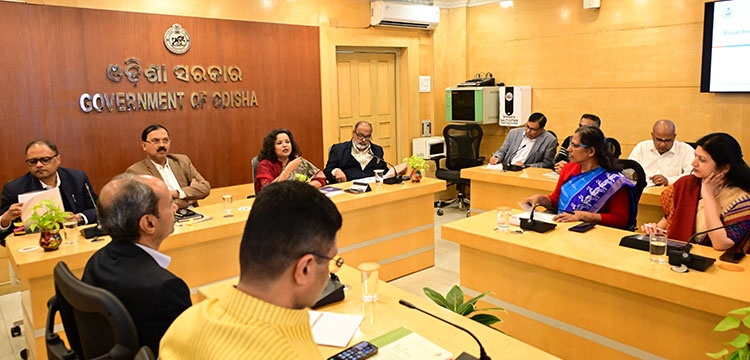
Additional Chief Secretaries Satyabrata Sahu, Deo Ranjan Kumar Singh and Surendra Kumar, along with other additional chief secretaries, principal secretaries, commissioners and senior officials, were present at the meeting.
Appreciating the contributions of departmental secretaries in policy formulation and field-level implementation, Chief Secretary Anu Garg sought collective teamwork to achieve the shared goals of Vikasit Odisha 2036 and Vikasit Bharat 2047.