


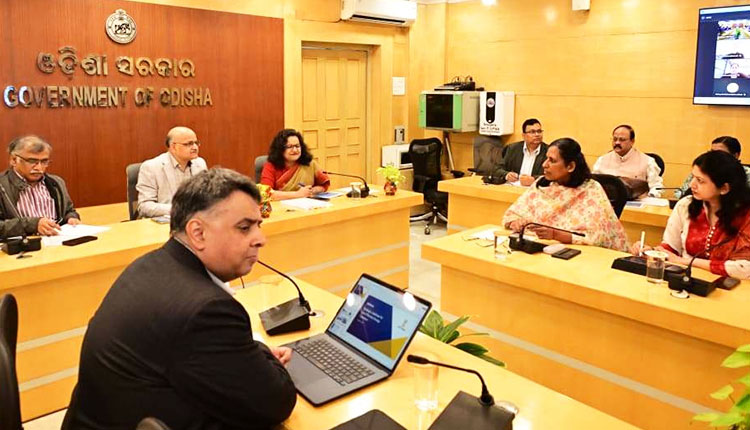
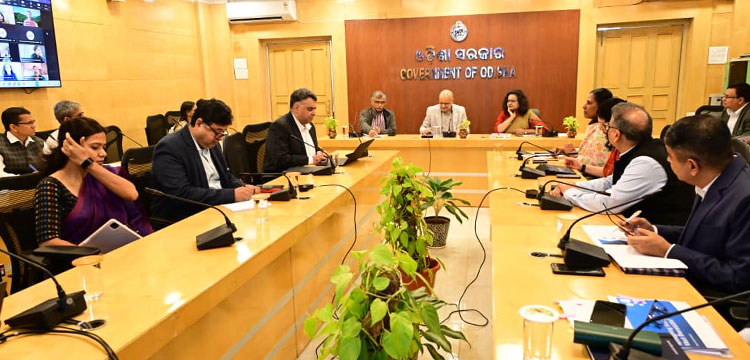
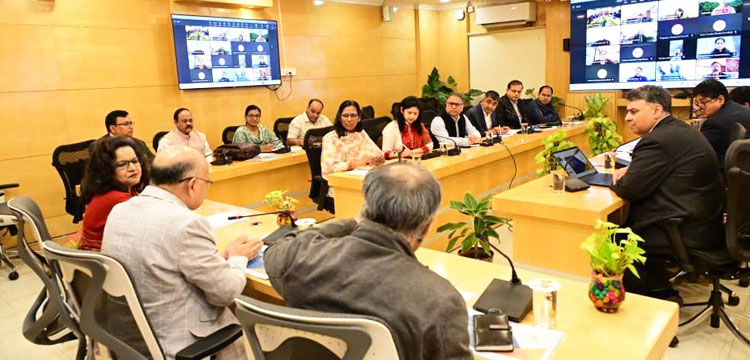
Bhubaneswar: Odisha Chief Secretary Anu Garg, along with top state officials and B. V. R. Subrahmanyam, CEO of NITI Aayog, discussed strategies today to achieve the state’s long-term development objectives under “Developed Odisha by 2036” and “Developed India” at the conference hall of Lok Seva Bhawan in Bhubaneswar.
The meeting, which also included the in-person participation of S. Kishore, a junior official of NITI Aayog, and other officials joining virtually, focused on implementing key schemes and programs aimed at economic growth, social empowerment, and technological innovation.
During the meeting, officials discussed development plans for the Bhubaneswar–Cuttack–Puri–Paradip–Cuttack Economic Region (BCPPER), emphasising its development as a combined economic and urbanisation hub and the need to expedite related initiatives.
Key topics discussed at the meeting included tribal empowerment, focusing on programs for social and economic upliftment. Initiatives highlighted included value-added processing of forest products, such as Sal tree seeds, to support livelihood opportunities and economic growth among tribal communities.
Youth skill development was another major area of focus, with an emphasis on providing vocational training from school through higher education. The goal is to equip young people with the skills required to meet future industry demands and ensure their meaningful participation in the workforce.
The meeting also addressed clean energy and waste management, stressing the importance of renewable energy solutions and sustainable waste systems. As part of these efforts, a Memorandum of Understanding (MoU) was signed between NITI Aayog and the ISEG Foundation to promote collaboration in these sectors.
Finally, technology and innovation were discussed as critical tools to improve social outcomes. Initiatives such as the NITI Frontier Tech Hub (NITI-FTH) and the ‘Living Lab’ initiative were highlighted for their role in addressing malnutrition and promoting nutrition among pregnant women and children.
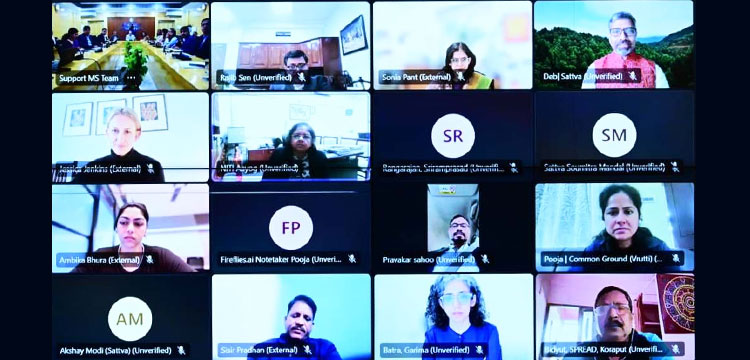
The meeting reinforced the importance of research, technology, and innovation in governance and stressed coordination between state and central institutions to build Odisha as a sustainable, inclusive, and innovation-driven state.
At the state-level meeting, secretaries and senior officials from departments including Electronics & IT, Energy, Skill Development and Technical Education, Higher Education, School & Mass Education, Science & Technology, Labour & Employee Insurance, Housing, Commerce & Transport, Scheduled Castes, Scheduled Tribes, Minorities, Backward Classes, Health & Family Welfare, and Planning & Coordination, among others, actively participated in the discussions.