


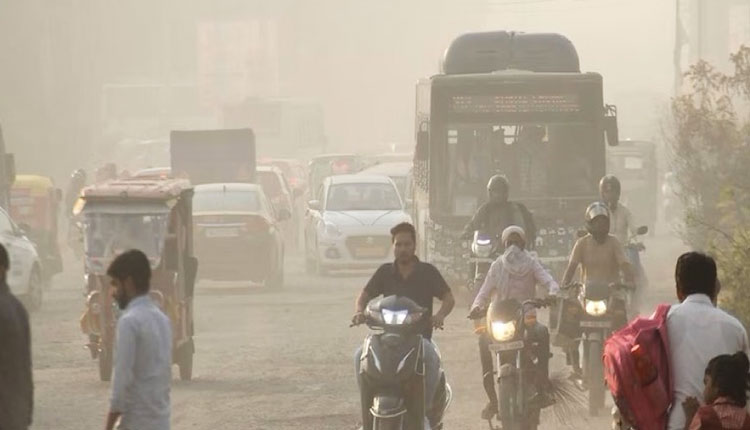
Bhubaneswar: Air quality across large parts of Odisha remained a serious concern on Monday, with several cities recording ‘Poor’ levels of pollution, reflecting a worsening winter trend that continues to impact public health.
According to the Central Pollution Control Board (CPCB) data, the state capital Bhubaneswar reported an Air Quality Index (AQI) of 256, placing it in the ‘Poor’ category, with fine particulate matter (PM2.5) identified as the primary pollutant.
The situation appeared particularly severe in Odisha’s industrial belt. Talcher, a major coal and power-generation hub, recorded an AQI of 257, making it one of the most polluted cities in the country on the day. Angul followed with an AQI of 241, while mining towns such as Barbil and Byasanagar also reported critically high pollution levels, with AQI readings of 235 and 232 respectively. Persistent industrial emissions, coal handling activities and unfavourable winter weather conditions, including low wind speed, are believed to be contributing to the accumulation of pollutants in these regions.
Urban centres beyond the industrial corridor were not spared either. Cuttack recorded an AQI of 251, placing it in the ‘Poor’ category, while Rourkela reported an AQI of 188, categorised as ‘Moderate’ but close to slipping into poorer air quality levels. Balasore also recorded moderate pollution levels, indicating that deteriorating air quality is becoming a statewide phenomenon rather than a localised issue.
Health experts have cautioned that prolonged exposure to air quality in the ‘Poor’ category can cause breathing discomfort among the general population and pose heightened risks to people with asthma, lung and heart diseases. Residents have been advised to reduce prolonged outdoor exposure, particularly during early morning and late evening hours when pollution levels tend to peak during winter.
Meanwhile, the absence of air quality data from several towns, including Baripada and Brajrajnagar, due to insufficient monitoring, has raised concerns over gaps in pollution surveillance in the state. Environmentalists have stressed the need for stronger enforcement of emission norms, improved dust control in industrial and construction areas, and expanded monitoring infrastructure as Odisha heads deeper into the winter months.