


Bhubaneswar: Railway infrastructure development in Odisha has accelerated significantly over the past decade, with 2,150 km of new railway tracks commissioned between 2014 and 2025, more than 3.5 times the 267 km laid during 2009–14, the Centre informed Parliament.
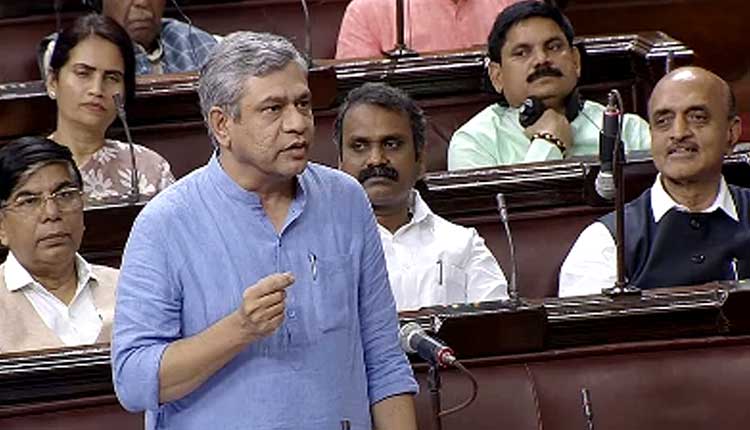
Replying to a question in the Rajya Sabha, Union Railway Minister Ashwini Vaishnaw said the railway budget allocation for projects in Odisha has also increased sharply. While the state received ₹838 crore per year on average during 2009–14, the allocation has risen to ₹10,599 crore for 2025–26, nearly 13 times higher.
According to the minister, 49 railway projects—including 19 new lines and 30 doubling or multi-tracking works—covering 4,010 km have been sanctioned in Odisha at an estimated cost of ₹67,496 crore. Of these, 1,429 km has already been commissioned, with ₹28,043 crore spent till March 2025.
Among the major ongoing projects is the 301-km Khurda Road–Bolangir new railway line, with a revised cost of ₹5,089 crore. So far, ₹4,311 crore has been spent, and ₹1,938 crore has been allocated for 2025–26. The Khurda Road–Daspalla (106 km) and Purunakatak–Bolangir (120 km) sections have already been commissioned, while work is underway on the remaining 75-km Daspalla–Purunakatak stretch. Six of the seven tunnels on this section have been excavated, and all five major bridges have been completed.
Railways are also progressing with the third and fourth line between Salegaon and Budhapank (85 km) to ease congestion in the Talcher region. While Salegaon–Rajathgarh (23 km) and Dhenkanal–Meramundali (34 km) sections have been commissioned, construction continues on the remaining stretches. Two major bridges and two stations have already been completed on the Meramundali–Budhapank section.
Several key railway projects in and around Odisha have been completed recently, including the Haridaspur–Paradeep new line, Angul–Sukinda new line, Sambalpur–Titlagarh doubling, Rourkela–Jharsuguda third line, and Sambalpur–Talcher doubling, significantly strengthening freight and passenger connectivity in the mineral-rich region.
The minister said the Bhubaneswar–Rayagada–Jeypore–Koraput corridor is currently served by the daily Hirakhand Express, while several other trains operate on the Koraput–Kottavalasa and Kottavalasa–Bhubaneswar sectors.
Railway officials noted that project completion timelines depend on factors such as land acquisition, forest clearances, utility shifting, geological conditions and availability of funds. Despite these challenges, railway infrastructure expansion in Odisha is being taken up on priority to improve connectivity and support economic growth.