


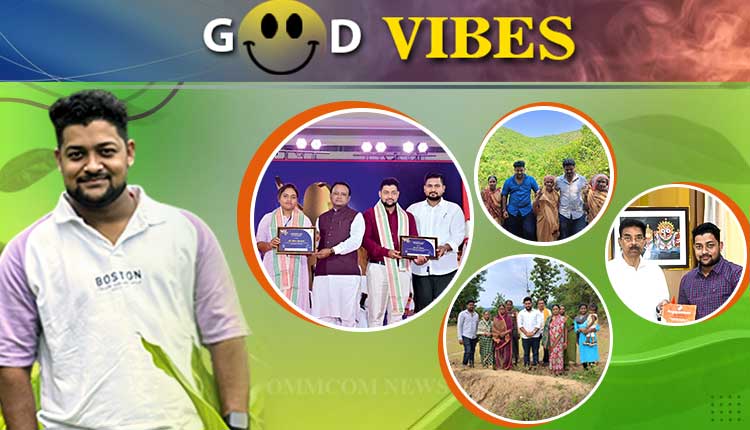
Having a degree in hand is one thing, but putting knowledge into practice is a whole different ball game. This age-old adage rings true in the story of D Shuvam, a young agriculturist who has chosen to dedicate his life to the welfare of farmers and their communities. He is taking bold steps to revolutionise the way farming is done. In a true sense, he is a passionate advocate for organic agriculture and is on a mission to create a network of organic villages, markets, and schools across Odisha.
Driven by a desire to make a tangible difference in the lives of farmers and their communities, he envisioned empowering them to adopt organic practices, improve their livelihoods, and promote sustainable agriculture. After completing his master’s degree in agriculture, he immersed himself in farming activities, launching initiatives to revolutionise the agricultural landscape.
Through his tireless efforts, he has already created 8 organic markets (haats) and transformed 11 villages into organic hubs. His vision is to replicate this model in every district, creating a ripple effect that will benefit thousands of farmers and their families.
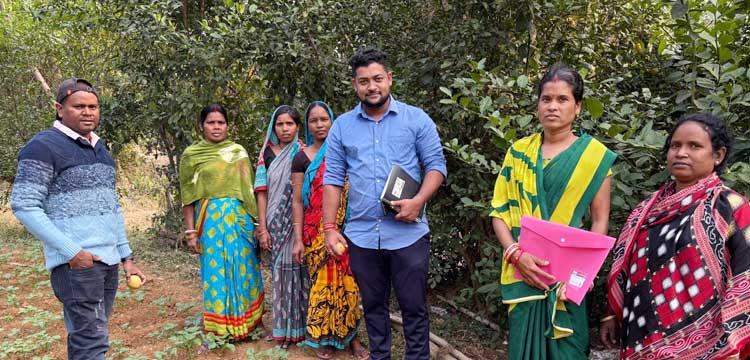
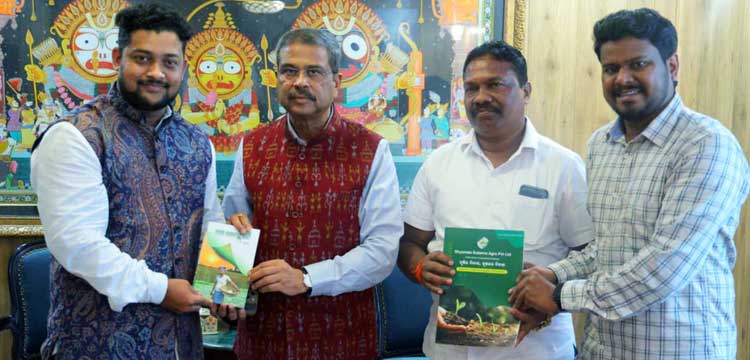
Ommcom News had the pleasure of speaking with Shuvam, founder of Shyamala Subarna Agro, a startup dedicated to empowering farmers through organic agriculture practices. He shared the insights behind creating organic villages, haats, and schools, shedding light on his vision to transform Odisha’s agricultural landscape.
About his startup, Shuvam said, “Our vision is to create an ‘Organic Odisha’ by empowering farmers and enhancing farming through our single-window portal. We provide technical guidance on preparing organic fertilisers and pesticides, certify organic produce, offer handbooks on organic farming, and facilitate marketing of organic products in domestic and international markets.”
“I believe in the ‘eat organic, eat natural’ motto. In today’s era, farmers often rely on chemical fertilisers and pesticides to boost yields, leading to soil degradation and health hazards. It’s time to revisit traditional practices and promote organic farming. As an agricultural postgraduate with 8 years of experience in organic farming, I’ve initiated the organic village movement, aiming to reduce chemical use and promote sustainable agriculture in villages. We’re inspired by Prime Minister Narendra Modi’s vision for a developed and organic Odisha by 2036, and we’re working with farmers to make chemical-free farming a reality. So far, we have initiated the organic village movement in 11 villages,” said Shuvam.
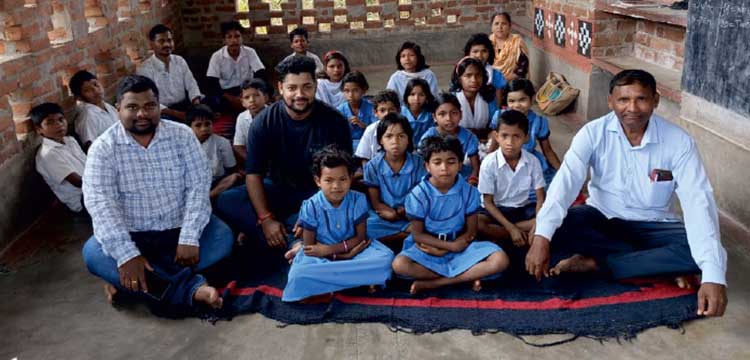
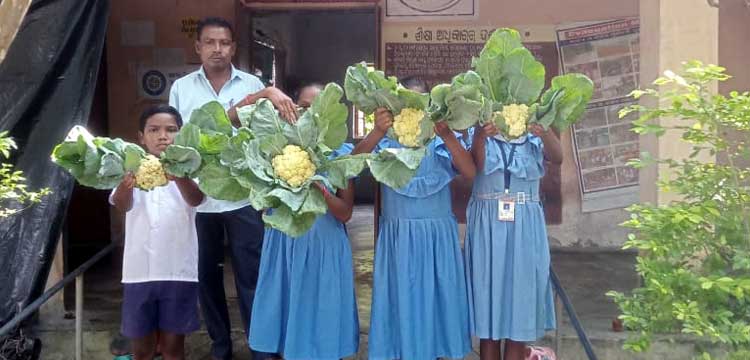
Inspired by the National Education Policy (NEP), his team has launched the ‘School Mein Khetti’ initiative, integrating agriculture into the school programme to shape young minds. The programme is currently implemented in five schools across Deogarh, Rayagada, Khorda, and Gajapati, where students from Class V to VIII are learning about the significance of organic agriculture.
About the ‘School Mein Khetti’ initiative, Shuvam said, “We have introduced a unique programme where students will dedicate one class (30 minutes) every Saturday to hands-on learning in the school’s kitchen garden. They will learn to make organic seed balls, fertilisers, and pesticides. We will also take them on field trips to nearby organic farms to experience cultivation practices firsthand. Our guidance includes preparing seed balls, Jeebamrut, and Ghan Jeebamrut, as well as sharing agriculture statistics of Odisha and India. Plus, we’re offering free registration, farm visits, and more – all to nurture young minds in organic farming.”
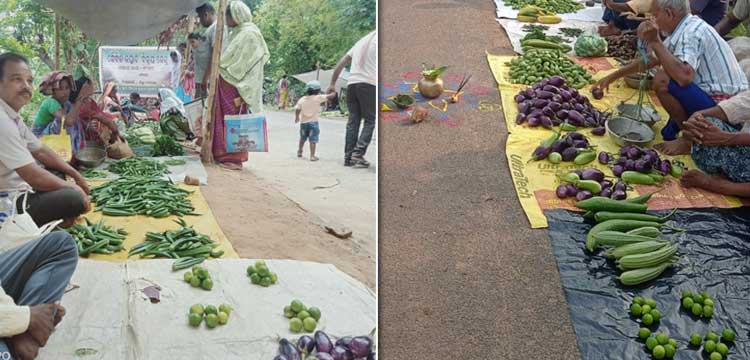
Besides, Shuvam’s Organic Haat initiative empowers farmers by creating community-based markets in villages, enabling them to directly sell chemical-free produce and promoting sustainable agriculture and rural livelihoods.
About the Organic Haat initiative, Shuvam said, “It empowers farmers by establishing community-based haats (markets) in organic villages, enabling them to directly sell the chemical-free produce to promote sustainable agriculture and rural livelihoods. Key features of the initiative include a farmer-centric ecosystem, direct market access, sustainable practices, and community building. Currently, the Organic Haat operates in 8 locations across Rayagada, Gajapati, and Deogarh, as part of the Rasayan Mukt Odisha mission.”
By Rashmi Rekha Das