


Cuttack: On the fertile patha (riverbed) of the Mahanadi in Odisha’s Cuttack district, rows of glossy, ripening ber fruits tell a quiet but powerful story of courage, choice, and rural enterprise. At Barabodia village under Salepur block, Narayan Behura—an educated youth who once worked in the private sector—has rewritten his career path by turning to Indian jujube cultivation, earning lakhs annually and creating local employment in the process.
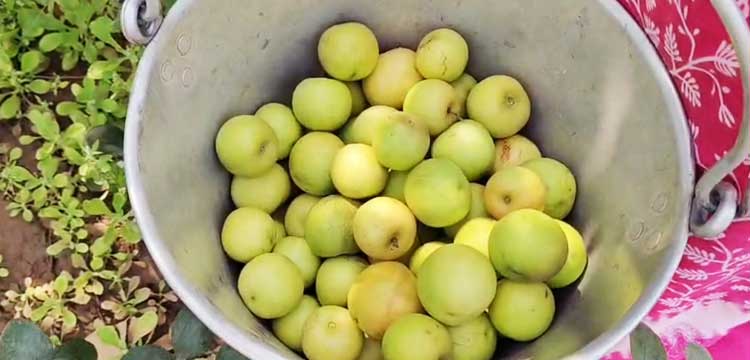
About two years ago, Narayan, around 48, made the difficult decision to quit his private job in search of greater self-satisfaction. Instead of migrating to another city or chasing a different desk job, he looked inward—towards his own land. What was once largely fallow farmland near his home became the foundation of a thriving ber orchard spread across six acres.
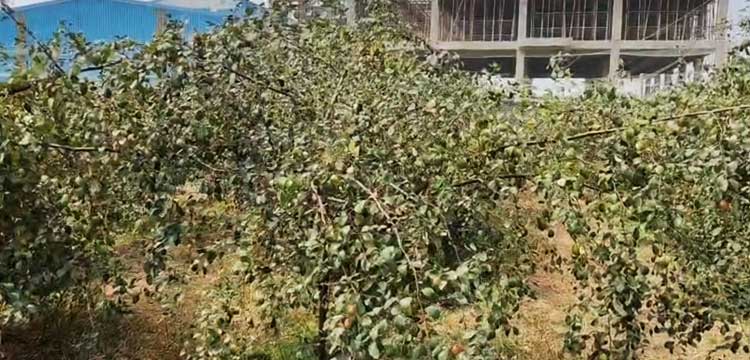
After careful planning, Narayan sourced saplings of three popular ber varieties—Ball Sundari, Kashmiri Red, and Miss India—ordering them online from West Bengal. Today, his farm hosts around 3,600 plants, heavy with fruit, some clusters bending so low they almost touch the soil. The visual itself is a testament to what thoughtful farming and persistence can achieve.
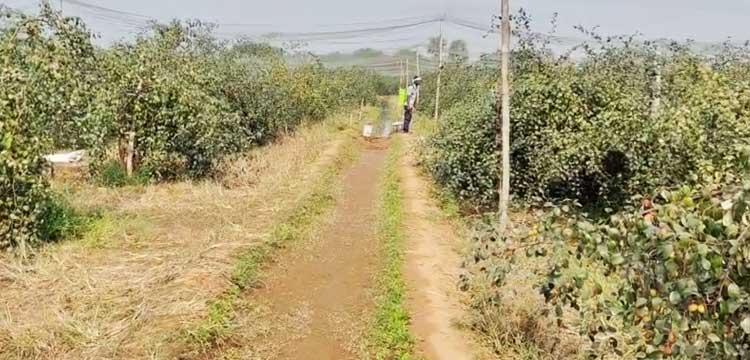
The results have exceeded expectations. In the first year of fruiting, each plant yielded around 12 to 15 kilograms. By the second year, production rose sharply to 30–35 kilograms per plant. The ber is sold at around ₹80 per kilogram, attracting not just local buyers but also traders from outside the region. Narayan estimates his annual income at nearly ₹15 lakh.
Yet, the impact of his initiative goes well beyond personal success. Around 10 to 15 people from nearby areas are regularly employed on the farm for irrigation, maintenance, and harvesting. For many, it has meant steady work close to home.
“I didn’t get self-satisfaction in my private job,” Narayan says. “After quitting, I started cultivating Indian jujube. Today I am happy—not only because I can take care of my family, but also because I can provide employment to others.”
Workers echo this sentiment. Mihir Dehury, who has been associated with the farm for the past two years, says the work has brought stability to many local families. From watering plants to plucking ripe fruit and supplying it to traders, the farm has become a dependable source of livelihood for nearly 15 to 16 people.
The quality of the fruit has also earned a loyal customer base. Buyers like Purna Chandra Behera regularly visit the farm, praising the sweetness and overall quality of the ber. “I have been coming here for the last two years,” he says. “The fruit is very good. I buy in bulk and the business has been profitable.”
Narayan’s success has sparked a quiet agricultural shift in the area. Several farmers along the Mahanadi riverbed in Barabodia have now adopted ber cultivation, inspired by the visible returns and growing demand.
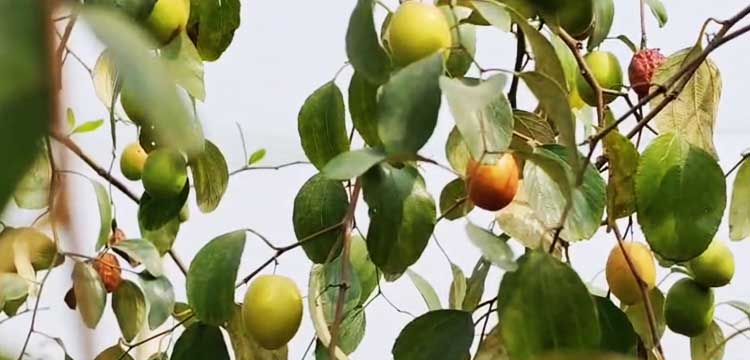
Local Sarpanch Sanjay Kumar Behura notes that under the panchayat, four to five farmers besides Narayan are now cultivating Indian jujube, locally known as barakoli in Odia.
“Ber is a nutritious tropical fruit, and this region is well-suited for it,” the Sarpanch says. “Narayan’s initiative shows that agriculture, when done smartly, can be both profitable and dignified. Today’s youth should look beyond just degrees and office jobs—there are many viable alternatives.”
As customers, traders, and aspiring farmers continue to flock to Barabodia for its famed ber, Narayan Behura’s orchard stands as a symbol of rural entrepreneurship—rooted in the soil, yet rich with possibility.