



Washington: A bipartisan group of 100 members of Congress has urged Homeland Security Secretary Kristi Noem to exempt the health care sector from a new $100,000 fee on employers petitioning for H-1B visas, warning it could deepen staffing shortages and limit access to care across the US.
In a letter dated February 11, lawmakers said they were “deeply concerned about the impact of the September 19 Presidential Proclamation, ‘Restriction on Entry of Certain Nonimmigrant Workers,’ on the health care workforce.”
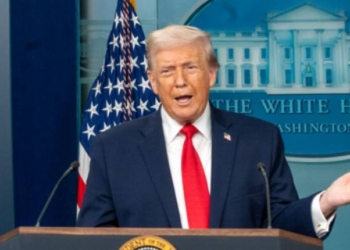
The proclamation imposes a $100,000 fee on employers seeking new H-1B visas but allows the DHS secretary to grant sector-wide exemptions if it “is in the national interest and does not pose a threat to the security or welfare of the United States.”
“We urge you to create a health care sector exemption to prevent additional strain on the health care workforce,” the lawmakers wrote.
Citing federal data, the letter said workforce shortages are already affecting millions.
“According to the Health Resources and Services Administration, nearly 87 million Americans live in areas Federally designated as lacking enough medical professionals to address the community’s health care needs.” Physician demand “could exceed supply by up to 86,000 in the next decade,” and clinical laboratory science programmes are “educating less than half the number of clinical laboratory professionals needed.”
“These shortages cannot be filled by the domestic workforce alone, and projections will worsen if health care employers cannot continue to recruit and retain international health care workers,” the members said.
The letter noted that for more than three decades, health care employers have used the H-1B visa programme to recruit physicians, advanced practice professionals, laboratory workers, and researchers. Many serve in underserved communities and contribute to biomedical research.
“Health care organisations must be able to recruit staff in the most cost-effective manner so they can use their financial resources to hire as many caregivers as possible to take care of their communities,” the letter said. Rural hospitals and urban safety-net hospitals “will most acutely feel the effects of the $100,000 fee.”
“Imposing a $100,000 fee for new H-1B visa petitions will exacerbate hospitals’ existing staffing challenges and could push chronically underfunded hospitals to their financial brink,” the members wrote. “Critically needed open positions will simply go unfilled, leaving rural and high-poverty urban areas without adequate access to care.”
“We strongly urge you to exempt the health care sector from this burdensome fee.”
The letter was led by Representatives Yvette D. Clarke and Michael Lawler and signed by a broad bipartisan group in both chambers, including Senator Kirsten Gillibrand.
It has the backing of major health organisations, including the American Hospital Association, the Association of American Medical Colleges, the Greater New York Hospital Association, and the California Medical Association.
The H-1B visa programme allows US employers to hire foreign professionals in speciality occupations. Indian nationals account for the majority of H-1B approvals each year, with many working in technology, health care and research roles.
Debates over H-1B policy have intensified in recent years amid broader immigration restrictions and workforce concerns. Health care leaders have repeatedly argued that international medical graduates and specialists play a critical role in staffing rural and underserved areas across the country.
(IANS)