


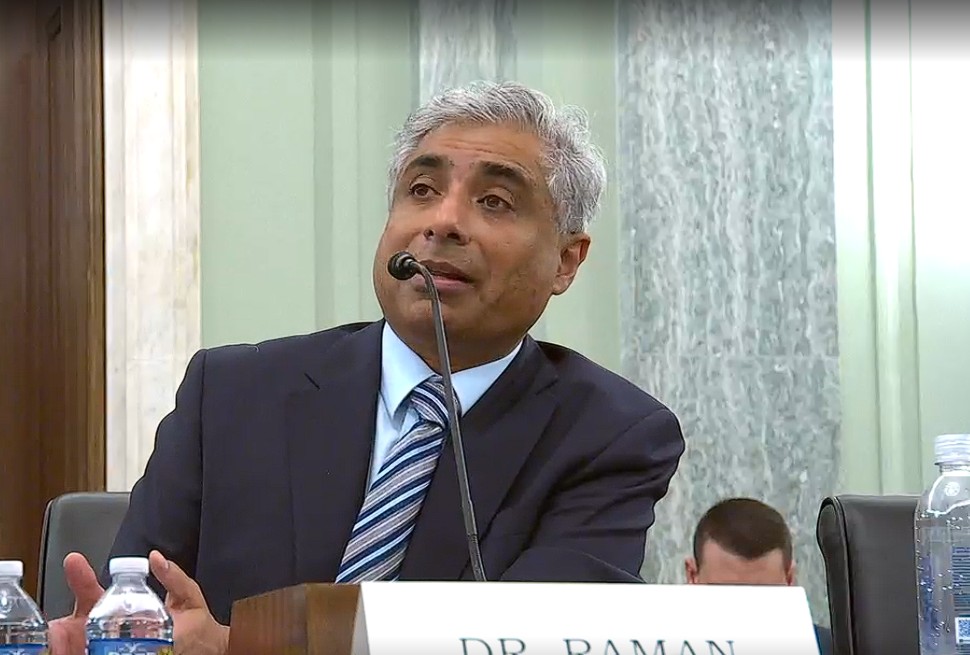
Washington: Arvind Raman, an Indian-born engineering scholar nominated to lead the US National Institute of Standards and Technology (NIST), told senators that the agency must focus on accelerating American innovation and setting global technology standards as the United States competes with China in emerging technologies.
Appearing before the Senate Commerce, Science, and Transportation Committee, Raman described his journey from India to the United States as an example of the opportunities the country offers.
“I first came to the United States 35 years ago from India, actually to study engineering at Purdue University,” Raman said. “I only had a few dollars in my pocket at the time.”
He recalled that his first paycheck as a research assistant was still weeks away and that he survived through a university loan available to students without credit history and help from the local Goodwill store.
“And today I’m the dean of engineering at that great institution,” he said, referring to Purdue University, where he has served as a faculty member for more than two decades and currently leads one of the largest engineering colleges in the United States.
Raman, nominated by President Donald Trump to serve as Undersecretary of Commerce for Standards and Technology and director of NIST, told lawmakers the agency plays a critical role in strengthening American industry and technological leadership.
“NIST has been foundational to advancing American industrial competitiveness,” he said. For more than a century, he said, the institute has helped ensure that American industries and technologies operate on trusted standards that enable innovation and global competitiveness.
“If confirmed, I look forward to working with all of you to help write the next chapter for NIST — that of maximum American innovation enabled by accelerating technology innovation in partnership with industries, with entrepreneurs, with stakeholders,” Raman said.
He also emphasised the importance of international technology standards, arguing that they help determine the rules governing global commerce.
“When America leads in setting global tech standards, it means that the rules, international rules of commerce, are literally being based on American values — free markets, private sector innovation, privacy, freedom of speech,” Raman told lawmakers.
Several senators questioned him about programmes run by NIST, including the Manufacturing Extension Partnership, which supports small and medium-sized manufacturers across the United States.
Raman repeatedly noted that he was not yet in the position and would need to review the details of various programmes before making policy decisions. However, he assured lawmakers that he would comply with congressional directives.
“I will follow the law if confirmed as director of NIST,” he said.
He also pledged to work with Congress to strengthen American leadership in emerging technologies, including artificial intelligence, semiconductors, and advanced manufacturing.
“If confirmed, I’m excited to help NIST deliver on the President’s AI action plan by really maximizing innovation in the entire AI tech stack,” Raman said.
That effort, he added, would include advancing US leadership in chips, biotechnology, quantum technologies, and manufacturing systems.
Raman stressed that NIST must work closely with industry and international partners to ensure that American technologies shape global standards.
“It’s extremely important for America to lead in tech standard setting,” he said, adding that such leadership ensures that American technologies can scale globally and reach wider markets.
Raman also highlighted the broader significance of technological leadership for democracy and national prosperity, noting that advanced technologies increasingly shape both economic competitiveness and national security.
If confirmed by the Senate, he said, his goal would be to ensure that NIST continues to fulfil its “foundational mission and enable an era of maximum American innovation.”
(IANS)