


Kathmandu: As most political parties move ahead to consolidate cadre for the March 5 parliamentary elections, the Nepali Congress (NC) appears to be a divided house.
Analysts warn that failure to settle the party’s internal strife at the earliest could prove costly for the grand old party in the upcoming House of Representatives elections.
In mid-October last year, a majority of representatives at the party’s general convention submitted a petition demanding that the party hold a Special General Convention in the context of the Gen-Z movement that toppled the coalition government led by former Prime Minister K P Sharma Oli in partnership with the NC.
The party’s charter states that if the Central Working Committee deems it necessary, or if forty per cent of the members of the Central General Convention submit a written request to the Centre citing special reasons for convening a meeting, a Special Central General Convention must be convened within three months of the submission of such an application.
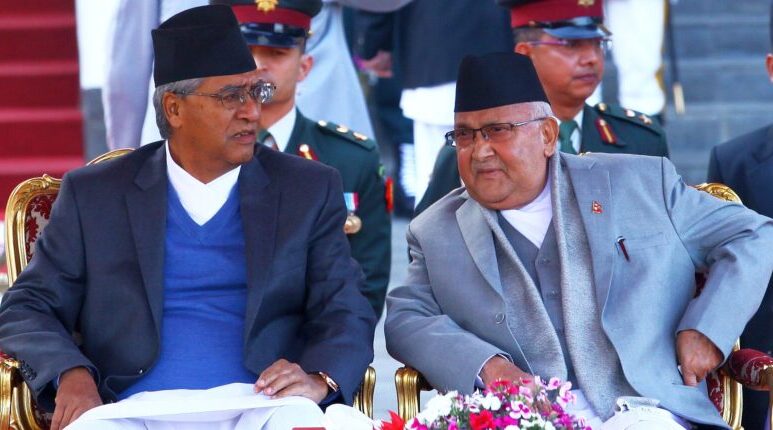
The establishment faction of the party, led by former President Sher Bahadur Deuba, refused to entertain the petition. The party’s Central Working Committee — where Deuba holds a majority — decided in early January to convene the 15th General Convention from May 11 to 14 in Kathmandu.
This prompted the party’s two general secretaries — Gagan Thapa and Bishwa Prakash Sharma, who represent the dissident faction — to announce a Special General Convention scheduled for January 11–12 in Kathmandu on Wednesday.
Supporters of the proposed convention stressed that they have no intention of splitting the party. In response, on behalf of President Deuba, party Chief Secretary Krishna Prasad Poudel issued a statement on Wednesday evening urging elected representatives to refrain from participating in the planned Special General Convention.
According to the party statute, the authority to convene a convention at any level, including a special one, rests solely with the Central Working Committee, and any activities carried out individually by office-bearers or members would be contrary to the charter.
With the party divided over holding a Special General Convention, many Congress leaders fear the dispute could lead to a split. However, Thapa and Sharma view the convention as an opportunity for leadership change, with Thapa in particular aspiring to become the next party President.
Although Deuba cannot contest for a third term as party President under the statutes, he is keen to see his loyalists lead the party. Calls for a Special General Convention intensified following the Gen-Z movement, during which public dissatisfaction with the leadership of major political parties — including the NC, the Communist Party of Nepal (Unified Marxist-Leninist), and the erstwhile CPN (Maoist Centre) — became increasingly vocal over their perceived failure to deliver prosperity.
While the NC remains divided, its longtime rival, the CPN (UML), has consolidated itself under the leadership of former Prime Minister Oli, who was re-elected party president at its recent general convention. The erstwhile CPN (Maoist Centre) has transformed into the Nepali Communist Party through the merger of more than a dozen leftist parties.
Meanwhile, the Rastriya Swatantra Party, which was the fourth-largest party in the dissolved House of Representatives, is strengthening itself by bringing in popular national figures and is expected to challenge the established parties in the upcoming elections.
“If the NC goes to the polls without settling its internal disputes, it could be disastrous for the party,” political analyst Lok Raj Baral said. “For instance, if one faction fields a rebel candidate against the official nominee, votes will be split and the party will lose.”
According to Baral, the best option for the NC would be to hold a Special General Convention, as a majority of elected representatives of the general convention have demanded it in line with the party’s statute.
(IANS)