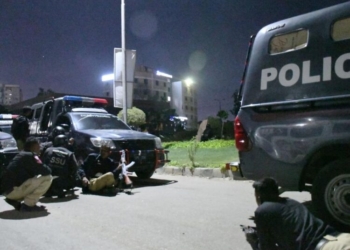



Tashkent: The renewed tensions between Pakistan and Afghanistan – marked by border incidents, suspended peace negotiations and increasing security concerns – have once again drawn attention to the fragile equilibrium of South and Central Asia. These developments, often portrayed as a result of historical rivalry, also showcase Pakistan’s ongoing struggle to balance domestic governance challenges with complex regional obligations, a report has stated.
“The evolving tensions between Pakistan and Afghanistan, which escalated in 2025 amid cross-border incidents and stalled peace negotiations, have renewed concerns about regional stability in South and Central Asia. While these developments are often portrayed as a continuation of long-standing regional rivalries, they also reflect deeper structural issues within Pakistan’s political and security system — particularly the complex relationship between civilian institutions and the security establishment,” a report in an Uzbekistan-based online publication ‘Zamin’ stated.
Since the late 1970s, Pakistan has played an important role in Afghanistan’s security landscape. During the Soviet-Afghan conflict, Pakistan was a key logistical and political partner in international efforts supporting Afghan resistance. However, this engagement evolved into a broader strategy aimed to maintain regional influence and protecting national interests, according to the report. The involvement of Pakistan’s Inter-Services Intelligence (ISI) and other security agencies in Afghanistan’s internal affairs has been analysed by researchers, showcasing Pakistan’s influence and challenges that emerged from it.
“Reliance on non-state actors as instruments of regional policy has proven complex and, at times, counterproductive. While such networks initially provided strategic depth and flexibility, they have also contributed to cycles of instability in Afghanistan and intermittently affected Pakistan’s own internal security environment. These outcomes have complicated Islamabad’s efforts to balance domestic stability, relations with Kabul, and its international partnerships — particularly with the United States and China. One of the key factors shaping Pakistan’s foreign and security policy is the enduring prominence of its military institutions. Analysts note that in critical areas of external relations, civilian governments often operate within parameters set by the security establishment. This dynamic has sometimes limited opportunities for consistent, long-term policymaking and constrained the role of diplomacy in resolving regional disputes,” the report mentioned.
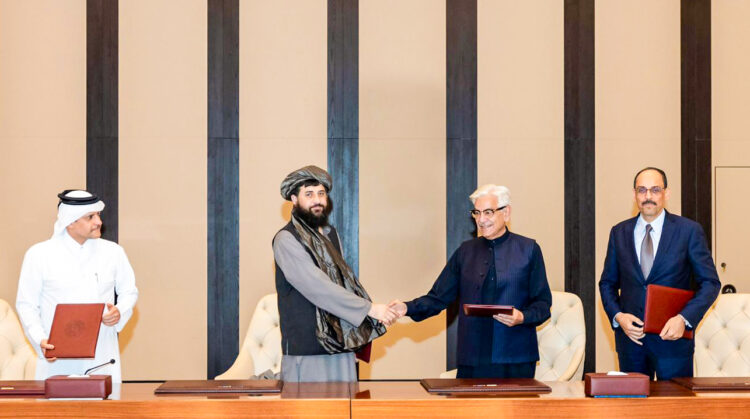
The suspension of talks between Pakistan and Afghanistan showcases these challenges, mutual concerns regarding border management, militant activity and refugee movement. The two nations have stressed the need for cooperation, however, sporadic military actions and rhetoric have impacted diplomatic efforts. The impact of tensions between Pakistan and Afghanistan extends beyond bilateral ties.
“Persistent instability along the Afghanistan–Pakistan corridor poses potential risks for Central Asia, a region increasingly connected to South Asia through trade and energy routes. Disruptions along these corridors could hinder projects such as the Trans-Afghan Railway and CASA-1000, while insecurity may embolden transnational militant groups that threaten regional development and governance. Central Asian governments — particularly those of Uzbekistan, Tajikistan, and Turkmenistan — remain attentive to developments on their southern borders. Their shared interest in stable connectivity underscores the importance of cooperative approaches to border security, counterterrorism, and economic integration,” the Zamin report highlighted.
(IANS)