




Washington: The US risks losing its quantum edge unless it maintains investment, strengthens its workforce, and stabilizes supply chains, lawmakers and officials warned.
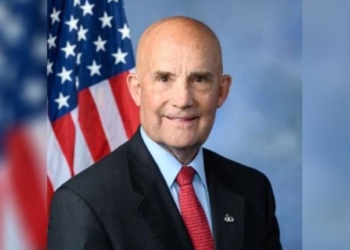
During a Congressional hearing this week, House Science, Space, and Technology Committee Chairman Brian Babin said the Trump administration has identified quantum science, technology, and engineering as a top research and development priority.
As Congress works to reauthorize the National Quantum Initiative, Babin noted the law made quantum research a national focus and turned federal policy.
“These investments lay the foundation for breakthroughs in quantum computing, sensing, and communications,” Babin said, adding that the US must not fall behind as rivals accelerate their efforts.
Ranking Member Zoe Lofgren said US leadership now stands at an “inflection point.” She warned that China has sharply increased spending and is closing the gap in both research output and technology development.
“In 2024, the Chinese Communist Party invested more than four times what the United States did in quantum R&D,” Lofgren said. She noted that China announced a $138 billion fund in 2025 to support emerging technologies, including quantum computing, and that it now leads in some areas, such as quantum communications.
Officials from key science agencies highlighted US strengths but also flagged growing risks.
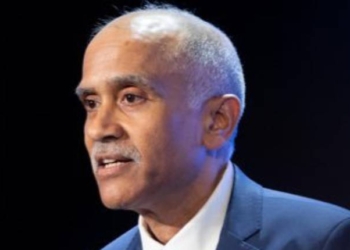
James Kushmerick of the National Institute of Standards and Technology said the US is in a “fierce international competition” and “cannot afford to take its foot off the gas.” He pointed to NIST’s 2024 release of the first post-quantum cryptography standards to protect digital systems from future quantum attacks.
“These standards are laying the foundation to protect trillions of dollars of global commerce,” Kushmerick said, stressing that rapid deployment is now critical.
Saul Gonzalez of the National Science Foundation said decades of early investment had enabled the current wave of quantum advances. But he warned that workforce shortages could slow progress.
“The supply of talent is not keeping up with industry’s demand,” Gonzalez said, noting that quantum research depends on physics, mathematics, engineering, and computer science working together.
NASA’s Mark Clampin said quantum technologies are already being used in space science, particularly in sensing. He cited the Cold Atom Laboratory aboard the International Space Station and new instruments that could measure Earth’s gravity with far greater precision.
“These capabilities support applications such as drought monitoring, water management, and flood prediction,” Clampin said.
At the Department of Energy, Tanner Crowder said the National Quantum Initiative enabled the creation of five multidisciplinary research centers and strengthened coordination across government, academia, and industry. He said the US is now positioned to pursue quantum-enabled supercomputing alongside artificial intelligence and high-performance computing.
Members of Congress from both parties raised concerns about immigration policy, workforce pipelines, and supply chains. Several warned that visa restrictions and uncertainty are discouraging foreign talent, which many witnesses said remains essential to US leadership.
Lawmakers also criticized tariffs and trade disruptions. They said higher costs for imported equipment are hurting US quantum startups and slowing research. Kushmerick said industry partners have reported real impacts and growing uncertainty.
“Uncertainty is bad for science,” he said.
The hearing marked an early step toward bipartisan reauthorization of the National Quantum Initiative. Babin said Congress aims to reinforce US leadership, address workforce challenges, and speed commercialization over the next five years.
Quantum technologies promise major advances in computing power, sensing, and secure communications. Witnesses agreed that leadership will depend on steady funding, skilled workers, and the ability to move discoveries from the lab into real-world use. These factors will be vital in realizing the full potential of quantum technologies beyond the research stage.
(IANS)