


Kathmandu: When 2025 began, Nepal had a strong government with a near two-thirds majority, represented by the country’s two largest political parties — the Nepali Congress (NC) and the Communist Party of Nepal (Unified Marxist-Leninist), or CPN (UML).
After a rollercoaster of three governments in one-and-a-half years — all under former Prime Minister Pushpa Kamal Dahal, also known as Prachanda, either with the backing of the Nepali Congress or the CPN (UML) — the two largest parties came together to form a government led by UML Chair K P Sharma Oli in July 2024.
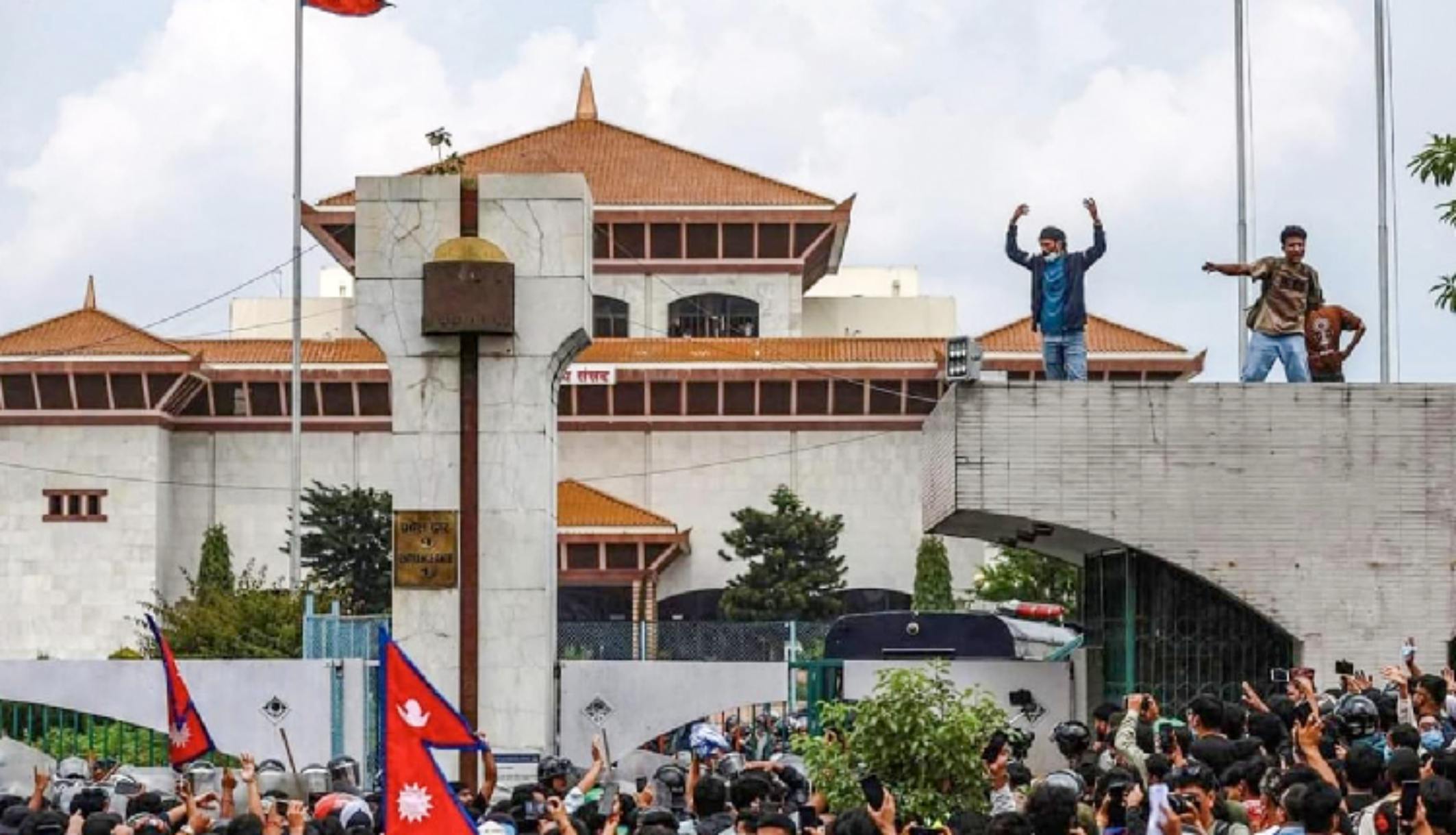
However, the super-majority government, which presided amid allegations of several high-profile corruption cases, failed to withstand the test of the Gen-Z movement in early September 2025. The Oli-led government collapsed within just 24 hours of the start of agitation in Kathmandu on September 8.
A violent crackdown on protesters left 20 people dead on the first day alone, out of a total of 77 deaths linked to the Gen-Z movement. The crackdown triggered violent protests the following day, forcing Oli to step down.
Oli was flown to an army barracks outside Kathmandu in a Nepal Army helicopter for his personal safety, while other top leaders were also provided military protection. The movement witnessed widespread destruction of government and private property, with losses estimated at over NPR 84 billion.
The Gen-Z movement paved the way for the formation of the current interim government led by Sushila Karki, the dissolution of the House of Representatives, and the announcement of fresh elections scheduled for March 5 next year.
“People were fed up with rampant corruption, and the arrogant manner of then Prime Minister K P Sharma Oli further angered Gen-Z youths, bringing them onto the streets against his government,” Lokesh Dhakal, a Nepali Congress leader and political analyst, told IANS. “The government used excessive force against youths — many of them protesting in school and college attire — and the action backfired.”
Following the Gen-Z protests, there was a widespread call for top leaders of traditional political parties to relinquish their leadership positions. Such debates swept through the Nepali Congress, the UML, and the erstwhile CPN (Maoist Centre), which has since transformed into the Nepali Communist Party following mergers with the CPN (Unified Socialist) and others.
Forced out of the Prime Ministerial post by the Gen-Z movement, Oli found political solace after being re-elected at the UML’s 11th General Convention. He has shown no regret over alleged misrule or the use of excessive force to suppress the Gen-Z movement.
Former Prime Minister Sher Bahadur Deuba has also shown no immediate intention of relinquishing party leadership. He has not entertained calls to hold the party’s general convention before elections, as he is ineligible to contest again for party president under the party statute. Prachanda, too, refused to step down as chair of the erstwhile Maoist Centre despite internal pressure, opting instead for party mergers that would guarantee his continued leadership.
“I have not seen any large political party or its top leaders genuinely reflect on their mistakes, judging by their behaviour,” Dhakal said.
He added that while the Gen-Z protests against corruption were justified, the vandalism and arson that destroyed government and private property worth billions of rupees suggested that unwanted elements had infiltrated the movement.
The year also saw some new political parties solidifying their support, especially after the Gen-Z protests.
In the 2022 parliamentary elections, the Rastriya Swatantra Party (RSP), founded by former media personality Rabi Lamichhane, had emerged as the fourth-largest political force.
Lamichhane, who enjoys strong youth support, faced allegations of fraud involving cooperative institutions after entering politics and was jailed. Released recently on bail following a court order, he has been working to bring together Gen-Z leaders and new political forces to strengthen his party ahead of the elections.
Lamichhane has already brought Kathmandu Mayor Balen Shah and Kul Man Ghising, Minister for Energy, Physical Infrastructure and Urban Development — both popular figures — into the party fold. He has offered the future Prime Ministerial candidacy to Shah.
As per the agreement between the RSP and Shah, Shah will become the party’s parliamentary leader and Prime Ministerial candidate after the upcoming House of Representatives election.
With this agreement, Shah has taken a significant step toward emerging as a national leader from his position as a city mayor. Ghising, credited with ending up to 18 hours of load-shedding, is among Nepal’s very popular public figures. His Ujyalo Nepal Party merged with the RSP, with Ghising becoming the party’s senior vice-chair.
It is widely believed that the coming together of these three popular leaders could challenge the dominance of traditional political parties — the Nepali Congress led by Sher Bahadur Deuba, the CPN (UML) led by KP Sharma Oli, and the Nepali Communist Party led by Pushpa Kamal Dahal.
“We may not penetrate the core cadres of old political parties, but we expect support from many voters, including dissatisfied supporters of those parties,” said Anup Upadhyaya, former chair of the Ujyalo Nepal Party, which merged with RSP. “The biggest appeal of the RSP is the collaboration of three popular leaders, and the party could emerge as the largest political force after the upcoming elections.”
RSP Treasurer Lima Adhikari told IANS that the party continues efforts to bring alternative forces and individuals contributing to the nation into its fold. “The Gen-Z movement showed that people are deeply dissatisfied with old parties and their corrupt practices,” she said. “The nation is seeking new ideas and leadership, and the RSP is well-positioned to provide that.”
As the RSP consolidates new forces, traditional parties are increasingly feeling threatened.
The Nepali Communist Party—formed primarily through the merger of the erstwhile CPN (Maoist Centre) and CPN (Unified Socialist) — has already absorbed more than a dozen fringe parties.
Meanwhile, leaders of the Nepali Congress and CPN (UML), the first and second-largest parties in the dissolved House of Representatives, have begun discussing collaboration.
On the economy front, Nepal began 2025 with various policy and legal reforms aimed at attracting investment. However, alleged corruption and misgovernance pushed Gen-Z youths onto the streets on September 8. The two-day protests resulted in dozens of deaths and widespread destruction of public and private property. Government buildings in Singha Durbar, the Supreme Court, the President’s Office, and numerous government offices and police posts across the country were attacked.
Nearly two dozen Bhat-Bhateni outlets, the nation’s largest retail chain, Hotel Hilton Kathmandu, warehouses and vehicle showrooms belonged to Chaudary Group owned by the country’s only billionaire Binod Chaudhary, and numerous other private properties were vandalised and set on fire.
The Asian Development Bank (ADB), in its Nepal: Macroeconomic Update, said the September 8–9 unrest shook private-sector confidence. Nepal’s economy is projected to grow by just three per cent in fiscal year 2025–26, down from 4.6 per cent the previous year—half the government’s target.
Manufacturing growth is projected to moderate sharply to 1.7 per cent this fiscal year from 3.8 per cent a year earlier, weighed down by deepening political uncertainty that has stalled production.
“As uncertainty clouds the investment climate, both domestic and foreign investors are likely to adopt a cautious stance, delaying capital investments and project commitments,” the ADB said.
Nepal’s private sector representatives are more concerned about the current government’s apathy in taking action against those allegedly involved in vandalism and arson attacks. Representative bodies of the private sector earlier complained that the police refused to take complaints against those involved in attacking the private properties.
“From the private sector’s perspective, personal and investment security are a must to encourage investment in the country,” Birendraj Pandey, President of Confederation of Nepalese Industries (CNI), a private sector representative body, told IANS. “Our expectation as the private sector is that the government should bring those involved in arson attacks and vandalism to justice. Impunity will give rise to repeated incidents in the future. It is a matter of establishing the rule of law.”
However, a recent agreement signed between the government and Gen-Z groups suggests that the government would not imprison those who were not seen as involved in vandalism and arson attacks during the initial investigation.
Senior Economist Keshav Acharya said that the private sector would be reluctant to invest as long as politics remain feudal and the government does not ensure that attacks on the private sector would not be repeated.
Whether the planned elections, if held, could bring political stability is open to debate. Nepal has continued to remain in the state of flux even when there was a majority government and nearly two-thirds majority.
“If the polls give a fragmented verdict, the country is likely to see another period of political instability,” Acharya told IANS.
The private sector however expects that the political leaders would learn from what happened during the Gen-Z movement. “Obviously, attacks on the private sector were a big setback for the investment climate in the country. Let’s hope this Gen-Z revolt would also create an opportunity to help promote good governance and create a conducive investment climate.”
(IANS)