





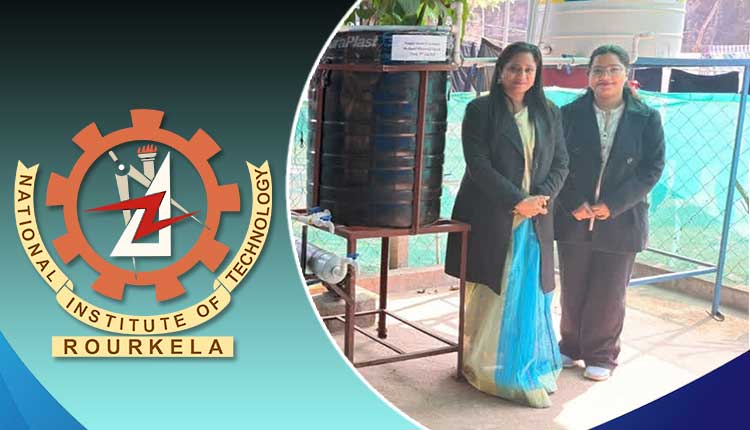
Bhubaneswar: In a pioneering step towards sustainable urban water management, researchers at the National Institute of Technology (NIT) Rourkela have developed a first-of-its-kind, nature-based wastewater treatment system to clean highly polluted laundry wastewater from traditional ‘dhobi ghats.’
The research team, led by Prof. Kasturi Dutta, Associate Professor, Department of Biotechnology and Medical Engineering, along with researchers Divyani Kumari (PhD) and Karthika Shanmugam (M.Tech), has created the “Constructed Wetland–Microbial Fuel Cell (CW-MFC) System”, which combines wetland plants, engineered filtration layers, and electricity-generating microorganisms to treat detergent-laden water efficiently.
Dhobi ghats, which continue to support livelihoods in many Indian cities, face acute water shortages due to drying borewells and limited access to open water. Simultaneously, untreated laundry wastewater containing detergents, dyes, and microfibres pollutes rivers, lakes, and wetlands, harming aquatic ecosystems and worsening water scarcity.
The low-cost, chemical-free, and energy-independent CW-MFC system was tested at NIT Rourkela’s own dhobi ghat, which produces around 1,400 litres of detergent-rich wastewater daily. The pilot system successfully removed surfactants and reduced chemical oxygen demand (COD) to permissible levels (1 ppm) set by the Bureau of Indian Standards.
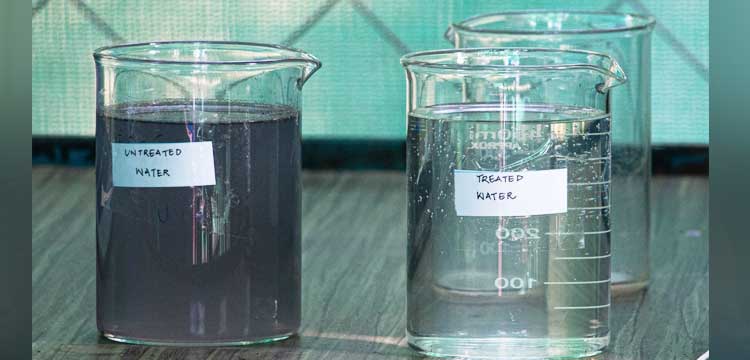
The system features two cylindrical wetland units integrated with microbial fuel cells. Layers of gravel, sand, and soil form the filtration matrix, while graphite chunks at the bottom and top serve as the anode and cathode. Both units are planted with locally available wetland species, Canna spp., to aid natural purification. Wastewater is pumped from the dhobi ghat to an overhead tank, treated in the system, and returned as odorless, colorless water suitable for reuse.
The team is now exploring collaborations with policymakers, municipal authorities, and social organizations for large-scale deployment of the system across cities.