
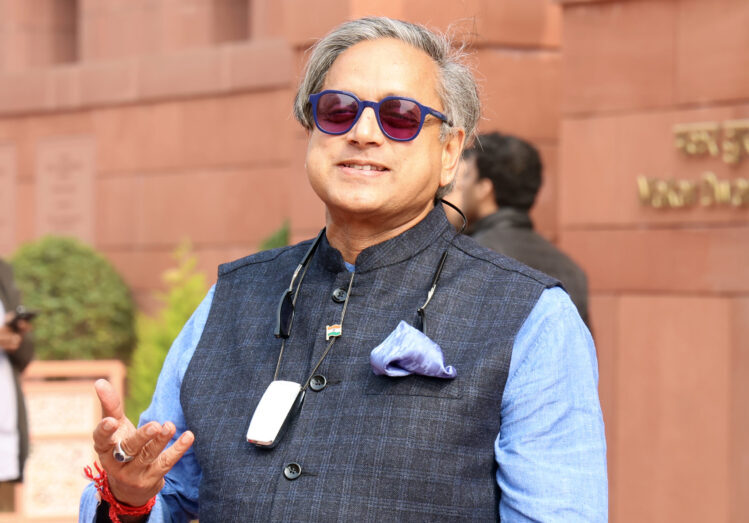
New Delhi: Congress MP Shashi Tharoor on Tuesday hailed the news that the New Zealand Labour Party has officially announced to support the enabling legislation for the New Zealand-India Free Trade Agreement (FTA).
India and New Zealand concluded a comprehensive and long-awaited FTA last month, marking a major economic and strategic milestone. The negotiations were formally launched on March 16, 2025.
In a post on X, Tharoor said the Labour Party’s decision effectively “rescues” the deal for New Zealand Prime Minister Christopher Luxon, as his coalition partner, New Zealand First, remains staunchly opposed and has invoked the “agree to disagree” clause.
“Labour says it’s a continuation of their long-standing efforts to deepen ties with India and that it would be irresponsible to block a deal with the world’s fastest-growing major economy. Though they remain concerned about the ‘dairy deficit’ (the exclusion of core dairy products from the FTA), Labour argued that some progress is better than none and that the deal provides a vital foothold for other sectors like education, tech, and wine,” Tharoor posted.
The ruling National Party offered certain “political concessions” to secure Labour’s votes. A specific one-year review mechanism is built into the agreement.
“This allows for a formal pursuit of ‘further improvements’, specifically regarding dairy and environmental standards. The migration provisions, which are important for India, will also get special scrutiny,” the Congress MP further said.
The enabling legislation will now move through a parliamentary Committee process and is expected to pass with a “super-majority” (National + ACT + Labour) in the first half of 2026.
“We may be in business with New Zealand by the end of the year! NZ may be a small economy, but concluding an FTA with it will be game-changer symbolically and signal that India is increasing its trade channels — and widening its options,” he wrote.
The FTA eliminates duty on 100 per cent of Indian exports, along with a $20 billion investment commitment over 15 years to strengthen long-term economic and strategic cooperation.
(IANS)