





New Delhi: It is easy to criticise. It is even easier to find faults and raise one’s voice in protest. Opposition parties in India have always been good at doing so — and in many ways, that is essential for a healthy democracy. But there are moments when history is unfolding, when decisions are tactical and strategic, and when the nation’s security and long-term interests are at stake. In such moments, perhaps the instinct to immediately point fingers can wait.
Unfortunately, that restraint is not always visible in public discourse.
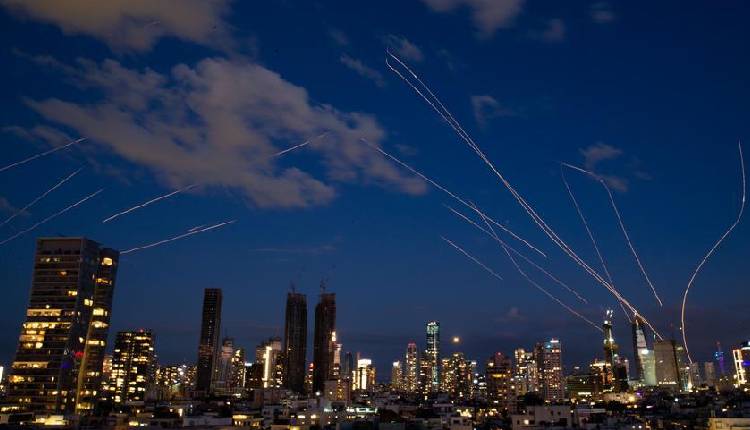
With the escalating tensions between the US, Israel, and Iran threatening to draw much of the world into a wider conflict, the geopolitical situation has become precarious for many countries. For nations like India, the challenge lies in navigating an extremely delicate diplomatic balance. The situation is akin to walking between the devil and the deep sea — a narrow path where a misstep could have far-reaching consequences.
So far, India appears to have managed this balancing act with caution and maturity.
India’s external diplomacy is being handled with notable care by its diplomats, even as the Modi government continues to maintain equilibrium amid rapidly evolving global developments. The complexity of the situation became evident when an Iranian warship, IRIS Dena, which had recently visited Visakhapatnam as part of a naval exercise organised by the Indian Navy, was torpedoed by a US submarine off the southern coast of Sri Lanka in the early hours of March 4.
The incident triggered immediate shock and disbelief, followed quickly by alarm and criticism.
The shock stemmed from the fact that the vessel had been a guest of India only days earlier. It was reportedly not on a combat mission and was believed to be unarmed when it was attacked. The alarm was understandable because the incident occurred so close to India’s maritime neighbourhood. And the criticism came from sections of the Opposition, who saw the episode as an opportunity to question the government’s diplomatic posture.
But was it really a moment that exposed weakness on India’s part?
Not quite. In reality, there was little that New Delhi could have done in that specific situation.
The criticism continued until it emerged that another Iranian vessel, IRIS Lavan, had been permitted to dock in India. External Affairs Minister S. Jaishankar later confirmed this development.
The ship had approached India on February 28 — the very day Israel and the US launched their strikes on Iran, reportedly killing Supreme Leader Ayatollah Ali Khamenei. India approved the request for docking on March 1, and the vessel arrived in Kochi on March 4 — coincidentally, the same day IRIS Dena was attacked. All 183 crew members of IRIS Lavan are currently being accommodated in naval facilities in the area.
This decision demonstrates that India’s diplomacy is neither reactive nor indifferent. It reflects a careful attempt to manage humanitarian considerations while navigating complex geopolitical realities.
Before such facts emerged, criticism had already begun to gather pace. Some voices even attempted to give a religious or ideological colour to what was essentially a complex geopolitical situation. It was also unfortunate that the Congress party rushed to issue statements even before New Delhi formally articulated its position on the rapidly evolving West Asia crisis following the initial US-Israel strikes on Iran.
Why the Congress party chose to respond so quickly is not difficult to understand. Electoral calculations often shape political responses. This is not the first time such reactions have been seen.
The party has questioned several military actions taken by India in the past, including the Balakot airstrikes, Operation Sindoor, and other operations targeting Pakistan-based terror infrastructure. Seen in that context, its quick response to the US-Israel-Iran conflict was perhaps predictable.
New Delhi, however, has largely stayed away from rhetorical posturing. Instead, it has responded cautiously and at appropriate moments, often through actions rather than loud declarations. Diplomacy, especially in times of conflict, rarely unfolds in television studios or on social media platforms. Much of it happens quietly and deliberately behind closed doors.
India’s approach so far reflects that understanding.
India has deep and complex relationships with all the principal actors involved in the unfolding crisis. Its strategic partnerships across the region are well known. At the same time, millions of Indians work across West Asia, and any regional instability directly affects their safety as well as India’s economic interests.
Balancing these relationships during a conflict of this scale is far from easy. India has so far managed to maintain a calibrated approach — neither rushing into dramatic public positions nor retreating into silence.
At the domestic level, too, the government appears to have kept the situation largely stable. In neighbouring countries such as Pakistan and Bangladesh, economic disruptions and fuel shortages have triggered public anxiety. Pakistan, for instance, recently announced an overnight increase of Pakistani Rs 55 per litre in petrol and high-speed diesel prices — the steepest hike in its history. Despite that increase, shortages continue to trouble consumers.
There are also fears of a broader energy crisis in Pakistan, where electricity generation remains heavily dependent on imported LNG.
In contrast, India’s energy supplies remain stable, and daily life continues without major disruptions. At a time of global uncertainty, this relative stability is not insignificant.
Critics argue that the government should adopt clearer or stronger positions on the conflict. But if diplomacy were truly that simple, many of the world’s crises would never have emerged in the first place. Effective diplomacy often requires patience, restraint and careful calculation.
India’s current posture reflects precisely that — a pragmatic attempt to remain non-aligned while engaging constructively with all stakeholders in pursuit of its national interests.
So far, India appears to be walking this geopolitical tightrope with steady steps. The path ahead remains narrow, the winds of global politics are unpredictable, and the risks are real. But careful diplomacy, strategic patience and political maturity can help the country navigate these turbulent times.
In moments like these, the Opposition’s urge to criticise loudly may be strong. Sometimes, the wiser course lies not in shouting louder, but in acting more carefully.
(IANS)