





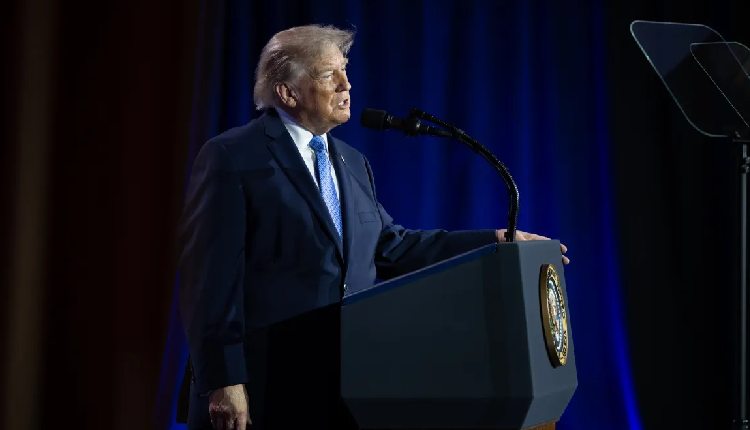
Washington: US President Donald Trump blamed the Iran war, higher petrol prices, and unpopular candidates for Republican midterm election losses, but defended the military action and said he was not looking to escalate the conflict.
In an interview with Ross Douthat for CBS News’ ’60 Minutes’, Trump acknowledged voters’ unhappiness with the war while arguing that preventing Iran from acquiring a nuclear weapon justified his decision.
“They didn’t like the war. They didn’t like the fact that gasoline went up, ’cause I had it down at a low,” Trump said.
He also distanced himself from the election outcome, saying his personal popularity had failed to translate into support for Republican candidates despite an extensive campaign effort.
“Well, number one, I was not on the ballot,” he said.
Douthat challenged that explanation, pointing to candidates Trump had endorsed who lost in traditionally Republican states. Trump defended his choices and argued that his support had helped other candidates win or come closer to victory.
Trump said he had held about 30 rallies in roughly 28 days. He suggested some supporters had stayed home, disliked the candidates, or disagreed with him.
On the economy, Trump pointed to employment figures, stock market gains and investment in factories as evidence that his policies were working. Douthat asked why voters remained unhappy about everyday costs despite those indicators.
“I think it was bad messaging,” he said.
The President blamed the press for failing to report favourable economic news. He said Americans would notice improvements over the next few months as investment and construction activity fed through to the economy.
Douthat questioned Trump’s emphasis on retirement account gains, noting that many Americans were more concerned about wages and petrol prices.
Responding to a question on Vice President J.D. Vance’s social media post in which he blamed the Republican losses on the Iran war, Trump broadly accepted that assessment but said it left out whether the military action had been justified.
“And my answer is an emphatic yes because you can’t let Iran have a nuclear weapon,” Trump said.
He said Vance had been part of the decision-making process. Trump argued that the attack would be judged favourably over time, even if its immediate political consequences were damaging.
Asked whether he would escalate the conflict after the midterms, Trump said: “Well, I’m not looking to. I don’t think there’s any reason to.”
He claimed Iran had been close to agreeing to a deal before the election and said the Republican losses had given Tehran renewed hope. He nevertheless predicted an agreement without providing a timetable or detailed terms.
Trump and Douthat also disputed conditions in the Strait of Hormuz. Trump said the waterway was open. Douthat said shipping depended on a substantial US military presence and asked how an agreement would allow those forces to leave.
Trump said countries protected by the United States would reimburse its war costs. The supplied transcript included no confirmation from those governments or response from Iran to his account of negotiations.
US midterm elections take place halfway through a President’s four-year term. All seats in the House of Representatives and roughly one-third of Senate seats are contested. The results determine the balance of power in Congress. Trump’s Republicans lost their majority in both the House of Representatives and the Senate.
(