





Bhubaneswar: The Odisha government has accorded significant priority to strengthening rural infrastructure and empowering Panchayati Raj institutions in the current budget, with a combined allocation exceeding ₹44,000 crore for key departments.
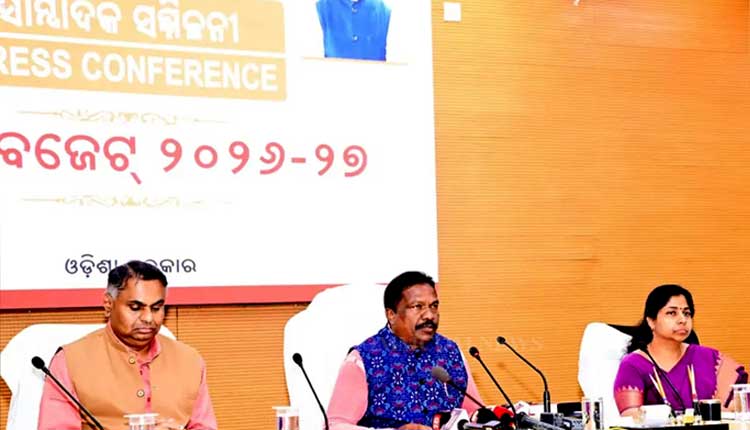
Briefing the media at the Odisha Legislative Assembly on Wednesday, Panchayati Raj, Drinking Water and Rural Development Minister Rabi Narayan Naik said ₹34,104.06 crore has been earmarked for the Panchayati Raj and Drinking Water Department, while ₹10,204.60 crore has been allocated for the Rural Development Department. The proposals have been passed in the House.
The Minister said the enhanced outlay is aimed at expanding drinking water supply, improving rural road connectivity, and generating new livelihood opportunities across the state.
Housing has emerged as a major priority area, with ₹2,445 crore allocated for Pradhan Mantri Awas Yojana (Gramin), ₹2,000 crore for Antyodaya Yojana, and ₹30 crore for PM-JANMAN Yojana to ensure pucca houses for eligible rural beneficiaries.
To boost rural employment, ₹5,575 crore has been earmarked for the ‘VB-G RAM G’ scheme, which guarantees 125 days of work annually, with provisions for wage payment within 15 days and unemployment allowance in case of non-availability of work. An additional ₹1,626 crore has been allocated for Mahatma Gandhi National Rural Employment Guarantee Act (MGNREGA) until the new scheme becomes fully operational.
In a bid to curb distress migration, a special initiative titled ‘Livelihood Enhancement through Karmavardhishnu Method’ will be implemented across 30 blocks in nine districts—Balangir, Bargarh, Kalahandi, Nuapada, Gajapati, Kandhamal, Koraput, Nabarangpur, and Rayagada. The state has approved ₹220 crore for the 36-month mission for 2026–27.
Reiterating the government’s commitment to achieving 100 per cent piped drinking water coverage in rural areas by March 2027, Naik said 77.15 per cent of households had already been covered as of March 1, 2026. To accelerate progress, ₹7,000 crore has been allocated under the Jal Jeevan Mission, ₹495 crore under Basudha Yojana, and ₹1,000 crore for the Rural Piped Water Supply (RPWS) scheme.
The government has also introduced ‘Mission PoWaR’, with an investment of ₹1,000 crore to connect 1,043 unserved habitations through the construction of nearly 8,993 km of roads and ghats.
The Rural Development Department has set a target to complete 5,200 km of roads and 300 bridges during the current financial year, while initiating new projects covering 9,700 km of roads and 350 bridges. Additionally, ₹142 crore has been allocated for road upgrades across 142 Assembly constituencies, and ₹80 crore for disaster-resilient road infrastructure.
Other allocations include ₹102.50 crore for construction of cow sheds in 2026–27.
Naik said the budget reflects the government’s commitment to making rural Odisha self-reliant and ensuring that development benefits reach the last mile, guided by the principles of service, infrastructure creation, and empowerment.