





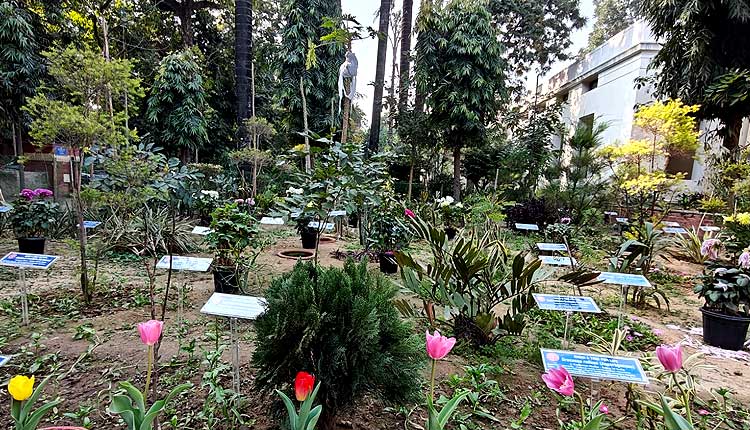
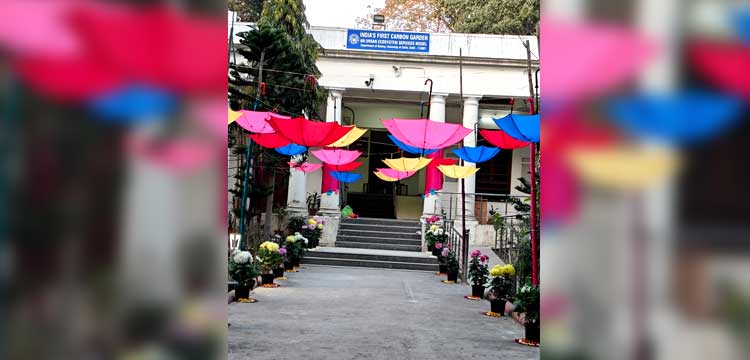
Bhubaneswar: In Delhi, where air pollution is a pressing issue, an innovative solution is taking root. Professor Dinabandhu Sahoo’s brainchild, India’s first carbon garden, is tackling air pollution head-on. This 2000 sq. ft. oasis features 50 plant species that absorb pollutants, producing oxygen and showcasing nature’s remedy to urban toxicity.
According to the World Health Organisation (WHO) every year more than 70 lakhs people die due to Air Pollution across the world. In India, 17 lakh people die every year due to Air pollution. Based on World Air Quality report by IQAir 2025, 13 of the world top 20 polluted cities are from India.
Going by report, air pollution is responsible for nearly 15 percent of all deaths in Delhi in 2023. Further, it was estimated that death attributable to air pollution accounted for economic losses of $36·8 billion in India every year. Professor Dinabandhu Sahoo, known as the founder of Indian Cherry Blossom Festival has now developed India’s First Carbon Garden inside University of Delhi Campus to combat deadly Air pollution.
Sahoo’s vision is contagious – experts are already on board, and over 1000 visitors have expressed interest in replicating the model. Imagine schools, colleges, and offices transforming into carbon sinks, purifying the air and nourishing the soil. This ‘urban ecosystem model’ and ‘mini biodiversity park’ combines hydrophytes, xerophytes, and mesophytes to clean the air.
Developed over three years by botanist Dinabandhu Sahoo, the model is being positioned as a blueprint for cities across the country.
According to Sahoo, plants are mainly indigenous in nature consisting of Hydrophytes, Xerophytes and Mesophytes. It has one of the oldest living organisms which is almost 1.3 billion years old. While trees consume carbon dioxide and store the carbon stock for a prolong period, the bark of the trees which host various types of microorganisms, which consume deadly gases like methane, hydrogen, carbon monoxide and other volatile compounds. Microorganisms associated with bark and leaves can produce special enzymes that converts those harmful gases into useful resources having positive impact on environment and health. In future, Large Carbon Garden can be established in the form of algal ponds, which can also accelerate bioconversion of toxic gases in the surrounding environment.
“It’s about creating a self-sustaining ecological unit where plants and microbes work together to clean the air,” said Sahoo, DU’s research and innovation chairperson.
“In a many ways Delhi University’s Carbon Garden represents a quite shift in how cities might confront environmental stress. Instead of treating pollution only after it spreads, this approach builds self-sustaining ecological defences directly into urban spaces. Experts agreed to Sahoo’s idea. If small carbon gardens are created in every school, colleges, universities, residential and office complex, it will significantly improve air and soil quality as well as mental health. It can give freedom from toxic air, enhance the quality of life, and reduce our medical expense”, said Sahoo.
However, Sahoo’s vision extends beyond the garden, aiming to replicate it across India.