





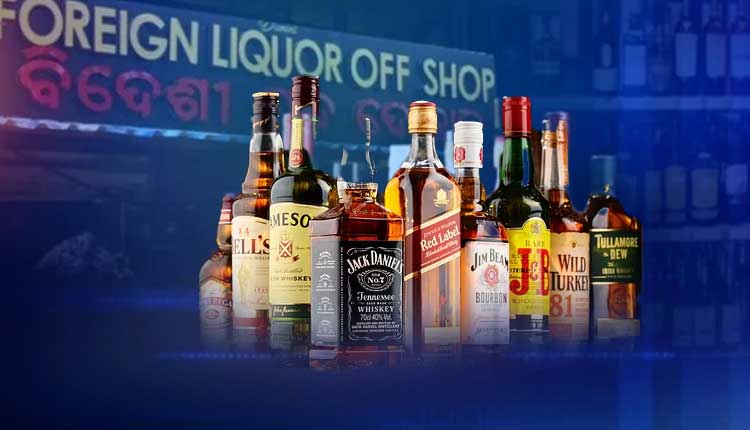
Bhubaneswar: The Government of Odisha has announced a triennial excise policy for the period from April 1, 2026, to March 31, 2029, marking a significant shift from the previous annual policy.
Excise Minister Prithviraj Harichandan presented the new Excise Policy today in the Odisha Legislative Assembly.
Going by new policy, application fees for various excise licences will be increased by 10 per cent, while licence fees will see an annual hike ranging from 10 to 20 per cent. The move is aimed at strengthening state revenue while regulating the liquor trade.
Besides, a 0.5% de-addiction cess on excise duty has been introduced, acknowledging alcohol as a harmful substance. The revenue generated will be used to establish and strengthen de-addiction centers. That apart, excise duty on IMFL and Country Liquor (CL) has been increased.
Going by the new policy, the Minimum Guaranteed Quantity (MGQ) system has been replaced with the Minimum Guaranteed Excise Revenue (MGER) system, reducing pressure on traders to meet quantity targets.
Besides, the state government has decided not to give permission to open new OFF, CL, or OS shops, and no new ON shops will be allowed in rural areas, except for 3-star and above hotels and clubs in industrial areas.
As per the new policy, excise shops will not operate near the Sri Jagannath Temple and Bada Danda (Grand Road) in Puri, and home delivery of alcohol will be prohibited.
Under the new policy framework, out-still (OS) production units must modernize, adopt advanced packaging, and install quality control equipment. Moreover, a Track & Trace system will be introduced to monitor ENA movement and track every bottle from production to sale. Along with this, the state’s excise chemical laboratories will be strengthened and improved through modern technology and trained human resources.
The policy aims to balance revenue generation with social responsibility and promote transparency in the excise sector.