





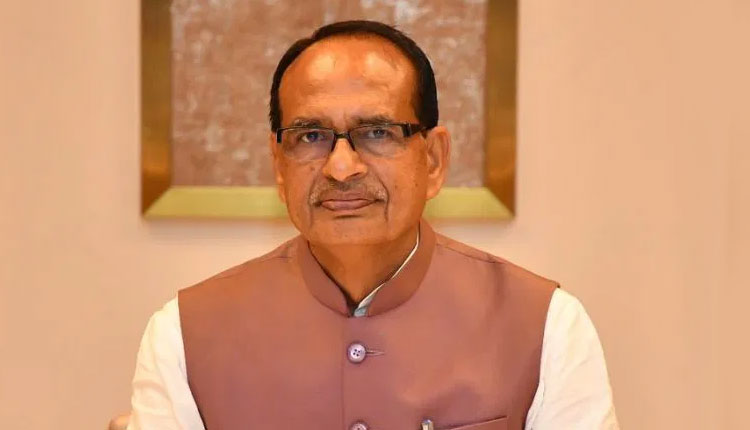
Jaipur: Union Agriculture and Farmers’ Welfare Minister Shivraj Singh Chouhan on Tuesday said that the three primary goals for Indian agriculture were to enhance farmers’ incomes and ensure the country’s food and nutrition security.
Addressing the Western Regional Agricultural Conference organised here, Chouhan stated that formal one-day rabi-kharif meetings are now being replaced by theme-based regional conferences for different agro-climatic zones. He described the initiation of this new conference series in the presence of agriculture ministers, senior officials, scientists, and progressive farmers from Rajasthan, Gujarat, Maharashtra, Madhya Pradesh, and Goa gathered on one platform.
Chouhan said that India’s wheat and rice stocks are so abundant that even storage space poses a challenge, but self-reliance in pulses and oilseeds still needs to be achieved so that food security can be entirely based on the nation’s own production capacity and dependence on imports can be eliminated.
He said that agriculture is the backbone of the Indian economy and farmers its soul, therefore, enhancing farmers’ income, improving their standard of living, and making farming easier remains the government’s top priority, while also emphasising nutrition security as an essential component of policy to provide nutritious food to the public.
The Union Minister described Farmer ID as the most useful system for the coming times, stating that everything from bank loans to government assistance will reach farmers quickly and transparently based on a certified digital profile.
Mentioning global uncertainties in the context of the West Asia situation, he said that in such times of crises, only through digital and data-based agricultural administration can the country and farmers be kept secure, therefore, all states have been urged to complete Farmer ID work in mission mode.
Chouhan informed that the procurement of pulses and oilseeds is being done by the Agriculture Department through the Pradhan Mantri Annadata Aay Sanrakshan Abhiyan (PM-AASHA), while wheat-rice procurement is handled by the Food Department, and procurement approvals are given in accordance with proposals sent by states, but ensuring time-bound procurement is the responsibility of states.
He assured that 100 per cent procurement of pulses such as chana, masoor, and tur will be done, and where physical procurement is not feasible, compensation for the difference between MSP (minimum support price) and market price can be directly provided to farmers’ accounts through price difference payment mechanisms like the Madhya Pradesh model for mustard and soybean.
Mentioning the challenge of falling prices in crops like potato, onion, and tomato due to international factors, he cited the utility of the Management Information System (MIS), under which payment for the difference between model rates and market prices can be made directly to farmers, with 50 per cent share borne by the Centre and 50 per cent by the state government. Additionally, he shared the decision to provide a transport subsidy to state agencies that wish to transport farmers’ produce from production areas to major cities.
Chouhan urged all states that the Viksit Krishi Sankalp Abhiyan will now be conducted according to states’ local conditions rather than simultaneously across the country.
He also informed that from now onwards, institutional support will be provided for the process of preparing states’ agriculture roadmaps; Rajasthan has initiated Centre’s partnership in its agriculture roadmap, and for this, a joint team of ICAR scientists and ministry’s nodal officers will work together with the state government, while full support will be extended to other states for their agriculture roadmaps as well.
Referring to recent weather disturbances that have damaged crops, Chouhan emphasised accurate assessment of losses by states and effective implementation of the Pradhan Mantri Fasal Bima Yojana, so that affected farmers receive full benefits. He stated that the Centre will leave no stone unturned in providing ample support to farmers.
(IANS)