
Puri: The second phase of the inventory of the Ratna Bhandar of Shree Jagannath Temple commenced on Wednesday, following approval by the state government and in accordance with prescribed guidelines.
The inventorisation of ornaments and precious jewels resumed in the morning, with the focus shifting to the Bahara (outer) Ratna Bhandar.
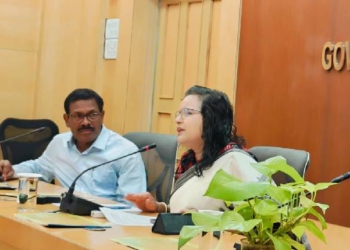
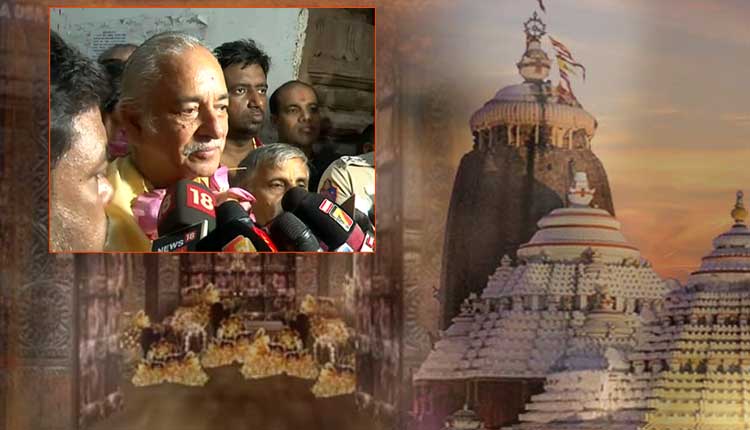
Briefing mediapersons after the first day’s proceedings, Gajapati Maharaja Dibyasingha Deb said the process is progressing smoothly. “Everything is proceeding well with the blessings of Mahaprabhu,” he said.
He informed that after offering darshan, he personally inspected the Bahara Ratna Bhandar in the presence of members of the government-constituted committee, officials and servitors. The inventorisation is being carried out as per the standard operating procedure (SOP), with each valuable item being documented using 3D mapping technology to create a comprehensive record.
The Gajapati Maharaja clarified that there is no plan to evaluate the monetary worth of the ornaments. Instead, detailed descriptions of the jewellery are being recorded to ensure proper documentation for future reference. He added that the Bhitara (inner) Ratna Bhandar will be taken up after completion of the Bahar inventory.
He further stated that there has been no disruption in darshan for devotees during the process. “There is no fixed timeline. The work will be carried out as per Mahaprabhu’s wish,” he said, adding that inventorisation will not be conducted on festival days or during periods of heavy footfall in the temple.
According to the schedule, the Bahara Ratna Bhandar inventory will continue for four consecutive days till April 11. The exercise will remain suspended on April 12 and resume on April 13. It will again be paused on April 14 and 15, before continuing from April 16 to 18. Further phases will be decided subsequently.
The counting exercise had originally begun on March 25, when valuables in the Chalanti (current) Bhandar were inventoried and cross-verified with the 1978 list. The ornaments were segregated, catalogued, weighed, and, for the first time, digitally documented through 3D mapping.