






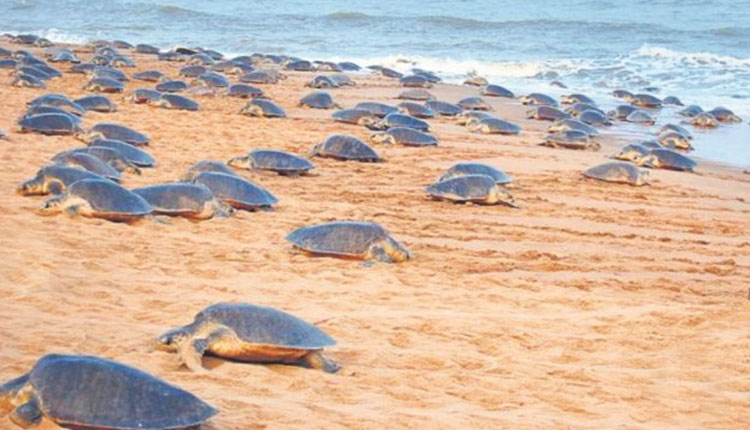
Bhubaneswar: The Rushikulya rookery witnessed a sharp decline in mass nesting of Olive Ridley turtles this season. It registered only 2.05 lakh turtles laying eggs in 2026. This is much lower compared to the all-time high of nearly 9 lakh turtles in the 2025 season.
Natural factors created a huge impact on the delay in arrival of these endangered species. These factors included shrinkage of beach width. Soil erosion occurred across the estuary. There was a sudden rise in sea surface temperature. The absence of southern wind also played a role.
Assistant Conservator of Forests Dibya Ranjan Behera explained these reasons. He said the combination of these elements affected the turtles badly. Podampeta had sheltered a huge number of eggs in the previous year. That year saw large congregations of the sea turtles. However, this year brought significant changes. Environmentalists and researchers found notable erosion of beach soil. This erosion added to the shrinkage of beach width.
The shrinkage stretched across a wide area till Prayagi.This situation prompted the turtles to begin sporadic nesting. They started during the early phase this year on the island beach. Gradually, the mass nesting zone shifted. It moved more towards the Rushikulya estuary.
This happened instead of using a spacious sand bed. Unfortunately, that sand bed was wiped out just before the nesting season. Officials added this detail. It is important to mention that mass nesting was zero in 2023. Nesting numbers remained poor in 2024. On the contrary, 2025 witnessed a record number of arrivals. The turtles came for nearly 10 days that year.