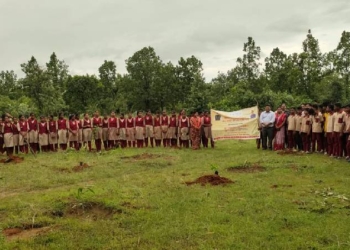







Bhubaneswar: As the Temple City celebrates its 78th Capital Foundation Day (Rajdhani Pratistha Diwas) today, the occasion offers a perfect moment to look back at the remarkable story of its birth as a modern capital.
On this day in 1948, India’s first Prime Minister Pandit Jawaharlal Nehru laid the foundation stone for the new capital of Odisha, marking a bold step towards progress in the post-independence era. Nehru himself gave the city its auspicious name, and his vision was clear — Bhubaneswar should not become an exclusive enclave for the elite, but a living space connected to the common people.
Why the Capital Moved from Cuttack
The shift from the historic city of Cuttack was driven by practical necessities. Cuttack, nestled between the Mahanadi and Kathjodi rivers, faced frequent flooding and had very limited room for expansion. In contrast, Bhubaneswar offered ample open land, a favourable climate, and strategic proximity to Cuttack. After careful deliberations and a unanimous resolution by the Odisha Legislative Assembly on September 30, 1946, the decision was finalised. The site was chosen for its historical significance as an ancient temple town, combined with the ease of land acquisition and scope for planned growth.
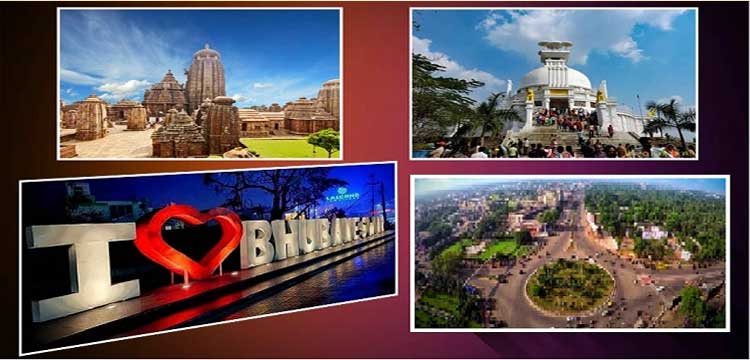
The Master Planner: Otto H. Koenigsberger
The man tasked with shaping this dream into reality was Dr. Otto H. Koenigsberger, a German-Jewish architect and urban planner who had fled Nazi Germany. Appointed in 1946 (with formal engagement around 1948), Koenigsberger brought international expertise to design one of independent India’s early planned cities. He envisioned Bhubaneswar as a modern, functional capital initially meant for around 40,000 residents. His master plan followed a linear layout with a central main traffic artery, from which self-contained neighbourhood units (sectors) branched out like the limbs of a tree. Key features of his design included: A grid-based system that blended open green spaces, parks, and natural ventilation to suit the local climate.
The initial estimated cost was around Rs 2.85 crore, which later rose significantly. Priority was given to key government buildings like the Secretariat, Legislative Assembly, and official residences. Despite delays and the reluctance of some officials to relocate from Cuttack, the new capital gradually took shape. The Odisha Legislative Assembly held its first session in Bhubaneswar in 1949.
From Planned Township to Thriving Metropolis
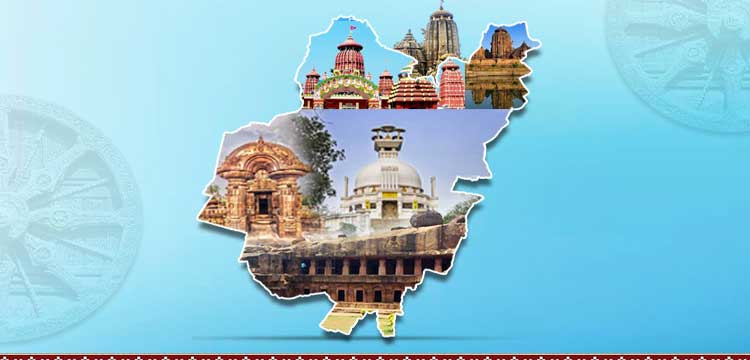
What started as a thoughtfully designed administrative centre has far surpassed its original blueprint. Today, Bhubaneswar stands as a vibrant urban hub of eastern India — a bustling IT and education destination that seamlessly merges its ancient spiritual legacy (as the ‘Temple City’) with modern infrastructure, wide roads, and green spaces.