





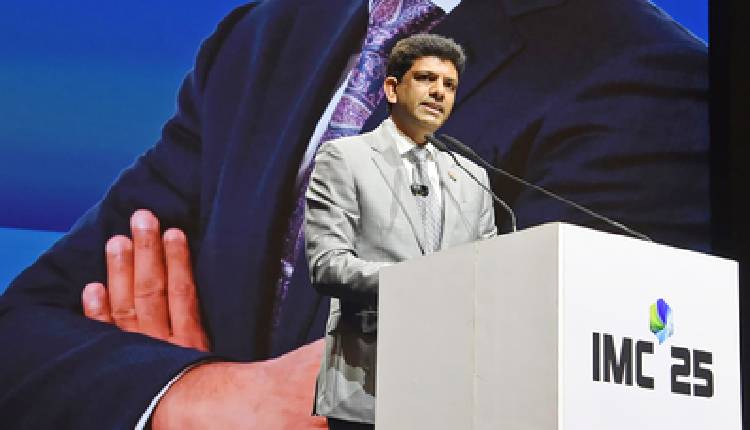
New Delhi: India’s ‘techade’ will be shaped by emerging technologies such as 6G, Artificial Intelligence (AI) and quantum computing, as the country builds on its strong telecom transformation, Dr Pemmasani Chandra Sekhar, Minister of State for Communications and Rural Development, said on Friday here.
Inaugurating the second edition of the ‘COAI DIGICOM Summit 2026’, the minister stated that the telecom sector has undergone transformative changes in recent years and is now poised for the next wave of innovation.
He noted that while India has come a long way, technology continues to evolve rapidly, presenting both opportunities and challenges.
Emphasising the need for collaboration, he said a robust telecom ecosystem must be built jointly by the government and industry.
Highlighting policy initiatives under Prime Minister Narendra Modi, the minister said the Telecommunications Act, 2023, marks the first comprehensive overhaul of India’s telecom laws in over 140 years, introducing clearer authorisation frameworks, enhanced consumer protection and provisions for emerging technologies.
He also pointed to the 2021 telecom reforms package, which improved financial viability through rationalised adjusted gross revenue (AGR), a four-year moratorium on past dues, removal of bank guarantees and a framework for equity conversion.
Measures such as Right-of-Way reforms via the Gati Shakti Sanchar portal and spectrum rationalisation through the National Frequency Allocation Plan 2025 have further streamlined processes and improved predictability, according to him.
On connectivity, the minister said that BharatNet remains the world’s largest rural broadband programme, aiming to connect over 2.6 lakh Gram Panchayats, with long-term operations built in.
He also highlighted citizen protection initiatives such as Sanchar Saathi, the Digital Intelligence Platform, Chakshu and ASTR as part of a comprehensive framework to tackle telecom fraud and enhance user safety.
Acknowledging industry efforts, Dr Pemmasani said India’s 5G rollout was completed in about 22 months, with over 5.1 lakh base stations and more than 400 million subscribers.
Moreover, the country now has over 1.22 billion telecom subscribers, among the lowest tariffs globally and one of the highest per-user data consumption rates, according to him.
He added that the sector’s gross revenue rose 10.7 per cent in FY25 to Rs 3.72 lakh crore, while Foreign Direct Investment inflows of over Rs 2.4 lakh crore till June 2025 reflect strong investor confidence.
On the manufacturing front, he highlighted progress under the Production Linked Incentive (PLI) scheme for telecom and networking products, with 42 companies approved, cumulative sales exceeding Rs 65,000 crore and exports crossing Rs 12,000 crore.
Addressing concerns around spam and digital fraud, the minister outlined measures including the disconnection of over 88 lakh fraudulent connections through ASTR, expansion of the Chakshu platform and onboarding of over 1,200 organisations on the Digital Intelligence Platform.
He said the Financial Fraud Risk Indicator (FRI) has helped prevent losses of around Rs 2,300 crore.
However, he expressed concern over low R&D spending by Indian telecom operators, which remains below 1 per cent of revenue compared to 15–25 per cent by global players.
(IANS)