
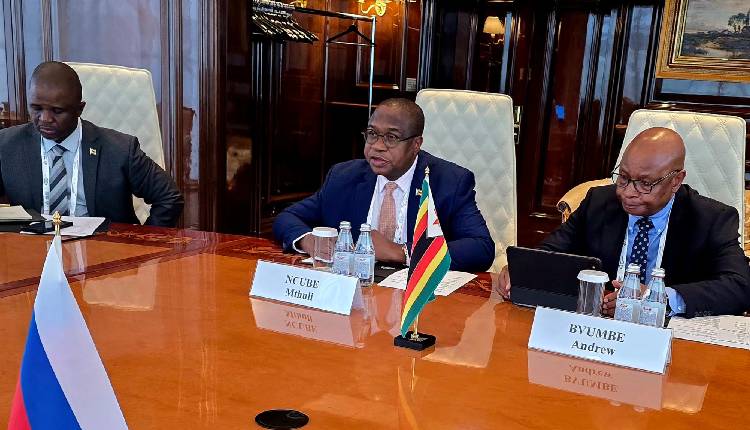
Harare: The Zimbabwean government has begun formal negotiations for membership to the BRICS New Development Bank, Minister of Finance, Economic Development and Investment Promotion Mthuli Ncube said in a statement on Saturday.
The minister said that Zimbabwe had received official communication from New Development Bank President Dilma Rousseff, confirming the start of the accession process and outlining the next steps toward full membership.
“The government of the Republic of Zimbabwe welcomes the decision by the Board of Directors of the New Development Bank authorising the commencement of formal negotiations regarding Zimbabwe’s membership of the Bank,” Ncube said, Xinhua news agency reported.
He noted that the landmark development represents a major milestone in Zimbabwe’s engagement and re-engagement agenda, reflecting growing international confidence in the country’s economic reform program, macroeconomic stability, and private sector-driven investment growth strategy.
Membership in the New Development Bank is expected to strengthen Zimbabwe’s capacity to mobilise long-term development financing for key national priorities in line with the country’s vision to become an upper-middle-income economy by 2030, the minister said.
“The commencement of formal negotiations also advances Zimbabwe’s broader efforts to deepen South to South win-win cooperation with emerging economies and integrate into the fast-evolving global technological and financial revolution associated with BRICS,” Ncube added.
Zimbabwean President Emmerson Mnangagwa announced in 2023 that the country had applied to join the New Development Bank, a multilateral financial institution established in 2015 by the BRICS members.
The bank’s main purpose is to fund infrastructure and sustainable development projects in BRICS countries, as well as other emerging economies and developing nations.
Meanwhile, Last month, the International Monetary Fund (IMF) management approved a 10-month Staff Monitored Program (SMP) for Zimbabwe, aimed at anchoring macroeconomic stability and advancing the country’s re-engagement with the international community.
The program is designed to help Zimbabwean authorities build a credible track record of policy implementation. This serves as a critical stepping stone toward a potential Fund-supported financial arrangement and a comprehensive roadmap for arrears clearance.
The IMF stated that the SMP will help lay the foundations for strengthening the monetary policy framework, including measures to promote the demand for the Zimbabwe Gold (ZiG). “The program will support efforts to maintain low and stable inflation and preserve progress in easing foreign exchange market pressures,” the IMF said.
(IANS)