





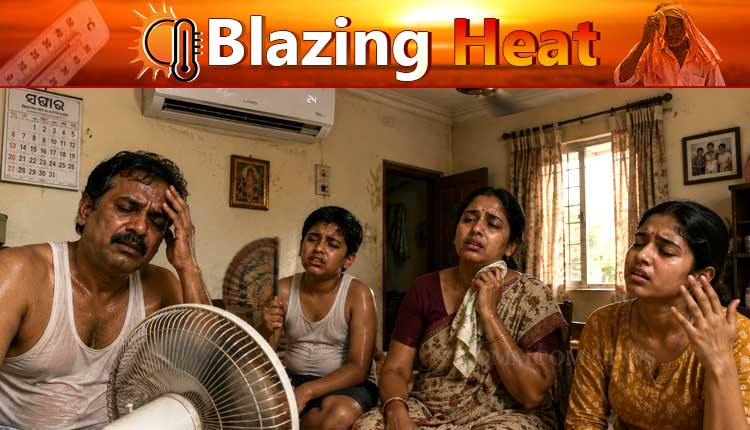
Bhubaneswar: While most people associate sunstroke or heatstroke with direct exposure to the scorching sun, health experts are warning that high humidity combined with elevated indoor temperatures can trigger this life-threatening condition even without stepping outside.
In the state capital, where morning temperatures at 5:30 AM have hovered around 30–31.4°C with humidity levels between 84% and 90%, the Heat Index has repeatedly crossed 39–44°C. This oppressive “feels-like” temperature significantly impairs the body’s natural cooling mechanism through sweating, raising serious concerns for indoor heat-related illnesses.
Not just Bhubaneswar, the entire Odisha is grappling with an intense heatwave, with temperatures crossing the 45°C mark in several areas and causing widespread discomfort.
On Thursday, Jharsuguda recorded the highest maximum temperature of 45.5°C, while the state capital Bhubaneswar saw a high of 42.2°C. As many as 22 towns across the state experienced blistering heatwave conditions with temperatures crossing the 40°C mark.
Sambalpur and Balangir both recorded 44.6°C, followed closely by Hirakud and Titlagarh at 44.5°C. Other places like Sonepur (44.3°C), Boudh (44.2°C), Talcher and Bhawanipatna (43.8°C each), and Anugul (43.6°C) also reported extreme heat.
Keeping the intense heatwave condition across the state in mind, health experts note that heatstroke is particularly dangerous in humid coastal regions. The body’s inability to dissipate heat leads to rapid dehydration, elevated heart rate, confusion, and in severe cases, organ failure. Vulnerable groups include senior citizens, children, pregnant women, and people with heart disease or diabetes.
Professor Dr Jayant Panda said that heatstroke is a temperature-related illness. When a person is directly exposed to sunlight, cutaneous circulation increases significantly. That means as much as 8 litres of blood flows through the skin in just one minute. This causes peripheral vasodilation in the skin. As a result, blood is diverted away from the core organs, leading to a drop in blood pressure and an increase in heart rate. In the later stages, other organs also get affected.
He added that heatstroke can also occur indoors if the temperature inside the house remains high. Normally, the human body temperature is 37°C. When the surrounding environmental temperature exceeds 40°C, heat starts transferring into the body, causing the body’s core temperature to rise. This leads to a fall in blood pressure, dehydration, and symptoms like vomiting. While heatstroke poses a risk to people of all age groups, it is particularly dangerous for children below 5 years and elderly persons above 65 years. It can be even more fatal for individuals suffering from multiple chronic illnesses.
Tips to Avoid Heatstroke While Staying Indoors
• Stay well hydrated: Drink plenty of water and oral rehydration solutions (ORS) at regular intervals, even if you don’t feel thirsty. Avoid excessive tea, coffee, or alcohol as they can cause dehydration.
• Keep the room cool and ventilated: Open windows and doors during early morning and late evening when outside air is cooler. Use exhaust fans to push out hot, humid air.
• Use fans wisely: Place a bowl of ice or a frozen water bottle in front of a fan to create a cooler breeze. Ceiling fans should be set on a speed that circulates air effectively.
• Block direct heat: Close curtains, blinds, or use reflective window films during the day to prevent sunlight from heating up the room.
• Wear light clothing: Even indoors, wear loose, light-coloured, cotton clothes that allow sweat to evaporate easily.
• Reduce physical activity: Avoid strenuous household work or exercise during the hottest parts of the day. Rest as much as possible.
• Take cool showers or use damp cloths: Frequently wipe your body with a damp cloth or take short cool showers to lower body temperature.
• Monitor indoor temperature and humidity: Try to keep indoor temperature below 32–35°C if possible. Use a simple thermometer and hygrometer if available.
• Sleep in the coolest area: Sleep on the ground floor or in the least exposed room. Use cotton bedsheets and avoid heavy blankets.
• Check on vulnerable family members: Regularly check on children below 5 years, elderly persons above 65, and those with heart disease, diabetes, or high blood pressure.
• Recognize early warning signs: Watch for dizziness, headache, nausea, rapid heartbeat, excessive sweating (or lack of sweating), confusion, or muscle cramps. Act immediately if symptoms appear.
• Avoid cooking during peak heat hours: Prepare meals early in the morning or late evening to prevent additional heat buildup inside the house.
Following these simple precautions can significantly reduce the risk of indoor heatstroke, especially during high humidity periods like the current spell in Bhubaneswar and coastal Odisha.