





Kinshasa: The government of the Democratic Republic of the Congo (DRC) has temporarily suspended all passenger flights to and from Bunia, the capital of the northeastern Ituri Province that is the epicentre of the ongoing Ebola outbreak, the Ministry of Transport have said.
An Ebola outbreak was declared in Ituri on May 15, with Bunia among the main affected areas. According to an official statement on Saturday (local time), no aircraft will be allowed to land at or take off from Bunia Airport until further notice, reports Xinhua news agency.
The ministry said all commercial, private and special flights to and from Bunia have been suspended. However, humanitarian, medical and emergency flights may be authorised subject to approval from aviation and health authorities.
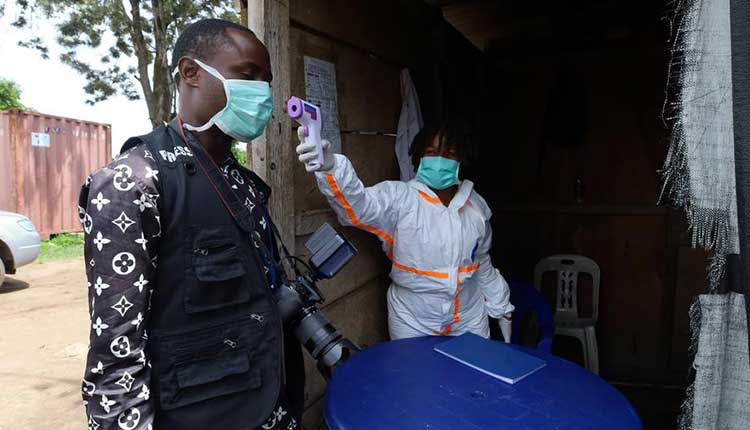
The outbreak has since spread to neighbouring North Kivu and South Kivu provinces. Uganda, which borders Ituri, has also reported confirmed cases.
World Health Organization Director-General Tedros Adhanom Ghebreyesus said Friday that the situation in the DRC is “deeply worrisome,” citing 82 confirmed cases and seven confirmed deaths.
He added that the actual scale of the outbreak is believed to be significantly larger, with nearly 750 suspected cases and 177 suspected deaths. “These numbers are changing as surveillance efforts and laboratory testing improve, but violence and insecurity are impeding the response,” Tedros said in a social media post.
Uganda’s Ministry of Health said Saturday that three new Ebola cases had been confirmed in the country, bringing the total number of confirmed infections to five.
The Bundibugyo strain causes this Ebola outbreak, a rarer Ebola variant first detected in Uganda in 2007. Unlike the Zaire strain responsible for previous DRC outbreaks, the Bundibugyo strain has no approved vaccine or specific treatment. Candidate vaccines are under discussion, but WHO officials say doses remain months away at best.
Anais Legand, a WHO technical officer on viral hemorrhagic fevers, said Wednesday that while preparations for possible trials continue, the priority is to establish safe and optimised treatment centres, create patient referral pathways, and ensure that every suspected case is detected and treated early.
(IANS)