





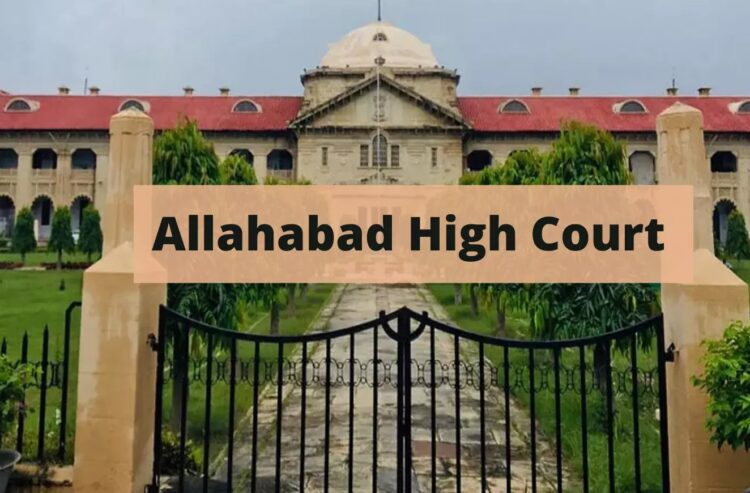
Prayagraj/New Delhi: The Allahabad High Court has expressed concern over inadequate forensic infrastructure in Uttar Pradesh, observing that shortcomings in DNA analysis facilities are affecting the investigation and prosecution of heinous crimes, including rape and murder cases.
Granting bail to an accused in an alleged rape and murder case registered in Etah district, a single-judge Bench of Justice Arun Kumar Singh Deshwal said the court was compelled to enlarge the applicant on bail because the forensic report failed to conclusively link him to the crime through DNA evidence.
The case relates to the death of a woman whose body was found near a river in November 2025.
According to the prosecution, the victim had left her home to dispose of cow dung but did not return. An FIR was initially lodged against unknown persons, and the applicant was later implicated on the basis of statements of witnesses who claimed to have seen him near the spot.
The defence argued that the applicant’s name did not figure in the original FIR and was introduced later through subsequent witness statements. It also contended that the alleged recovery of the deceased’s watch from an open field was insufficient to establish his involvement in the alleged rape and murder.
The applicant further contended that the Forensic Science Laboratory (FSL) report did not support the prosecution’s allegation of rape, since the DNA profile of the accused did not match the DNA material recovered from the victim’s vaginal smear.
While allowing the bail plea, the Allahabad High Court noted that similar issues have surfaced in several cases involving allegations of rape followed by murder. “This Court has come across number of cases specially where the lady was murdered after committing the rape. In those cases, though vaginal swab and DNA sample of accused were also sent to FSL but in most of the cases, FSL report shows that because of incomplete generation of DNA profile, source of DNA found in the vaginal swab cannot be determined,” Justice Deshwal observed.
“Though, the present case is also related to heinous offence wherein rape was committed upon a lady and subsequently, she was murdered but for want of proper scientific evidence, this Court is constrained to release the applicant on bail, albeit with a heavy heart and great pain,” the order added.
The Allahabad High Court termed the inability to generate a complete DNA profile a major deficiency in both the investigation process and forensic facilities. “This is the biggest anomaly in the investigation as well as an incomplete facility in the FSL,” Justice Deshwal remarked.
The order referred to an earlier case in which the Director of the Uttar Pradesh FSL had informed the Allahabad High Court that many forensic laboratories in Uttar Pradesh were grappling with staff shortages and the absence of advanced DNA-testing equipment.
Observing that outdated machines and inadequate infrastructure were hampering the generation of conclusive DNA profiles, the Allahabad High Court said such deficiencies were adversely affecting the administration of criminal justice.
“In this case, outdated machines as well as incomplete infrastructure in FSL is the main reason for non-generation of DNA profile,” the order said.
It added that responsibility for addressing the issue rested with the state administration. “No one can be blamed except the State Government which has many other issues to consider, apart from the issue of providing basic infrastructure to FSL,” Justice Deshwal observed.
Expressing hope that corrective measures would be taken, the Allahabad High Court said it expected the state government to provide “high-end machines” and adequate manpower to forensic laboratories across Uttar Pradesh.
It directed the Registrar (Compliance) to forward a copy of the order to the Chief Secretary of Uttar Pradesh for placing it before the Chief Minister.
Granting bail, the Allahabad High Court recorded that the applicant had no criminal antecedents and had been in custody since November 2025. It clarified that its observations were confined to the bail proceedings and would not influence the trial on merits.