
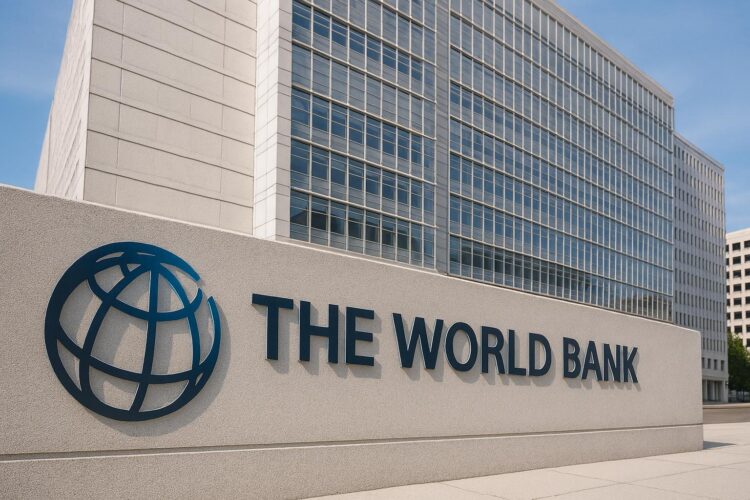
Washington: India has entered a phase of “peak development potential” and is poised to sustain high growth over the next two decades, the World Bank’s Chief Economist Indermit Gill said, arguing that the country’s economic trajectory will be driven by its own strengths rather than by following China’s development model.
During a briefing on the World Bank’s latest Global Economic Prospects report, Gill told IANS that India stands out among major economies because its long-term growth potential remains strong even as many countries face demographic decline and slowing productivity.
“If you look at India over the next two decades, India has entered its peak development potential,” Gill said.
He noted that while potential growth rates in several large economies are expected to decline in coming years, India’s growth potential remains comparatively strong.
“Potential growth rates for India, we estimate to be fairly high for the next two decades,” he said.
According to Gill, one of India’s biggest advantages is its demographic profile.
“On the demographic side, India’s demographics work for it,” he said.
He also pointed to relatively low private-sector debt levels and a consumption-driven economy as factors supporting India’s long-term outlook.
“On the debt side, especially private debt, India has relatively low debt-to-GDP ratios on the private side,” Gill said.
Unlike export-led Asian growth models of the past, India is expected to draw strength from its domestic market, he argued.
“India’s domestic consumption to GDP ratios are very normal. They’re close to 60-something per cent,” Gill said.
He then offered a striking assessment of India’s future path.
“India’s not going to be the next China, India’s going to be the next India,” Gill said.
At the same time, the World Bank economist cautioned that India must address structural weaknesses if it wants to fully capitalise on its favourable conditions.
“One of them has to do with openness. India has to become a much more open economy,” he said.
Gill also called for stronger efforts to attract investment.
“India could do a lot more to get private investment going again, especially foreign direct investment,” he said.
He said the country would need both “business-friendly reforms” and “trade-friendly reforms” to maximise its growth opportunities in the coming decades.
The comments come as the World Bank projects global growth to slow to 2.5 per cent in 2026, the weakest pace since the Covid-19 pandemic, amid disruptions linked to the conflict in the Middle East and rising energy costs.
India, however, continues to stand apart from much of the developing world. The World Bank’s latest projections show the country remaining the fastest-growing major economy, reflecting a combination of favourable demographics, expanding domestic demand and continued economic reforms.
(IANS)