
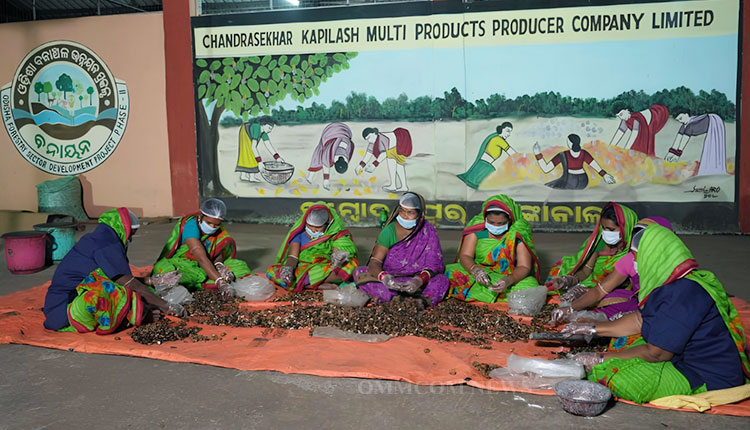
Bhubaneswar: Odisha’s forest-dependent communities are witnessing a significant socio-economic transformation as the Odisha Forestry Sector Development Project (Phase-II) (OFSDP-II) continues to strengthen sustainable livelihoods, empower women and promote community-led forest management across the state.
Implemented by the Odisha Forestry Sector Development Society (OFSDS) under the Department of Forest, Environment and Climate Change with financial support from the Japan International Cooperation Agency (JICA), the project is currently being implemented across 14 forest and wildlife divisions in 10 districts through more than 1,210 Vana Surakhya Samitis (VSSs). The initiative has so far benefited over 6.37 lakh people from 1.47 lakh forest-dependent families.
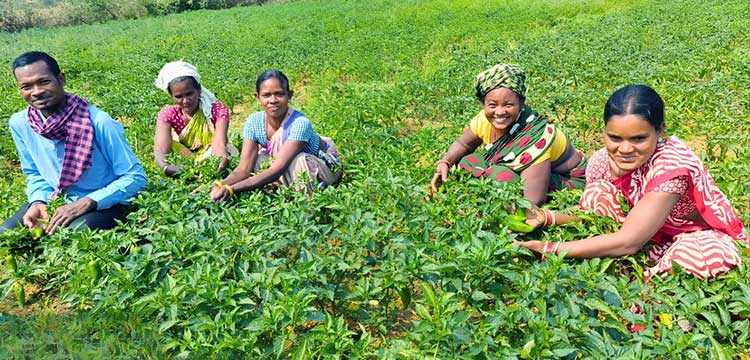
The impact of the programme is reflected in the lives of beneficiaries such as Sairendri Sidar of Devdhara village under the Jharsuguda Forest Division. After losing her husband, she struggled to support her family through daily wage labour. A revolving fund loan of Rs 15,000 received through her VSS enabled her to take up pointed gourd cultivation, helping her establish a stable source of income and financial independence.
A similar story has emerged from Ganjam district, where Upendra Nayak of Gundibira VSS under the South Ghumusar Forest Division successfully ventured into oyster mushroom cultivation with project support. Producing 110 kilograms of mushrooms from 80 beds during the previous winter season, he earned Rs 16,500, improving his household income and livelihood security.
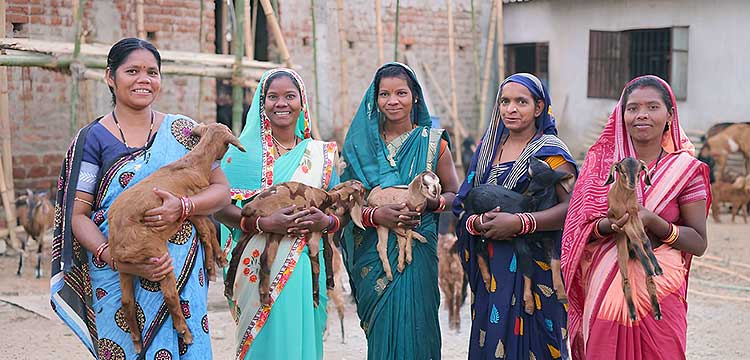
The project has significantly expanded its outreach through convergence with various government programmes. During 2024-25, it reached around 3.41 lakh beneficiaries, followed by another 4.14 lakh beneficiaries in 2025-26, taking the cumulative coverage under convergence initiatives to nearly 7.55 lakh people over the last two years. Livelihood interventions span agriculture, forestry, livestock, fisheries, mushroom cultivation and millet processing.
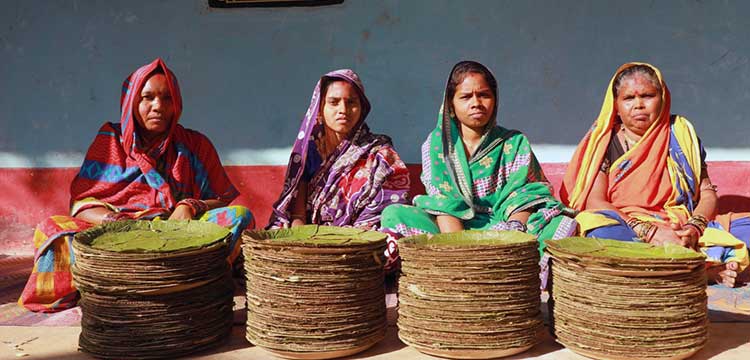
To strengthen value addition and market access, six Multi-Product Clusters (MPCs) have been established across the state. These include sal leaf processing units at Karanjia, Rairangpur and Baripada, a cashew processing cluster in Dhenkanal, a lemongrass cluster in Jharsuguda and a pulse processing cluster in Boudh. Together, these clusters have generated direct employment for 2,526 VSS members. The initiative is set to expand further with three additional clusters ready for inauguration and five more planned under the OFSDS–OMBADC partnership in Kendujhar, Kendujhar Wildlife Division, Bonai, Debagada and Raurkela.
Financial inclusion has emerged as another key outcome of the programme. By March 2026, revolving funds managed by VSSs had disbursed loans worth Rs 31.39 crore, with Rs 22.83 crore already repaid. The financial assistance has benefited 47,746 people, including 38,147 women, enabling beneficiaries to establish and expand income-generating activities while promoting women-led entrepreneurship and value-added forest produce enterprises.
Alongside livelihood enhancement, OFSDP-II continues to promote biodiversity conservation, ecological restoration and community-led forest governance, demonstrating how sustainable forest management can improve both environmental outcomes and the quality of life for thousands of forest-dependent families across Odisha.