





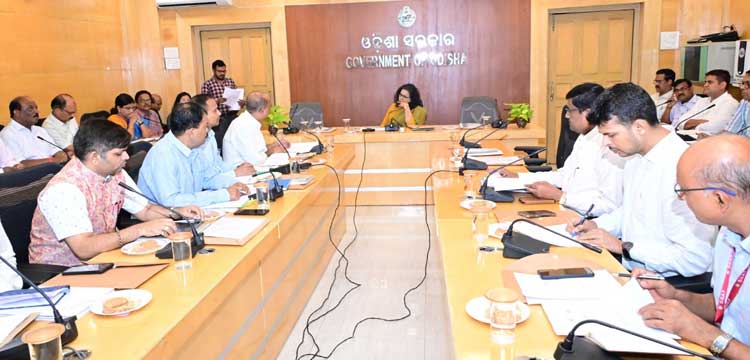
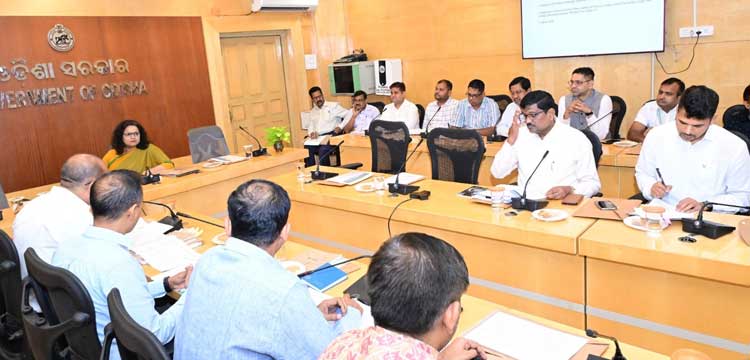
Bhubaneswar: The 39th State Level Approval Committee meeting of the Pradhan Mantri Rashtriya Krishi Vikas Yojana Integrated Umbrella Scheme was held on Wednesday at Lok Seva Bhawan under the chairmanship of Chief Secretary Anu Garg.
The meeting reviewed the annual work plan for various state-linked schemes under PM-RKVY for the financial year 2026-27 and discussed projects in agriculture and allied sectors. Agriculture Commissioner-cum-Secretary Sachin Ramachandra Yadav made a detailed presentation on the launch of the scheme, implementation status and the future work plan.
The meeting was attended by Principal Secretary, Finance Department Sanjeev Kumar Mishra, Director Agriculture, Director Soil Conservation, Director Textiles and Handicrafts Department, Vice Chancellor of OUAT and senior officers from Horticulture, Water Resources and other departments.
 With a view to improving efficiency, avoiding duplication of similar projects and giving more freedom to states to prepare schemes as per local needs, the name ‘RKVY Cafeteria’ has been changed to Pradhan Mantri-Rashtriya Krishi Vikas Yojana from 2025-26.
The revised annual action plan for Odisha for 2026-27 with an outlay of Rs 1,037.19 crore was presented in the meeting. Under this plan, 16 state-linked integrated schemes will be implemented under four broad categories which include new mission for self-reliance and food security, climate resilience related initiatives, technology and agricultural extension and National Priority Development Scheme.
An annual action plan of about Rs 15.01 crore was also discussed under the new mission named ‘Kapas Kanti’ to increase cotton production in the state. Through this mission special emphasis will be given to modern agricultural technology, integrated crop management, farmer training and productivity enhancement in eight districts.
Out of the 15 projects proposed under RKVY-DPR, 12 projects have been sent to the Central Government for approval. Revised proposals as per the suggestions of the Central Government were discussed in the meeting. In addition, four new projects were also proposed for approval.
These include generation of clean energy from agricultural waste, the Zero Drudgery Value Chain Model aimed at reducing physical labour and increasing the income of women farmers, and innovative initiatives such as integrated farming systems with high productivity and low cost. The meeting focused on increasing farmers’ income and dissemination of productive modern agricultural technologies.
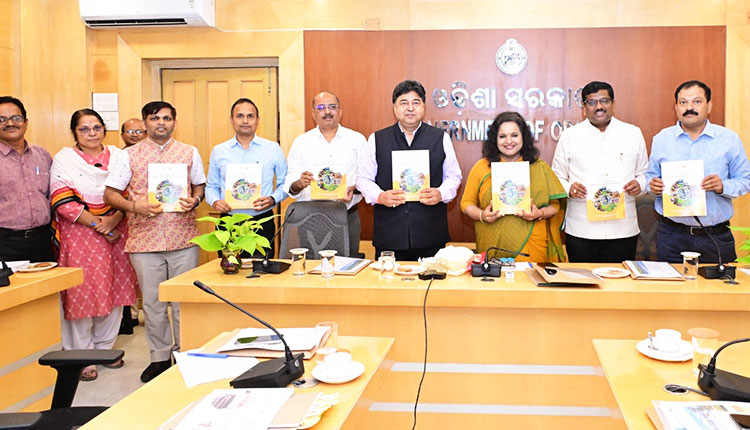
Further support to farmers in the areas of oilseeds, oil palm, pulses, horticulture, agricultural mechanization, organic farming, digital farming and agricultural extension was also discussed. The progress of the Pradhan Mantri Krishi Sinchai Yojana’s watershed development component and ‘Reward Odisha’ program was also reviewed. Under both programs, the Annual Action Plan 2026-27, revised Detailed Project Proposals, and proposals for investment of flexi funds and reserve funds for incentivizing excellent performing watershed projects were discussed. Work related to watershed development, natural resource management, climate resilient agriculture, livelihood development, preparation of scientific watershed plans and institutional capacity building was also reviewed. On this occasion, the Standard Operating Procedures for use of research results and for large scale expansion of RKVY projects was released.
Chief Secretary Anu Garg emphasized time-bound and result-oriented implementation of all projects under PM-RKVY. She directed all implementing agencies to ensure increase in agricultural productivity and farmers’ income, promotion of climate resilient and technology-oriented agriculture, and effective coordination with ongoing state schemes so that benefits reach farmers.
She also suggested expanding micro irrigation schemes by taking advantage of mega lift and large-scale irrigation schemes under the Water Resources Department, preparing a three-year roadmap to increase productivity in agriculture and allied sectors, developing Koraput coffee as a brand and encouraging districts where it is cultivated, promoting natural and organic farming, and taking pulses and oilseed farming into mission mode.