





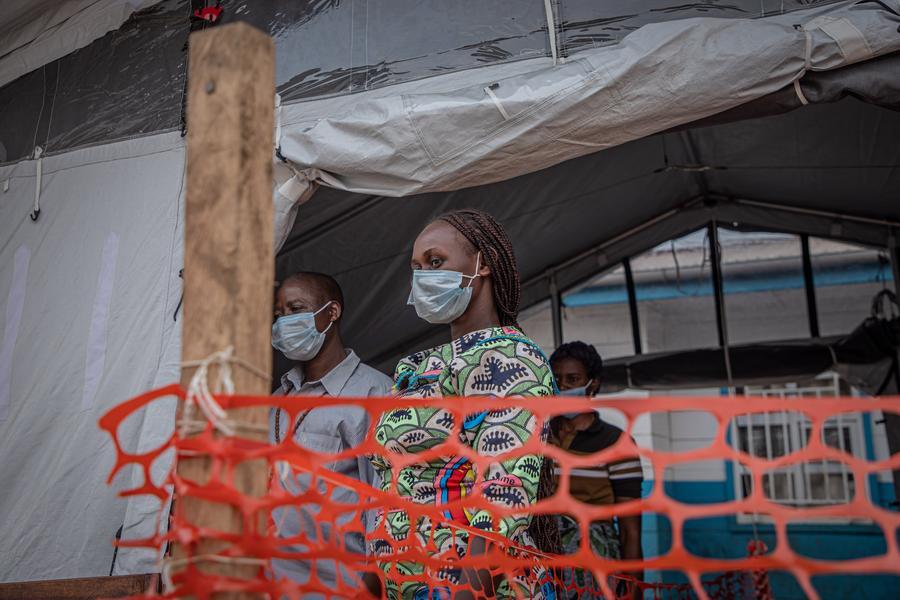
United Nations: Women and children continue to bear a disproportionate share of the Ebola outbreak in the eastern province of Ituri in the Democratic Republic of the Congo (DRC), UN humanitarians have said.
The Ebola outbreak is unfolding in Ituri, where nearly 1 million people are displaced, about 80 per cent of whom are women and children, the UN Office for the Coordination of Humanitarian Affairs (OCHA) said on Friday (local time).
According to the UN Children’s Fund (UNICEF), children represent almost one third of all deaths although they account for nearly a quarter of confirmed cases.
The outbreak is also severely disrupting essential health care. In the areas hardest hit by Ebola in Ituri province, the use of health services has dropped by more than 40 per cent in recent months, as fear of infection keeps people away, UNICEF said.
The UN Population Fund warned that fear of Ebola and overstretched health services are preventing many pregnant women from seeking care, reports Xinhua news agency.
Maternal deaths in Ituri have nearly doubled since the outbreak began, with an average of about six women dying each week from childbirth-related complications, while Ebola infection during pregnancy remains associated with almost universal fetal loss.
OCHA stressed that restoring community confidence is key. UNICEF and partners, together with the DRC Ministry of Public Health, the World Health Organisation and the Africa Centres for Disease Control and Prevention, have deployed 13,000 community workers and others, reaching more than 2.4 million people with messages on Ebola prevention and early detection. They have also carried out over 500,000 household visits to counter misinformation and encourage people to seek care early.
In neighbouring South Sudan, the United Nations and partners continue to support government-led preparedness efforts against Ebola. While no cases have been confirmed in South Sudan, the outbreak in the DRC, coupled with people moving between borders, continues to pose a risk, said OCHA.
These preparedness efforts include surveillance to detect cases early, screening at points of entry, training health workers, providing medical supplies, and community awareness campaigns, said OCHA.
This month, health partners screened more than 135,300 travellers at points of entry into South Sudan. More than 300 health workers and front-line personnel have been trained in screening, triage, infection prevention and control, referrals and safe burials. Over 7 tonnes of emergency supplies have also been pre-positioned in Yambio, near the border with the DRC.
However, insecurity continues to hamper this work. Between January and July, 451 incidents that blocked or threatened humanitarian operations were reported across South Sudan. Along the Yei-Morobo corridor, 32 humanitarian staff abductions have been recorded since January of last year, underscoring the challenges of operating in the areas at highest risk of Ebola, said OCHA.
(IANS)