





As the clock strikes midnight on Friday, temple bells will resonate across the country, devotional songs will fill the air and thousands of devotees will gather to celebrate the birth of Lord Krishna. Homes adorned with flowers and lights, beautifully decorated cradles for Bal Gopal and the fragrance of incense will transform the festival into a vibrant expression of faith.
Yet, beyond the colourful celebrations and cherished traditions, Krishna Janmashtami remains a festival with a message that transcends time. More than marking the birth of one of Hinduism’s most revered deities, it celebrates the triumph of righteousness over evil, hope over despair and compassion over hatred—values that continue to hold relevance in the modern world.
Celebrated on the eighth day (Ashtami) of Krishna Paksha during the month of Shravana, Janmashtami commemorates the birth of Lord Krishna, regarded as the eighth incarnation of Lord Vishnu.
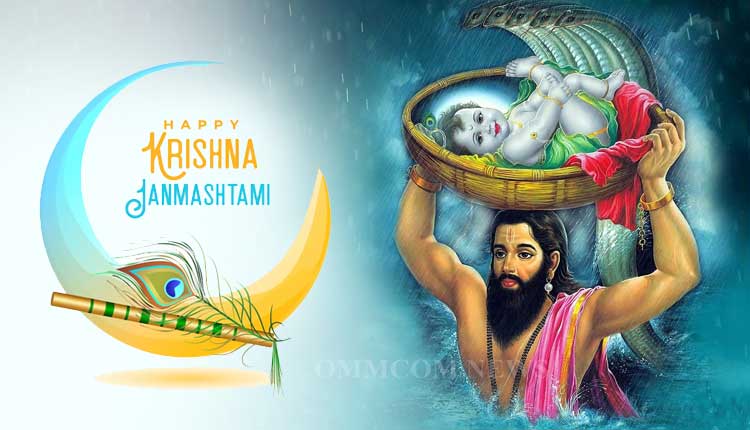
According to Hindu tradition, Krishna was born at midnight in a prison cell in Mathura, where his parents Devaki and Vasudeva had been imprisoned by the tyrannical King Kansa.
The story begins with a prophecy foretelling that Devaki’s eighth child would bring an end to Kansa’s reign. Driven by fear, Kansa imprisoned the couple and killed their children one after another. But when Krishna was born, divine intervention enabled Vasudeva to carry the infant across the flooded Yamuna River to Gokul, where he was raised by Nanda and Yashoda.
For devotees, the story represents far more than mythology. It symbolises the victory of truth over tyranny and the emergence of hope even in the darkest of times.
Unlike many divine figures who are worshipped from a distance, Krishna occupies a deeply personal place in the hearts of millions. He is remembered not only as a god but also as a mischievous child, a loving son, a trusted friend, a wise philosopher and a compassionate guide.
His childhood tales of stealing butter, playing with the cowherds of Gokul and sharing an affectionate bond with Mother Yashoda have endeared him to generations. Equally inspiring is his unwavering friendship with Arjuna on the battlefield of Kurukshetra, where he delivered the Bhagavad Gita—one of the world’s most influential spiritual texts.
Each of these relationships reflects a different dimension of love—parental affection, friendship, devotion and selfless guidance. Perhaps that is why Krishna continues to feel remarkably close, even centuries after his story first entered the cultural imagination.
Across India, Janmashtami is celebrated in diverse yet equally vibrant ways. Devotees observe day-long fasts before gathering in temples for bhajans, kirtans and special prayers that culminate at midnight—the sacred Nishita Kaal believed to mark Krishna’s birth.
Temples recreate scenes from Krishna’s childhood with elaborate tableaux, while homes install decorated cradles carrying idols of Bal Krishna. The ringing of bells, chanting of mantras and devotional offerings create an atmosphere of collective joy and reverence.
In Maharashtra, the festival takes on a distinctly energetic character through Dahi Handi, where young men and women form towering human pyramids to break an earthen pot suspended high above the ground. Inspired by Krishna’s fondness for butter and curd, the event has evolved into a spirited community celebration that attracts thousands of spectators every year.
The enduring appeal of Janmashtami lies not merely in its rituals but in the philosophy it represents.
Through the Bhagavad Gita, Krishna urges humanity to perform its duties with sincerity while remaining detached from personal gain. In an era marked by uncertainty, relentless competition and mounting stress, the message resonates with renewed relevance.
The festival encourages people to pause and reflect. Are we fulfilling our responsibilities with honesty? Can we remain compassionate in adversity? Are we able to rise above fear, anger and selfishness?
Krishna’s teachings suggest that spirituality is not confined to temples or rituals. Instead, it is reflected in everyday choices—in the way people work, build relationships and fulfil their responsibilities with integrity.
Janmashtami also serves as a celebration of India’s living cultural heritage.
Families prepare festive delicacies, children dress as Krishna and Radha, communities organise cultural programmes and temples become centres of music, dance and storytelling. For younger generations, these celebrations offer an engaging introduction to stories that have shaped Indian civilisation for centuries.
The festival thus becomes more than a religious observance. It becomes a bridge connecting generations through shared traditions, values and collective memory.
The world of 2026 is vastly different from the one described in ancient scriptures. Yet many of the struggles confronting humanity—fear, conflict, injustice and uncertainty—remain strikingly similar.
That is perhaps why Krishna’s life continues to inspire.
His birth symbolises hope amid adversity. His childhood celebrates innocence and joy. His friendship with Arjuna exemplifies loyalty and wisdom. And his teachings continue to encourage people to pursue duty with courage, compassion and inner balance.
As devotees gather this Janmashtami, the festival offers more than an occasion for celebration. It invites reflection on how timeless values can illuminate contemporary life.
For millions, celebrating Krishna is not simply about remembering a divine birth. It is about embracing love without selfishness, faith without fear and action without attachment.
And perhaps that is why, despite the passage of centuries, Janmashtami continues to inspire the same devotion and enthusiasm—because every generation discovers in Krishna not only a deity to worship, but a guide for life.