





In western Odisha, the farming year unfolds through a series of time-honoured observances. From the sowing of the season’s first seeds after Akshaya Tritiya to the final homecoming of the harvest, each stage carries its own quiet ceremony. Among them, Nuakhai holds a place of special reverence—the day when the earliest, still-tender grain is offered to the village deity before anyone tastes it.
On this auspicious occasion, Ommcom News steps into the heart of the ritual and practice that have sustained the festival for centuries.
A Name That Speaks of Gratitude
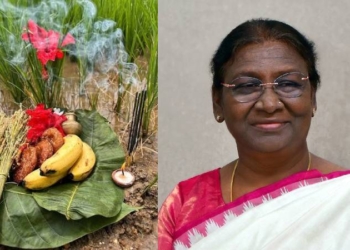
The word itself is straightforward: “nua” means new, “khai” means to eat. Yet Nuakhai is less about the act of eating and more about giving thanks. The rice offered is not fully mature. Soft, milky and still standing in the field, it is considered the purest form of the crop—before birds can claim their share, before the grain acquires any market value. Villagers hold that the first produce of the earth must first belong to the divine.
Roots That Stretch Across Centuries
Historical accounts trace the organised form of the festival to the 12th century and to Raja Ramai Deo of the Chauhan line at Patnagarh, in present-day Balangir. Recognising agriculture as the foundation of prosperity, the king is believed to have 0steered communities from older hunting and gathering ways towards settled farming. Over the centuries the observance travelled well beyond the old Patna kingdom, reaching adjoining regions that today form parts of Chhattisgarh and Jharkhand—areas long linked to Odisha through shared administration and culture before the state was formed on linguistic lines in 1936.
The Practice
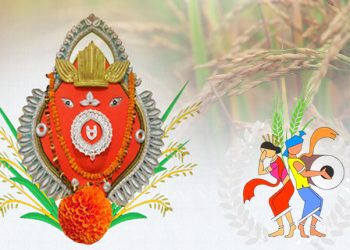
To understand Nuakhai is to leave formal temple compounds and enter the village itself. In many places the presiding deity has no built shrine. The sacred space is simply an open patch of earth beneath ancient trees that have stood for generations. Those trees are rarely cut; they are protected by the same quiet reverence that guards the deity—an instinctive ecological ethic that needs no modern vocabulary. The principal offering is collective. It is performed by the traditional village priest, often known as the Jhankar and frequently drawn from the Kondh community. He carries out the rites and presents the nua to the village deity on behalf of everyone.
Waiting for the First Right
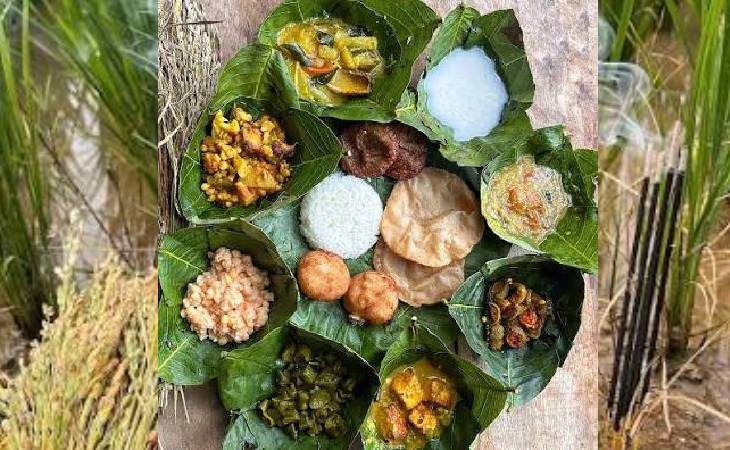
Only after the village ritual is complete do households bring the new grain into their own courtyards. Throughout the day, adults—especially women—refrain from eating. They wait for the auspicious moment when the offering has been made at home as well. In an age of constant availability, this deliberate postponement carries quiet power. It affirms that what nature gives does not automatically belong to us first. The grain becomes prasad before it becomes a meal. Families then sit together and share the first rice of the season. Different communities still weave forest leaves into the celebrations, preserving an older, intimate bond with the surrounding landscape.
Without exaggeration it can be said that Nuakhai remains, at its heart, a collective act of thanks—simple, seasonal and enduringly human.