





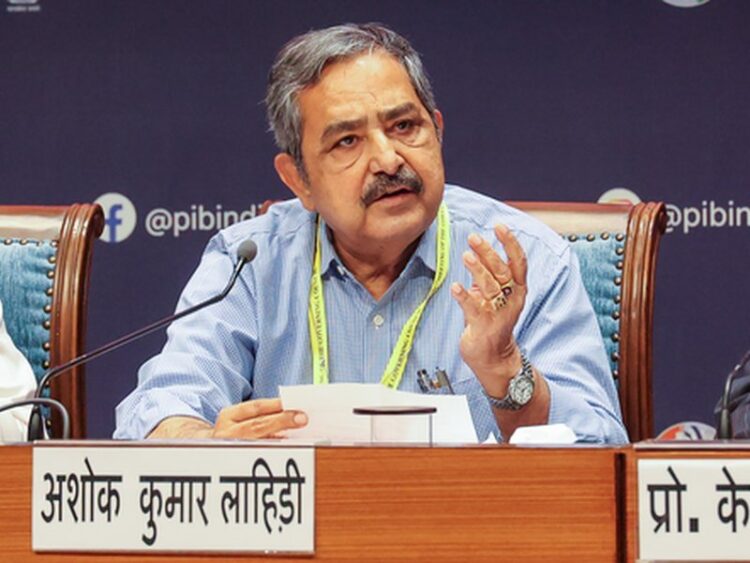
New Delhi: NITI Aayog Vice Chairman Ashok Kumar Lahiri on Friday identified education, healthcare, infrastructure and entrepreneurship as the four key pillars essential to achieving the vision of Viksit Bharat 2047.
Speaking to the media on the sidelines of the Pathway to Viksit Bharat event, Lahiri emphasised the importance of entrepreneurship in generating employment, noting that India needs more people who can create jobs rather than simply seek them.
“Entrepreneurship is very important. If everyone is looking for a job, we also need people who can create jobs for others,” he said.
Encouraging young people to venture into business, Lahiri urged students to consider entrepreneurship as a career path. “I encourage these young students to become entrepreneurs themselves,” he said.
Expressing optimism about India’s entrepreneurial ecosystem, Lahiri said entrepreneurship was growing rapidly, with several startups achieving unicorn status. He also highlighted the success of Indian companies in the information technology (IT) and artificial intelligence (AI) sectors.
“Infrastructure is essential. If you cannot go from your village with your fruits to the city or you can’t commute to the towns, then you can’t develop. So you need this,” he noted.
Referring to the transformative potential of entrepreneurship, he cited Lala Shri Ram and Jamsetji Tata as examples of individuals who demonstrated what entrepreneurship could achieve.
On improving productivity, Lahiri said it depended on how effectively human capital, physical capital and entrepreneurship were combined.
“There are so many of these pioneers who showed what entrepreneurship can be. So job creation and productivity, very important. Now productivity is basically, you have to combine human capital with physical capital and entrepreneurship,” he mentioned.
Highlighting the importance of infrastructure, he said it was fundamental to a country’s development. Without adequate infrastructure, transporting agricultural produce and other goods from villages to cities would become difficult, hindering economic progress.
(IANS)