





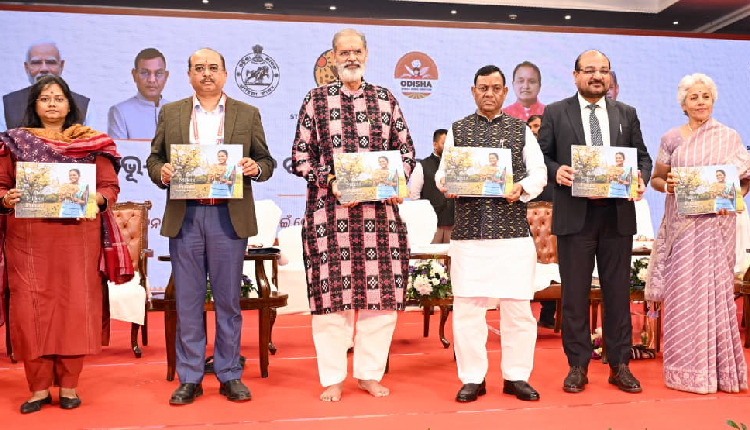
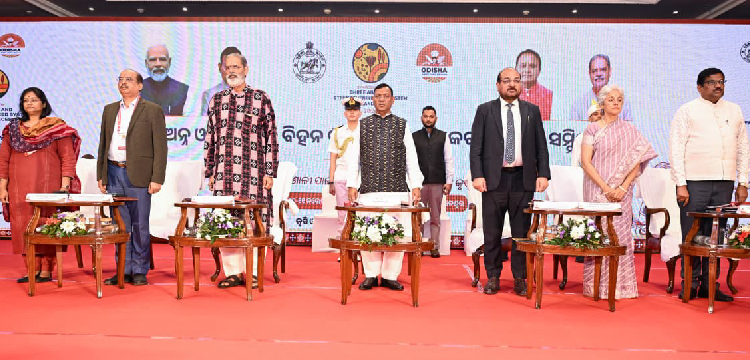
Bhubaneswar: Odisha Governor Brajmohan Ram on Tuesday called for collective efforts to promote millet consumption and conserve indigenous seed varieties, stressing the need to make Shree Anna (millets) an integral part of daily diets and strengthen traditional agricultural practices.
Inaugurating the conference titled “Shree Anna and Strengthening of Indigenous Seed Systems–2026” in Bhubaneswar, the Governor urged the younger generation, students and government employees to include millets such as ragi (finger millet), bajra (pearl millet) and jowar (sorghum) in their regular diets.
He said millets should become an essential part of every family’s food habits, adding that healthy eating was not only important for individual well-being but also reflected respect for farmers and the country’s agricultural heritage.
Highlighting the significance of millets in India’s traditional food culture, the Governor said these crops had been cultivated and consumed for centuries. In Odisha’s tribal and drought-prone regions, millet cultivation is closely linked to local livelihoods and cultural traditions.
Promoting ragi cultivation would help improve farmers’ incomes while preserving the state’s traditional agricultural heritage, he said.
The Governor also highlighted the role of millets in addressing agricultural challenges arising from climate change, erratic rainfall, rising temperatures and water scarcity.
Their low water requirements, relatively lower cultivation costs and ability to withstand adverse climatic conditions make them a sustainable and viable alternative for farmers, he said.
Emphasising their nutritional benefits, the Governor said millets are rich in dietary fibre and essential nutrients. Their regular consumption can help encourage healthier food habits at a time when lifestyle-related diseases such as diabetes, obesity and hypertension are increasing.
He also called for strengthening processing, packaging, value addition and marketing facilities to ensure that millet-based products from Odisha reach wider domestic and international markets.
On the conservation of indigenous seeds, the Governor stressed the need to establish community-based seed banks, document traditional seed varieties and encourage seed exchange practices.
Traditional seed varieties represent generations of farmers’ experience and indigenous knowledge and play a crucial role in preserving agricultural biodiversity, he said.
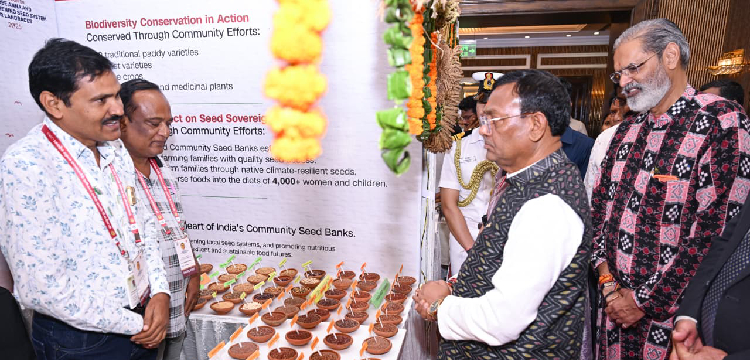
Highlighting the contribution of tribal communities and women farmers as custodians of traditional seeds, the Governor called for integrating their indigenous knowledge with modern science and technology, along with better market linkages.
Appreciating the State Government’s Shree Anna Abhiyan and the initiatives of the Central Government to promote millets, he said collective efforts to conserve traditional seeds, protect agricultural diversity and enhance farmers’ incomes would contribute significantly to achieving the goals of ‘Viksit Odisha 2036’ and ‘Viksit Bharat 2047’.
Deputy Chief Minister Kanak Vardhan Singh Deo, ICAR Director General Dr Mangi Lal Jat, M.S. Swaminathan Research Foundation (MSSRF) Chairperson and former Chief Scientist Dr Soumya Swaminathan, and Odisha University of Agriculture and Technology (OUAT) Vice-Chancellor Prof Pravat Kumar Roul also addressed the conference.
Earlier, Sachin Ramchandra Jadhav, Commissioner-cum-Secretary of the Department of Agriculture and Farmers’ Empowerment, delivered the welcome address, while Director of Agriculture and Food Production Dr Poma Tudu proposed the vote of thanks.