





Bhubaneswar: Union Agriculture and Farmers Welfare Minister Shivraj Singh Chouhan on Saturday urged farmers in Odisha to adopt sustainable agricultural practices, promote crop diversification and cultivate pulses in rice fallow fields to improve soil health and enhance farm productivity.
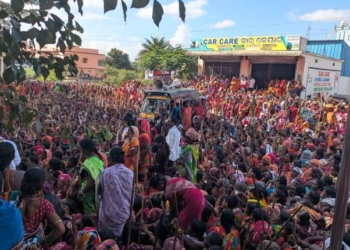
Addressing farmers during his visit to Hirapur on the outskirts of Bhubaneswar under the ‘Khet Bachao Abhiyan’ (Save the Farm Campaign), Chouhan stressed the need for balanced fertiliser use, soil testing and natural farming to ensure long-term agricultural sustainability.
The campaign, organised by the Ministry of Agriculture and Farmers Welfare, Government of India, is guided by the vision of ‘Swasth Dhara, Samriddh Kisan’ (Healthy Soil, Prosperous Farmer).
Speaking to reporters, the Union Minister said Prime Minister Narendra Modi had expressed concern over the gradual deterioration of soil health due to the excessive and uncontrolled use of chemical fertilisers and pesticides.
“We must act now to take measures to protect ‘Mother Earth’ and our farmlands, ensuring that the soil continues to produce food grains, fruits and vegetables for future generations,” he said.
Chouhan advised farmers to use fertilisers only after conducting soil tests and apply them in accordance with the specific nutrient deficiencies identified. A balanced approach to fertiliser application is essential to protect both soil and human health, he said.
He also encouraged farmers to adopt natural or organic farming on a portion of their agricultural land and stressed the need to modify existing crop rotation patterns.
Making a special appeal to Odisha’s farming community, Chouhan called for the cultivation of pulses during the ‘rice fallow’ period, when fields remain uncultivated after the paddy harvest. Such crop diversification can help utilise fallow land more effectively while contributing to improved soil health and agricultural productivity.
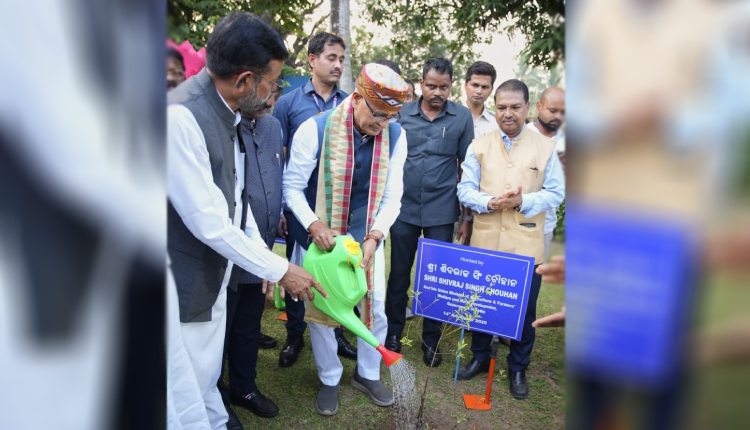
Earlier, the Union Minister visited the historic 9th-century Chausathi Yogini Peetha at Hirapur, where he offered prayers and planted a sapling within the temple premises as a gesture towards environmental conservation.
He subsequently visited nearby paddy fields, inspected standing crops and interacted with local farmers to understand their agricultural practices and concerns.
Scientists and officials from the Central and State Governments, including representatives of the Agricultural Technology Management Agency (ATMA) and Krishi Vigyan Kendras (KVKs), accompanied the Union Minister during the programme.