





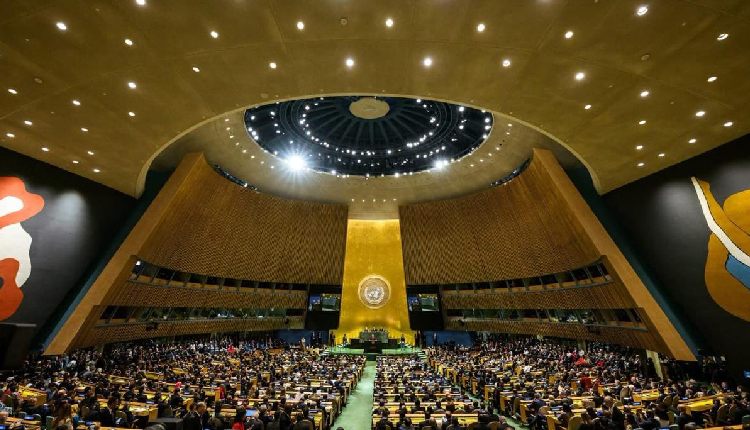
United Nations: Leaders from Africa, the Caribbean and the Indian Ocean have warned that debt repayments and high borrowing costs are draining money from hospitals, classrooms, infrastructure and climate protection across the developing world.
Noting that the debt crisis is more than a dispute over balance sheets, leaders from several countries described it as a test of whether poorer countries could invest in their people while meeting obligations to creditors.
In his address, Kenyan President William Ruto said global public debt reached a record $102 trillion in 2024. Developing countries held less than one-third of that debt but paid about $1 trillion in interest that year, he said. Forty-six developing countries now spend more on interest than on health or education, he noted.
“The hospital competes with a creditor. The classroom competes with debt service,” Ruto said.
He also criticised the cost of capital facing African economies. Subjective credit ratings had cost the continent an estimated $75 billion through excessive interest and foregone lending, he said.
“Capital must price risk. It must not price prejudice,” Ruto said.
Botswana President Duma Gideon Boko linked debt pressure to declining faith in global institutions.
“When nations spend more to service debt than invest in education, job creation, or provision of healthcare, trust in the system erodes,” Boko said.
South African Foreign Minister Ronald Lamola said African countries had spent roughly the same amount servicing debt in the past year as the continent needed to close its infrastructure financing gap. He backed a Borrowers’ Club to counterbalance creditors and called for greater scrutiny of credit-rating agencies.
“To us, Mr President, unsustainable debt betrays the promise of development and destroys the prospects for democracy,” Lamola said.
Ghanaian President John Dramani Mahama said developing countries borrowed at interest rates up to eight times higher than industrialised nations. Climate disasters then forced African and Caribbean states to take on more debt to rebuild, he said.
“Governments are forced into a tragic choice: to service predatory debt or serve their people,” Mahama said.
Barbadian Prime Minister Mia Mottley said climate-vulnerable countries needed to mobilise about $490 billion annually by 2030 but current flows were roughly $90 billion.
“As young people in Barbados would say, the math simply ain’t mathing,” Mottley said.
Her prepared statement said borrowing costs for climate-vulnerable countries were about 1.2 percentage points higher than for advanced economies, generating an estimated $62 billion in excess interest payments each year.
The Maldives backed a permanent Borrowers’ Platform that would give developing countries a voice in shaping the financial system. Seychelles said debt sustainability was “a matter of national survival” for small island states and demanded affordable long-term finance and meaningful relief.
Dominica said countries repeatedly hit by disasters were borrowing merely to rebuild. Angola said debt servicing consumed more money than African governments could invest in health, education and infrastructure. Nigeria said repayments displaced essential development spending.
Vietnam has sought affordable long-term finance and greater developing-country influence in global financial institutions.
Sovereign debt restructuring can involve national creditors, private lenders and multilateral institutions. The G20 Common Framework coordinates restructuring for eligible low-income countries, but its negotiations have often been slow and most middle-income borrowers remain outside its scope.
(IANS)