





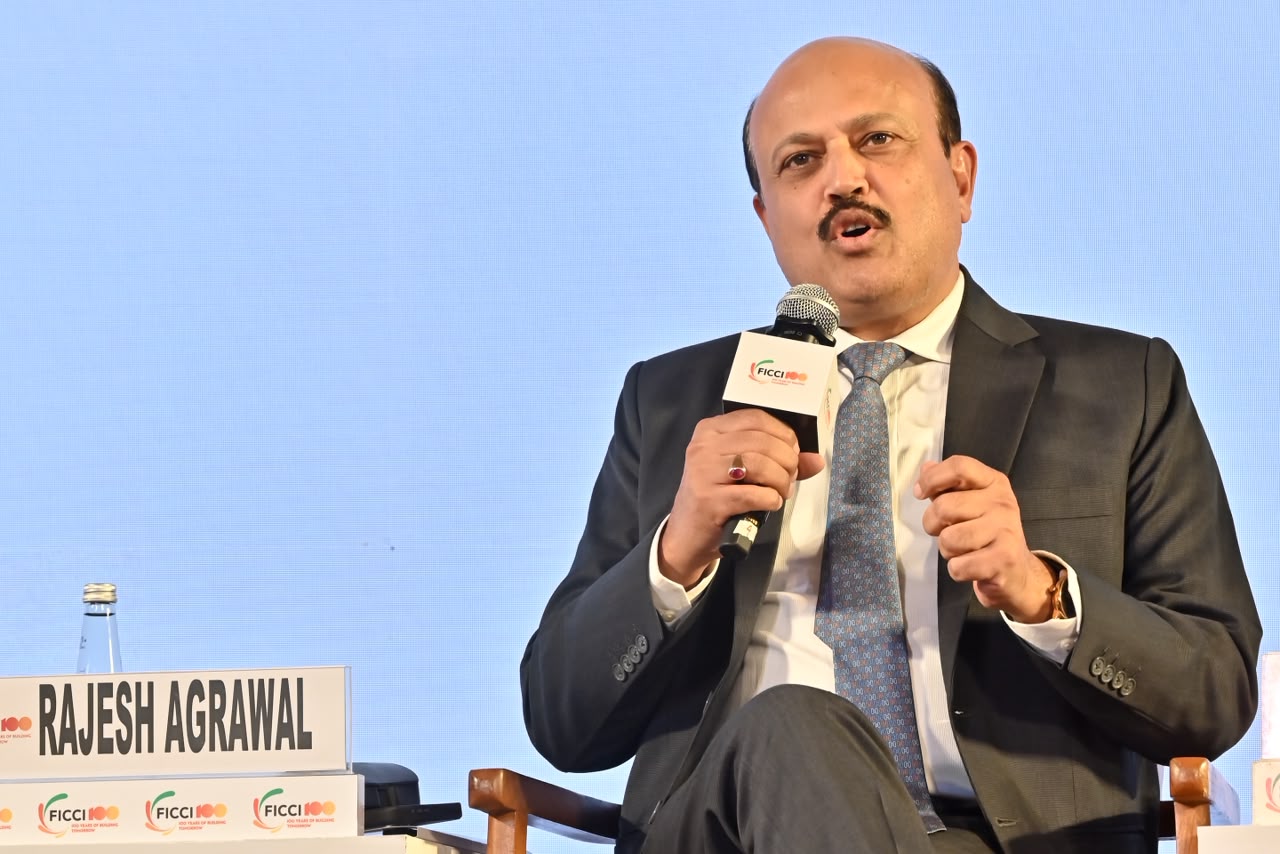
New Delhi: India and the United States are close to concluding negotiations on a bilateral trade agreement, with most key issues nearing resolution, Commerce Secretary Rajesh Agrawal said on Wednesday.
Speaking at a panel discussion titled ‘India’s Next Leap: Reforms, Competitiveness and Growth’ during FICCI’s Annual General Meeting and Annual Convention curtain raiser, Agrawal said that three major aspects of the proposed trade deal have been almost finalised and discussions are approaching their final stages.
“The India–US trade agreement is at an advanced stage, with the legal text negotiated and discussions nearing completion,” he stated.
He, however, noted that the timeline for signing the agreement remains dependent on greater clarity regarding the United States’ tariff framework.
According to Agrawal, uncertainty persists after the US Supreme Court struck down the previous tariff structure, making it necessary for negotiators to better understand the future tariff regime before moving ahead with the formal conclusion of the pact.
“Concluding the negotiations and having everything ready is something that we strive towards as soon as possible,” the Commerce Secretary said.
Agrawal indicated that India is simultaneously engaged in several trade negotiations with different countries and regions, some of which are currently under review and expected to gather momentum in the coming weeks and months.
Meanwhile, commenting on gold imports, the Commerce Secretary said that the country’s gold imports are expected to remain manageable at around $30-40 billion this year, with the existing import duty structure having a positive impact on curbing imports.
Agrawal said the recent moderation in gold prices was a positive sign, although gold imports would continue given the precious metal’s widespread trading across global markets.
He noted that gold is a globally traded commodity and there are limits to controlling its imports as trade expands.
Asked whether the government was considering increasing import duty on gold, the Commerce Secretary said the decision rested with the Department of Revenue.
“I am not a designated person to comment on it. I leave it to the Department of Revenue to decide. But I think the current duty structure is holding on and has had a positive impact on imports,” he said.
(IANS)