






New Delhi: A fair increase in fuel prices could still be on the table if global crude oil costs remain elevated and India’s import bill continues to strain oil companies, Pranjul Bhandari, Chief India Economist at HSBC said on Tuesday.
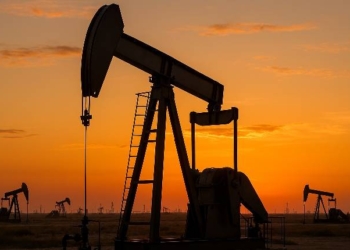
In an exclusive interview with IANS, Bhandari noted that India’s landed cost of crude oil imports has recently been around $110 per barrel, a level she said is putting significant pressure on oil marketing companies.
“The landed cost of oil imports in India in the last month or so has been about $110 a barrel. And I think at those levels, there is a lot of losses that the oil distribution companies are making. Now, the government has taken a big part of that share. It has cut excise duty on oil,” she said.
“But some of the share of that burden has to also be taken by consumers. And retail prices have been increased by seven and a half rupees per litre. My sense is retail prices can be increased a little more,” Bhandari told IANS.
“I would have, you know, asked for about 10 to 12 rupees per litre, because that would have shed the burden of the global price shock more equitably between the government and the consumer sector,” she said.
At the same time, she indicated that if global oil prices stay elevated, further retail price hikes cannot be ruled out in the near term.
“I think a little bit more price hike from here could be in the cards if this crisis continues and if our imported oil bill remains as high,” Bhandari noted.
Her comments come at a time when volatility in global crude markets continues to keep pressure on energy import costs.
Earlier in the week, the government said that oil marketing companies (OMCs) in India are continuing to face significant financial stress, with daily under-recoveries, including losses on liquefied petroleum gas (LPG) sales, estimated at Rs 600–700 crore.
Addressing a media briefing in the national capital, Praveen Khanooja, Additional Secretary in the Ministry of Petroleum and Natural Gas, said the losses are being driven largely by sharp gaps between retail selling prices and international fuel costs.
(IANS)