





New Delhi: Multiple media platforms and opposition voices have described Prime Minister Narendra Modi’s appeal to conserve fuel, revive work-from-home practices, reduce unnecessary imports, and avoid non-essential overseas travel as “austerity measures.” However, using the term “austerity” to describe the Prime Minister’s remarks is both inaccurate and misleading.
The word “austerity” carries a specific economic meaning and historically refers to periods of fiscal tightening marked by government spending cuts, subsidy reductions, shrinking welfare expenditure, and restrictions on public investment.
Economists often associate austerity with economic slowdown, reduced public support programmes, and contractionary policies aimed at reducing fiscal deficits.
None of these conditions applies in the present case. Prime Minister Narendra Modi’s appeal was not an announcement of austerity measures. The government is neither cutting capital expenditure nor reducing welfare schemes or subsidies. Public investment in infrastructure, welfare delivery, manufacturing incentives, and development programmes continues to remain central to the government’s economic strategy.
What the Prime Minister called for was responsible and strategic economic behaviour during a period of global uncertainty.
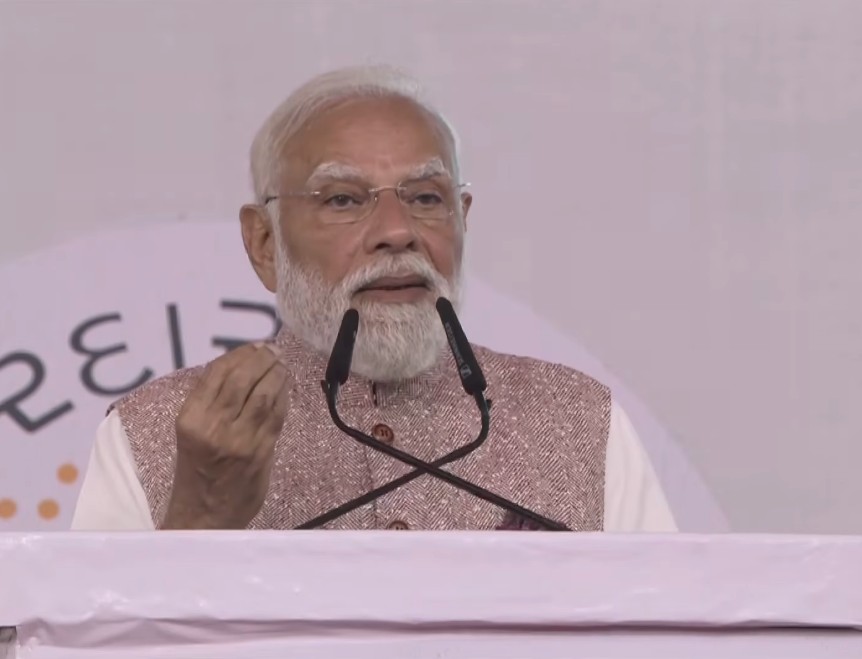
Addressing a public meeting organised by the BJP at Parade Grounds in Secunderabad on Sunday, PM Modi had urged citizens to collectively contribute towards protecting the Indian economy from the ripple effects of the ongoing conflict in West Asia.
He went on to highlight the challenges posed by various factors such as global supply chain disruptions, rising fuel prices, and increasing economic uncertainty resulting from international tensions.
In this context, PM Modi appealed to citizens to conserve fuel, use Metro rail and public transport wherever possible, adopt car-pooling, and increase the use of electric vehicles. He also encouraged industries and offices to revive work-from-home arrangements, online meetings, and virtual conferences — measures that had proven effective during the Covid-19 period in reducing fuel consumption and improving efficiency.
Importantly, he also appealed to citizens to avoid non-essential purchases of imported goods and unnecessary overseas vacations in order to conserve foreign exchange reserves.
“This is not austerity. It is economic prudence,” say experts. The distinction matters because austerity implies the state’s withdrawal of expenditure from the economy. PM Modi’s appeal, by contrast, is about reducing avoidable consumption that increases India’s import bill and foreign exchange outflows at a time when global energy markets are under stress.
Experts believe the Prime Minister’s message should instead be viewed through the lens of economic resilience and national responsibility. India imports a significant portion of its crude oil requirements. In view of this, any prolonged geopolitical conflict in energy-producing regions is bound to impact inflation, transportation costs, and the country’s current account balance, say economic experts.
In such circumstances, reducing unnecessary fuel consumption and encouraging efficient use of resources becomes a strategic economic necessity, they add.
PM Modi also highlighted that saving fuel, reducing wasteful expenditure, and protecting foreign exchange reserves were presented as collective national duties.
Experts say that at no point did the Prime Minister advocate reduced government spending, cuts in welfare schemes, or restrictions on economic activity. Instead, his message focused on smarter consumption patterns, energy efficiency, and reducing external vulnerabilities.
Labelling such appeals as “austerity” therefore creates an incorrect narrative. The government is not asking citizens to stop spending altogether; it is asking them to spend more wisely and responsibly in the national interest.
In times of global uncertainty, nations often rely not only on policy decisions but also on public participation. PM Modi’s appeal was fundamentally about collective economic discipline and resilience — not austerity.
(IANS)