






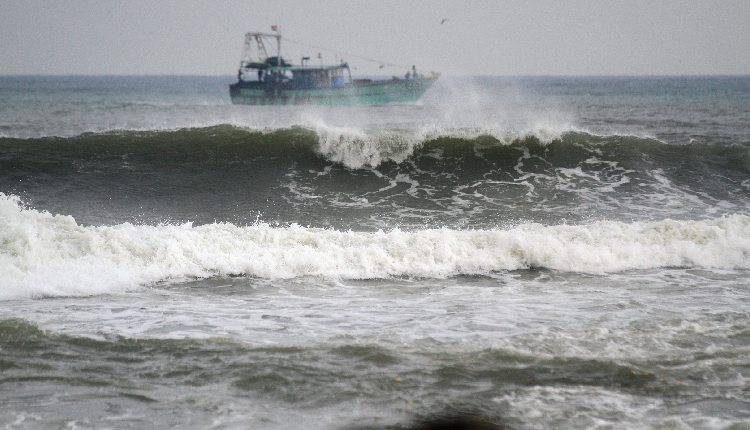
Amaravati: Cyclone Murasu crossed the south Andhra Pradesh coast between Nellore and Narsapur, close to Ongole, during the early hours of Tuesday, bringing strong winds of 100-110 kmph, gusting up to 120 kmph, the India Meteorological Department (IMD) said.
In a post on X, the IMD said: “The Severe Cyclonic Storm MURASU moved north-northwestwards and crossed the south Andhra Pradesh coast between Nellore and Narsapur, close to Ongole (near Latitude 15.53°N and Longitude 80.22°E) during 0330 to 0530 hours IST of today, with wind speed of 100-110 kmph gusting to 120 kmph.”
According to the November 3 update issued by the Real Time Governance Society (RTGS) and Andhra Pradesh State Disaster Management Authority (APSDMA), the cyclone was moving at a speed of 9 kmph during the preceding six hours.
The state disaster management authorities said the cyclone was likely to make landfall near Ongole, while the landfall process was expected to take another two hours to complete, according to the update.
At the time of the advisory, the cyclone was centred approximately 20 km from Ongole, 60 km from Bapatla, 70 km from Kavali, 110 km from Nellore and 130 km from Machilipatnam.
Strong winds ranging from 100 to 120 kmph were expected during the landfall process, while several districts were likely to receive heavy rainfall following the cyclone’s crossing of the coast.
Providing details of the expected rainfall, Prakhar Jain, Managing Director of the State Disaster Management Authority (SDMA) and CEO of RTGS, said isolated heavy rainfall was likely in West Godavari, Eluru, Krishna, NTR and Guntur districts.
Similar weather conditions were also expected in Bapatla, Palnadu, Markapuram, Prakasam and Nellore districts.
The authorities have advised people to remain extremely alert and vigilant in view of the severe weather conditions.
Residents in the affected districts have been urged to take the warnings seriously, as strong winds and heavy rainfall could continue to affect several parts of the state during and after the cyclone’s passage.
(IANS)